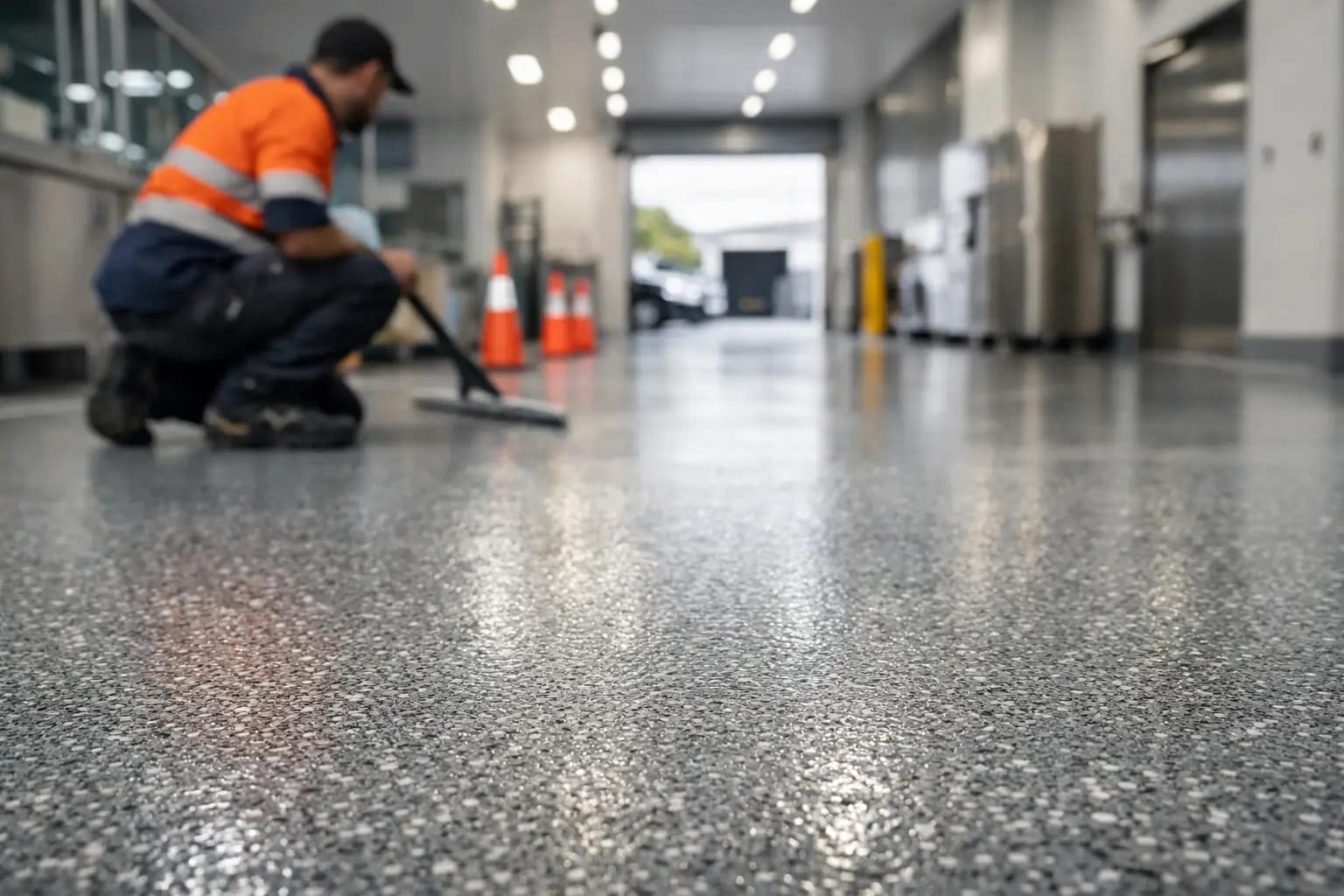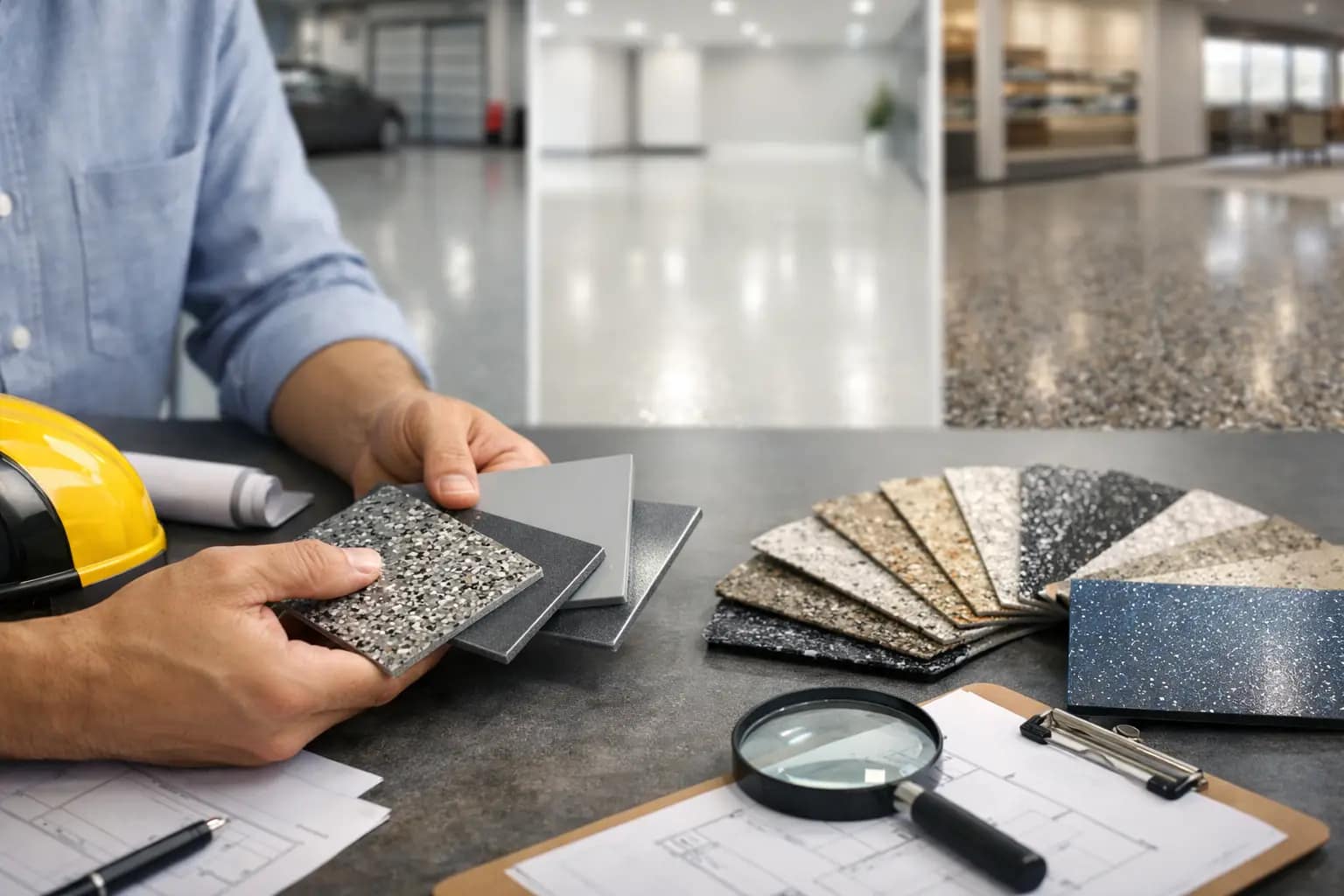

When people ask about garage epoxy flooring cost, they are usually trying to answer a bigger question – is it worth paying for a coated floor, or is plain concrete good enough? In most garages, the real cost is not just the coating itself. It is the condition of the slab underneath, the amount of preparation required, and whether you want a finish that still looks good after years of tyre traffic, spills and regular use.
A garage floor takes more punishment than most surfaces around the home. Cars track in dirt and water, oil and brake fluid can stain bare concrete, and even a tidy garage ends up with knocks from tools, storage and day-to-day movement. A professionally installed epoxy system solves a lot of that, but pricing varies because not all garages start from the same point.
What affects garage epoxy flooring cost?
The biggest factor is surface preparation. If a concrete slab is clean, level and in good condition, the job is more straightforward. If it has old paint, tyre marks, cracks, moisture issues or surface dusting, more work is needed before any coating can go down.
This matters because epoxy is only as good as the bond to the concrete. A cheaper quote that skips proper grinding or patching may look appealing at first, but it often costs more later in repairs or premature failure. Professional preparation usually includes concrete grinding, crack repair, cleaning and checking the slab for defects that could affect adhesion.
Garage size also plays a part, but not always in the way people expect. A larger area increases material and labour costs, yet small garages can sometimes have a higher per-square-metre rate because setup, equipment and preparation still take time. Access can influence pricing too. A garage with easy access and an empty floor is faster to complete than one packed with shelving, stored items or difficult entry points.
The coating system itself is another major pricing variable. A basic epoxy coating designed for light residential use will sit at the lower end of the range. A full system with primer, body coat, decorative flake and a hard-wearing topcoat costs more, but it generally gives better slip resistance, stronger wear performance and a more refined finish.
Typical garage epoxy flooring cost ranges
In Sydney and across NSW, most homeowners can expect garage epoxy flooring cost to be priced by the square metre, with the final figure shaped by the floor condition and the coating system selected. As a rough guide, basic residential epoxy coatings often start from around $50 to $80 per square metre. Mid-range systems with better durability and finish quality commonly sit between $80 and $120 per square metre. Heavier-duty or decorative flake systems can run higher, especially where substantial preparation is needed.
For a standard double garage, that usually means a total project cost somewhere from the low thousands upward rather than a few hundred dollars. If the slab needs extensive repairs, moisture treatment or removal of old coatings, the price will rise accordingly.
These numbers are best treated as a starting point, not a fixed promise. One garage may only need grinding and coating, while another may need crack filling, levelling and extra coats to achieve the same result. That is why site-specific quoting is so important.
Why preparation changes the price so much
Good epoxy flooring is built from the ground up. If the concrete is weak, contaminated or uneven, coating over it will not fix the underlying problem. It will only hide it for a while.
Grinding is one of the most important steps in the process because it opens the concrete surface and removes contaminants that stop the epoxy from bonding properly. Dust-controlled grinding also keeps the job cleaner, which matters in residential settings where people want practical improvements without unnecessary mess.
Repairs can add to the cost, but they also protect the finish. Cracks, chips and spalling need proper treatment before coating starts. If they are left as they are, they will usually show through or continue to worsen under traffic. In other words, the preparation cost is not a nice extra. It is a core part of getting a durable floor.
Cheapest quote versus best value
It is easy to compare epoxy flooring quotes on price alone, but that usually tells only half the story. Two quotes can look similar on paper while offering very different standards of preparation, materials and finish.
A lower-cost installer may use thinner coatings, skip a proper primer, reduce grinding time or apply a system not suited to hot tyres and regular vehicle use. That can lead to peeling, yellowing, patchy wear or poor chemical resistance. A better-value quote will usually explain the preparation method, the number of coats, the type of materials being used and what finish you can expect.
For homeowners and property managers, the practical question is not just what the floor costs today. It is how long it will last, how well it will perform, and how much maintenance or repair it may need over time.
Decorative finishes and their impact on cost
Not every garage floor is purely functional anymore. Many people want a space that looks cleaner, brighter and more finished, especially when the garage doubles as a workshop, home gym or storage area.
Decorative flake epoxy systems cost more than a plain solid-colour finish, but they offer real benefits beyond appearance. Flake can help disguise minor dust and marks, improve texture underfoot and create a more consistent visual finish. Topcoats can also be selected to improve UV stability, stain resistance and ease of cleaning.
That said, a decorative system is not always necessary. If the garage is mainly used for parking and utility storage, a straightforward heavy-duty finish may be the right fit. The best option depends on how the space is used and how much visual improvement matters to you.
What to ask before accepting a quote
If you are comparing prices, ask what is included in the preparation, whether crack repairs are covered, and how many coats form the system. Ask whether the concrete will be mechanically ground, what type of epoxy or topcoat is being applied, and whether a non-slip finish is available.
It is also worth checking curing times and access requirements. Some systems allow faster return to service than others, which can matter if the garage is your main parking area or part of a commercial premises. Clear communication on timing, preparation and finish quality is often a sign that the contractor knows the work and stands by the result.
For property owners who want certainty, a detailed site inspection is usually the best way to get an accurate price. Reputable contractors do not guess from a photo if slab condition is likely to affect the job.
Is epoxy worth the cost for a garage?
For most garages, yes – provided the installation is done properly and the system matches the use of the space. Bare concrete is porous, harder to keep clean and more likely to stain or wear unevenly over time. A professional epoxy floor creates a sealed, easier-to-maintain surface that looks sharper and handles traffic better.
The value is even clearer in working garages, workshops and higher-use residential spaces where durability matters. Instead of constantly dealing with dusting concrete, hard-to-remove stains or a tired-looking slab, you get a floor built to perform.
At Floor Masters, this is why pricing is approached with preparation and long-term performance in mind rather than quick cosmetic coverage. For homeowners and businesses alike, the right epoxy system is not just about appearance. It is about getting a floor that stands up to real use and still looks professional.
If you are weighing up garage epoxy flooring cost, the smartest move is to look past the headline number and focus on what the quote is actually delivering. A garage floor should do more than look good on day one. It should stay hard-wearing, easy to clean and fit for purpose long after the job is finished.