A worn driveway usually shows its age in the same places first – tyre paths, surface flaking, small cracks, stains and patches that never quite come clean. When the slab is still structurally sound, driveway concrete resurfacing options can give you a cleaner, more durable finish without the cost and disruption of a full replacement.
The right option depends on the condition of the existing concrete, how the driveway is used, and what result you want from the surface. Some homeowners want a fresh modern look. Others need a hard-wearing finish that can handle regular vehicle traffic, weather exposure and low ongoing maintenance. In commercial or multi-residential settings, slip resistance and a professional appearance often matter just as much as visual improvement.
When resurfacing makes sense
Resurfacing is generally a good fit when the concrete base is stable but the top layer is tired, porous or visually dated. That includes minor surface cracking, discolouration, worn coatings, light pitting and general weathering. It can also suit driveways that function well but bring down the overall presentation of the property.
It is not the answer for every slab. If there is major movement, deep structural cracking, sinking sections or drainage failure, resurfacing alone will not fix the root problem. In those cases, repairs may be needed first, and sometimes replacement is the more sensible long-term choice. A proper assessment matters because the finish is only as good as the concrete underneath it.
The main driveway concrete resurfacing options
For most residential and light commercial driveways, resurfacing falls into a few practical categories. The best one comes down to surface condition, finish preference and expected traffic.
Spray-on concrete resurfacing
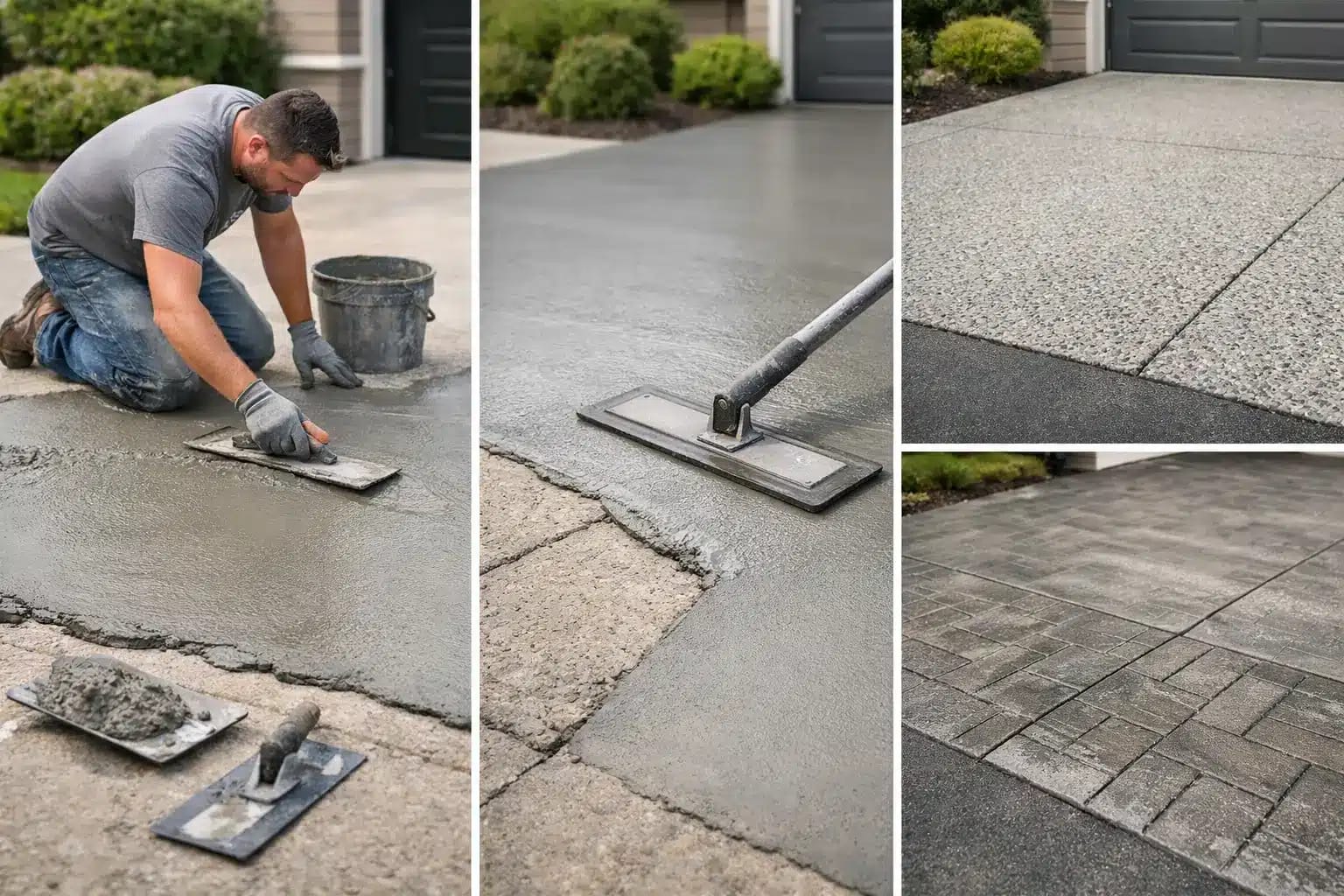
Spray-on concrete coatings are one of the most common driveway concrete resurfacing options for properties that want a decorative upgrade with added texture. This system creates a new wearing surface over prepared concrete and can be finished in a range of colours and patterns.
A big advantage is visual flexibility. Spray-on finishes can modernise older driveways and improve kerb appeal without removing the existing slab. They also provide a practical non-slip texture, which is useful on sloped driveways or areas exposed to rain.
The trade-off is that preparation needs to be done properly. Any contamination, weak surface material or unstable areas below the coating can affect bond and performance. For driveways with oil staining, old failed coatings or soft surface concrete, grinding and repairs are often part of the job, not an optional extra.
Skim coating and surface levelling
Where the concrete is sound but uneven in appearance, lightly pitted or marked by old wear, skim coating can be a practical way to restore a smoother, cleaner surface profile before a final finish is applied. This approach is more about correcting the surface than simply covering it.
It can suit driveways with shallow imperfections, patchy previous repairs or rough sections that need a more consistent base. In some cases, skim coating is part of a broader resurfacing system rather than the final visible finish.
This option is useful when appearance matters, but it still relies on the slab being fundamentally stable. It will not hide major cracking or movement for long.
Concrete repairs before resurfacing
Technically, repairs are not a decorative finish, but they are often a necessary part of resurfacing. Cracks, spalling, edge damage and failed patches need to be dealt with first if you want the new surface to last.
This is one of the biggest differences between a short-term cosmetic improvement and a proper resurfacing job. Surface repairs help restore continuity, reduce weak points and give the coating system a better foundation. If a contractor talks only about the topcoat and not the repair process, that is usually a sign to ask more questions.
Coated concrete finishes for specific use cases
Some driveways benefit from coating systems designed more for performance than pattern. In settings where stain resistance, cleanability and wear matter most, the finish may be selected for durability and ease of maintenance rather than decorative effect.
This is more common in mixed-use spaces, access ways, garages that flow into driveways, or commercial entries where presentation and function need to work together. The finish needs to match the traffic and exposure level. A product that performs well indoors is not automatically the right choice for an exterior driveway.
Surface preparation is where the result is decided
Most resurfacing failures start below the finish. Dust, moisture, weak laitance, grease, old sealers and poorly repaired cracks all affect adhesion. That is why mechanical preparation is a critical part of any professional resurfacing job.
Concrete grinding creates a clean, sound profile so the new system can bond properly. It also exposes hidden issues that may not be obvious at first glance, such as soft surface areas or previous patching that has already failed. For occupied homes and active sites, dust-controlled grinding makes a real difference to cleanliness and disruption.
Preparation also includes checking falls, edges and joints. If water already sits on the driveway, resurfacing over it will not solve the drainage issue. A good contractor should be upfront about that before recommending a finish.
Choosing the right finish for your property
There is no single best finish for every driveway. The right choice depends on how the area is used and what matters most to you.
For homeowners, appearance and low maintenance are usually the main drivers. A textured spray-on finish often suits this well because it lifts the look of the property while improving grip and weather resistance. If the driveway connects to a garage or side access area, it also helps to think about how the surfaces work together visually.
For strata, investment properties and commercial premises, long-term upkeep and safety tend to carry more weight. A finish that looks sharp on day one but marks easily or becomes slippery in wet weather is rarely the best value. In these cases, durability, repairability and slip resistance should be part of the decision from the start.
Local conditions also matter. In Sydney and across NSW, driveways deal with strong UV, rain, heat and daily vehicle use. That means the resurfacing system needs to be suited to outdoor exposure, not just chosen on colour alone.
What to ask before going ahead
If you are comparing contractors, focus less on broad promises and more on process. Ask what preparation is included, how cracks and damaged areas will be handled, what finish is recommended for your traffic level, and whether the surface will have a non-slip profile.
It is also worth asking how the existing slab condition affects the recommended system. An honest answer should include limitations. For example, resurfacing can greatly improve the appearance and performance of an ageing driveway, but it is not designed to stop future slab movement if the concrete below is unstable.
A clear scope matters just as much as the finish itself. That includes surface prep, repairs, coating build-up, curing time and expected maintenance. Reliable contractors will explain this in plain terms.
Long-term value comes from fit, not just finish
The cheapest-looking option on paper is not always the most economical once repairs, traffic and maintenance are factored in. A resurfacing system that is matched to the slab condition and installed with proper preparation will generally hold up better and present better over time.
That is especially important for driveways, where the surface is exposed every day and takes more abuse than many people realise. Tyre friction, turning wheels, moisture, sun and contaminants all work on the coating at once. A finish chosen for the wrong environment may still look good initially, but performance is what determines value.
At Floor Masters, that practical view matters. The aim is not to push a one-size-fits-all product, but to recommend a resurfacing approach that suits the concrete you already have and the result you want from it.
If your driveway is worn but the slab still has life in it, resurfacing can be a smart upgrade. The key is choosing a system that suits the surface, the traffic and the conditions – then making sure the preparation is done properly before any finish goes down.