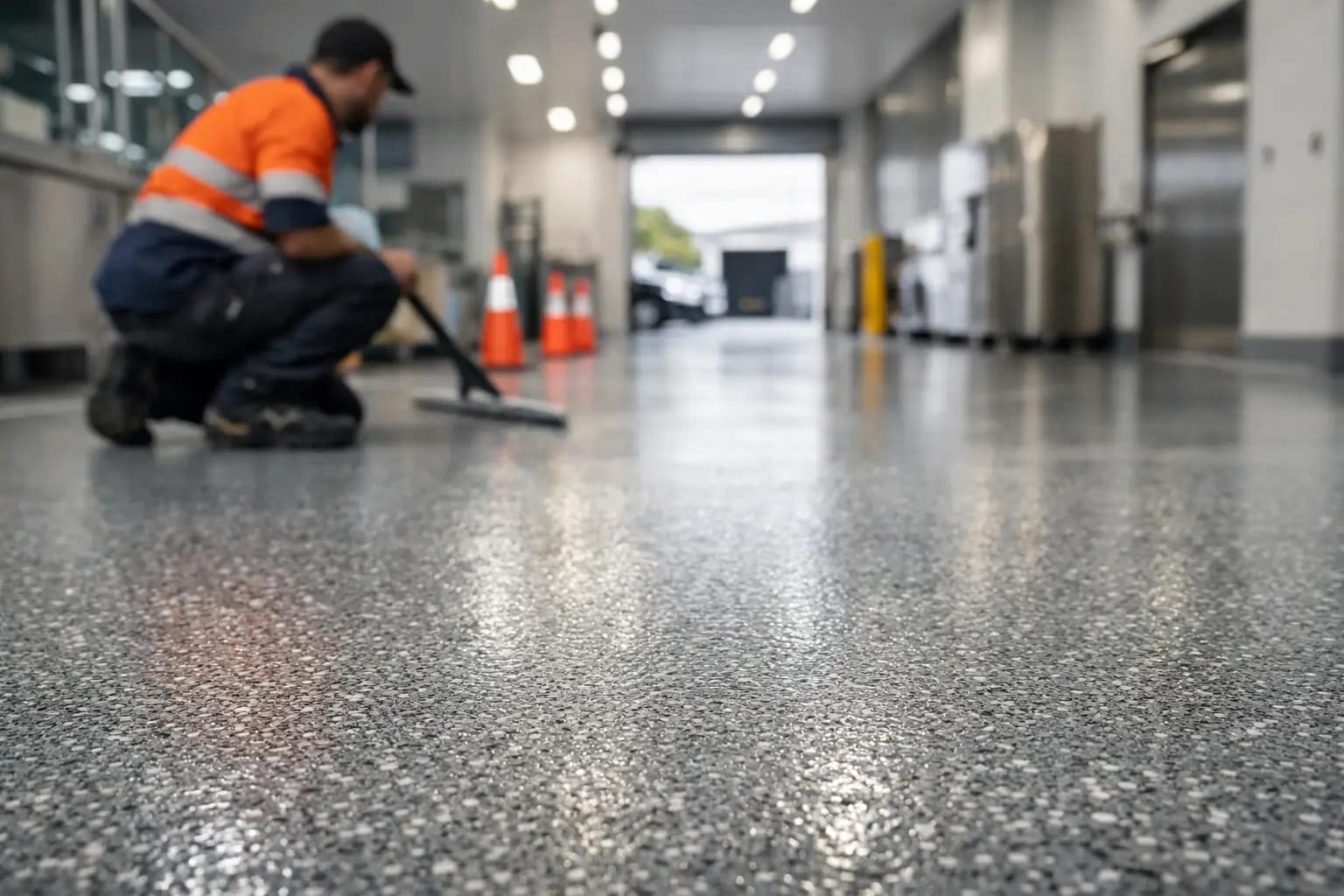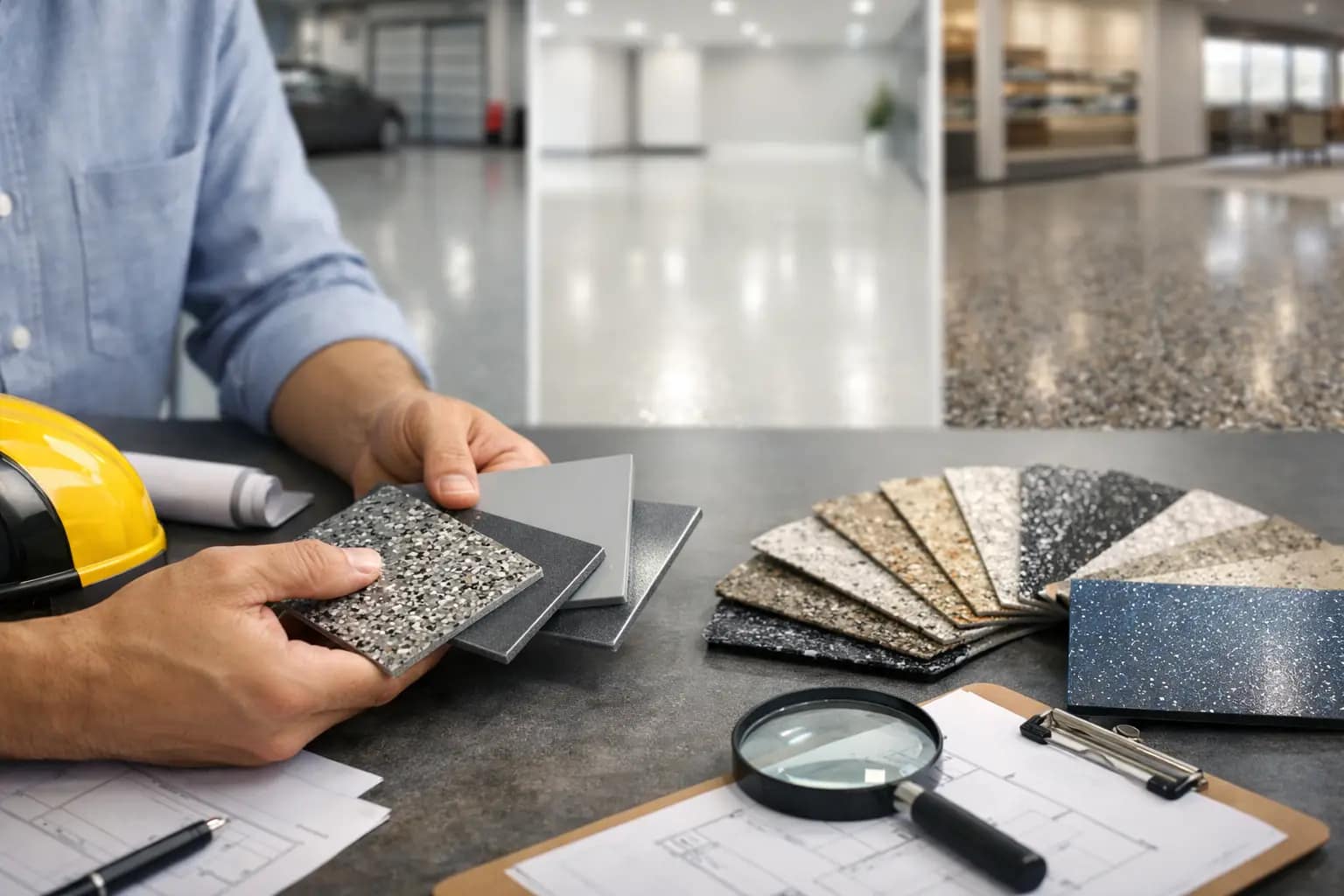
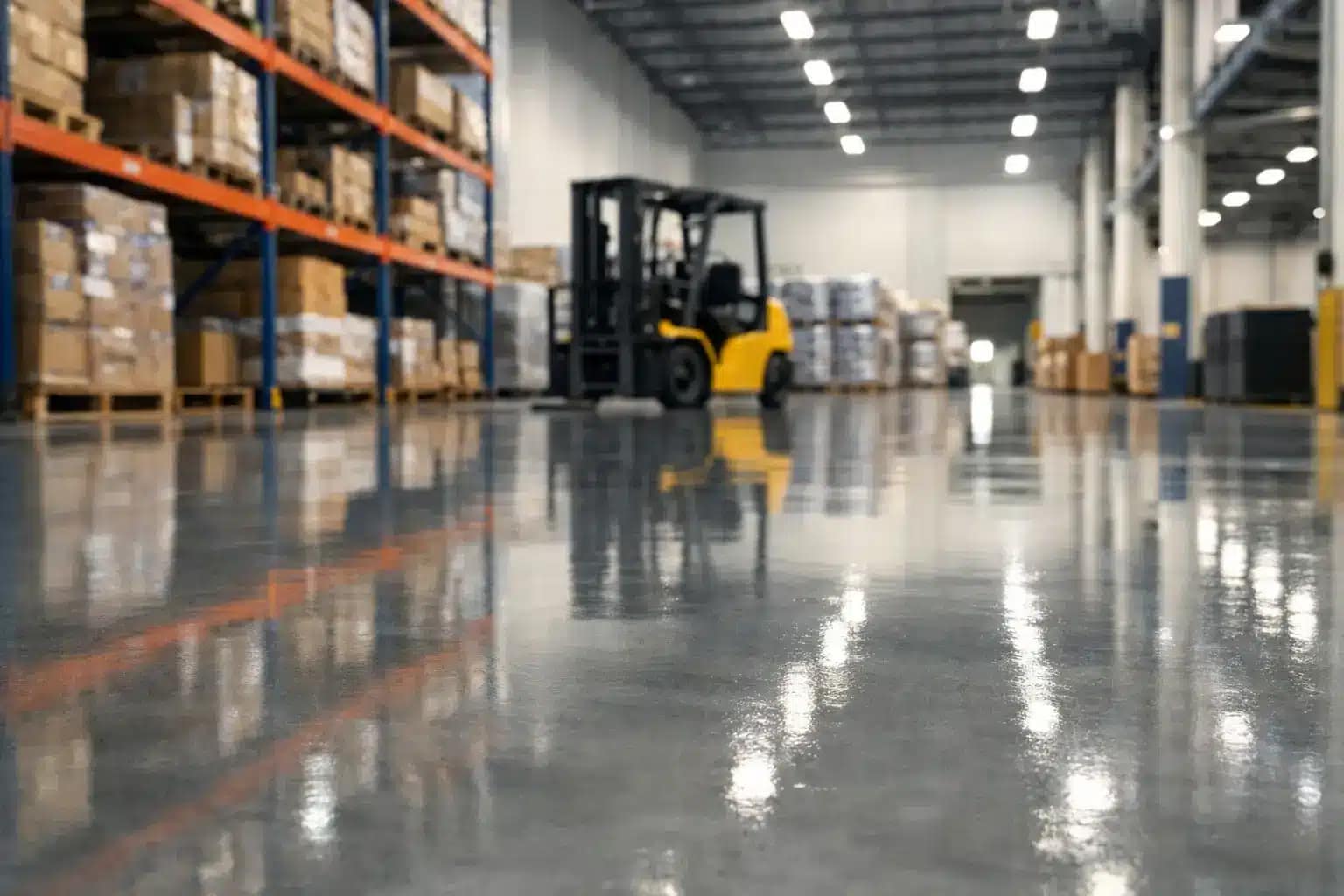
Forklift traffic shows up on a warehouse floor faster than most people expect. Tyre marks, dust, oil drips, chipped concrete and slippery patches can turn a hard-working site into a maintenance problem. That is why warehouse epoxy flooring is usually less about appearance alone and more about day-to-day performance, safety and how well the floor holds up under pressure.
For warehouse operators, builders and facility managers, the floor is part of the operation. If it breaks down, cleaning gets harder, safety risks increase and the site starts looking neglected. A properly installed epoxy system can help solve those issues, but only when the floor is prepared correctly and the coating is matched to the way the warehouse is actually used.
Why warehouse epoxy flooring is used in busy facilities
Concrete on its own is tough, but it is not always enough for a modern warehouse. Bare concrete can dust over time, absorb spills, stain easily and wear down in high-traffic areas. Once that starts happening, the floor becomes harder to maintain and less reliable under constant use.
Warehouse epoxy flooring adds a protective layer over the concrete surface. That layer helps resist abrasion, chemical exposure and daily wear from pallet jacks, forklifts and foot traffic. It also creates a more consistent finish, which can improve cleanliness and give the site a more professional look.
In practical terms, that means less dust circulating through stock areas, fewer issues with surface deterioration and a floor that is easier to sweep and scrub. For sites handling food packaging, automotive work, storage or light manufacturing, those benefits can make a real difference to operations.
Not all warehouse floors need the same epoxy system
This is where many decisions go wrong. “Epoxy” is often treated like one product, but warehouse flooring systems can vary a lot depending on the condition of the slab and the demands of the site.
A warehouse used mainly for storage has different needs from one handling machinery, chemical washdowns or constant forklift movement. Some sites need a simple protective coating. Others need a heavier-build system with improved impact resistance, line marking or non-slip additives in selected zones.
The right result depends on a few things: the age and condition of the concrete, whether there is moisture in the slab, what kind of traffic the floor sees and how much downtime is available for the work. A coating that performs well in one warehouse may not last in another if those factors are ignored.
Surface preparation is what makes the job last
If there is one part of the process that should never be rushed, it is preparation. Good epoxy does not hide a bad slab. It relies on the coating bonding properly to clean, sound concrete.
That usually means grinding the floor to remove contaminants, weak surface layers and previous coatings. Cracks, holes and damaged sections may also need repair before the epoxy is applied. If moisture issues are present, they need to be identified early, because trapped moisture can cause coating failure later.
This is one of the biggest differences between a warehouse floor that performs well for years and one that starts peeling too soon. Clean finishing matters, but the real strength of the system starts below the visible surface.
Safety matters as much as durability
In warehouse settings, slip resistance cannot be an afterthought. Smooth floors may be easier to clean, but if the site deals with water, oil, dust or regular movement between indoor and outdoor areas, the floor finish needs to suit those conditions.
A non-slip epoxy finish can be built into the system where it is needed most, such as loading zones, ramps, wash areas or pedestrian paths. The key is balance. If the texture is too aggressive, cleaning becomes harder and equipment movement can be affected. If it is too smooth, the floor may not provide enough grip for safe use.
That is why a practical site assessment matters. The best warehouse flooring is not just hard-wearing. It also supports safer movement for staff, visitors and machinery throughout the day.
Cleanliness and maintenance are part of the value
A warehouse floor does not need to look polished to be doing its job well, but it does need to be manageable. Dusty, porous or damaged concrete tends to hold onto grime and create more cleaning work than it should.
Epoxy flooring helps by sealing the surface. That makes it easier to remove dust, spills and marks before they build up. In many warehouse environments, a cleaner floor also supports better stock protection and a better impression for staff, clients and inspectors.
Low maintenance does not mean no maintenance. Any warehouse floor will last longer with regular cleaning and sensible traffic management. But compared with untreated concrete, a properly installed epoxy system usually reduces upkeep and makes cleaning routines more efficient.
Downtime needs to be planned properly
For most warehouse operators, the flooring itself is only part of the job. The real concern is disruption. If the site needs to stay operational, the installation has to be planned around access, curing times and workflow.
That is why realistic scheduling matters. Some warehouse epoxy flooring projects can be staged in sections, allowing part of the site to remain active while work is completed in zones. In other cases, a full shutdown may be the better option if speed and consistency are the priority.
There is no single rule here. It depends on the layout, the coating system selected and how the warehouse runs. What matters is getting clear advice upfront so there are no surprises once the work begins.
When epoxy is a strong fit – and when extra assessment is needed
Epoxy is a strong choice for many warehouses, but it is not a shortcut around slab issues. If the concrete is badly deteriorated, contaminated or holding moisture, those problems need attention first. Otherwise, even a premium coating system can struggle.
It is also worth being realistic about expectations. Epoxy improves resistance to wear, chemicals and staining, but it does not make a floor indestructible. Heavy impact, substrate movement and neglected damage can still affect performance over time. The goal is a tougher, safer and more serviceable floor – not a surface that never needs attention again.
That honest view matters because it helps site managers choose the right system for the long term rather than the quickest fix.
Choosing a warehouse epoxy flooring contractor
The quality of the installer has a direct impact on the result. Warehouses are not like small decorative coatings in low-use spaces. They need proper assessment, mechanical preparation, the right materials and a team that understands how industrial environments operate.
When comparing contractors, it helps to look at more than the coating product itself. Ask how the surface will be prepared, how repairs are handled, how dust is controlled during grinding and what finish is recommended for your traffic and safety requirements. Clear answers on those points usually tell you more than broad promises.
For Sydney and NSW warehouse operators, local experience can also help. Conditions vary from site to site, and an experienced contractor will understand the common issues that show up in older slabs, active facilities and fast-turnaround projects. Floor Masters approaches this kind of work with a focus on preparation, clean workmanship and systems that are selected for practical performance, not just appearance.
What good warehouse flooring looks like after the job is done
A successful result is usually obvious within the first few weeks of use. The floor is easier to clean. Dust is reduced. Traffic routes feel more predictable. The site looks sharper and more organised without becoming harder to maintain.
Over time, the real value shows up in fewer surface problems, less effort spent on cleaning and a floor that keeps supporting the operation instead of dragging it down. That is the standard worth aiming for with warehouse epoxy flooring.
If your warehouse floor is starting to dust, stain, chip or create safety concerns, it is worth treating it as an operational issue rather than just a cosmetic one. The right flooring system can make everyday work cleaner, safer and easier to manage.