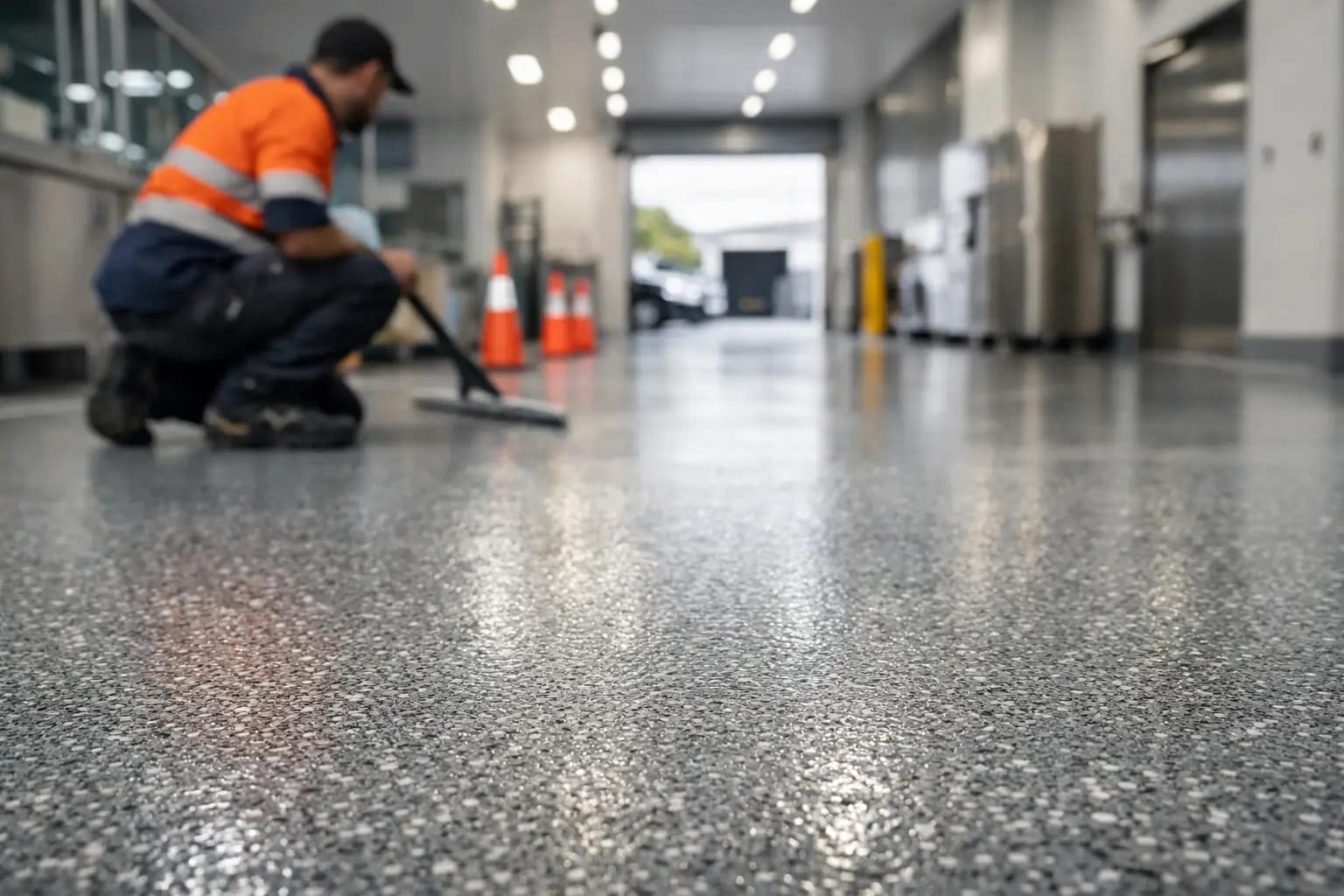
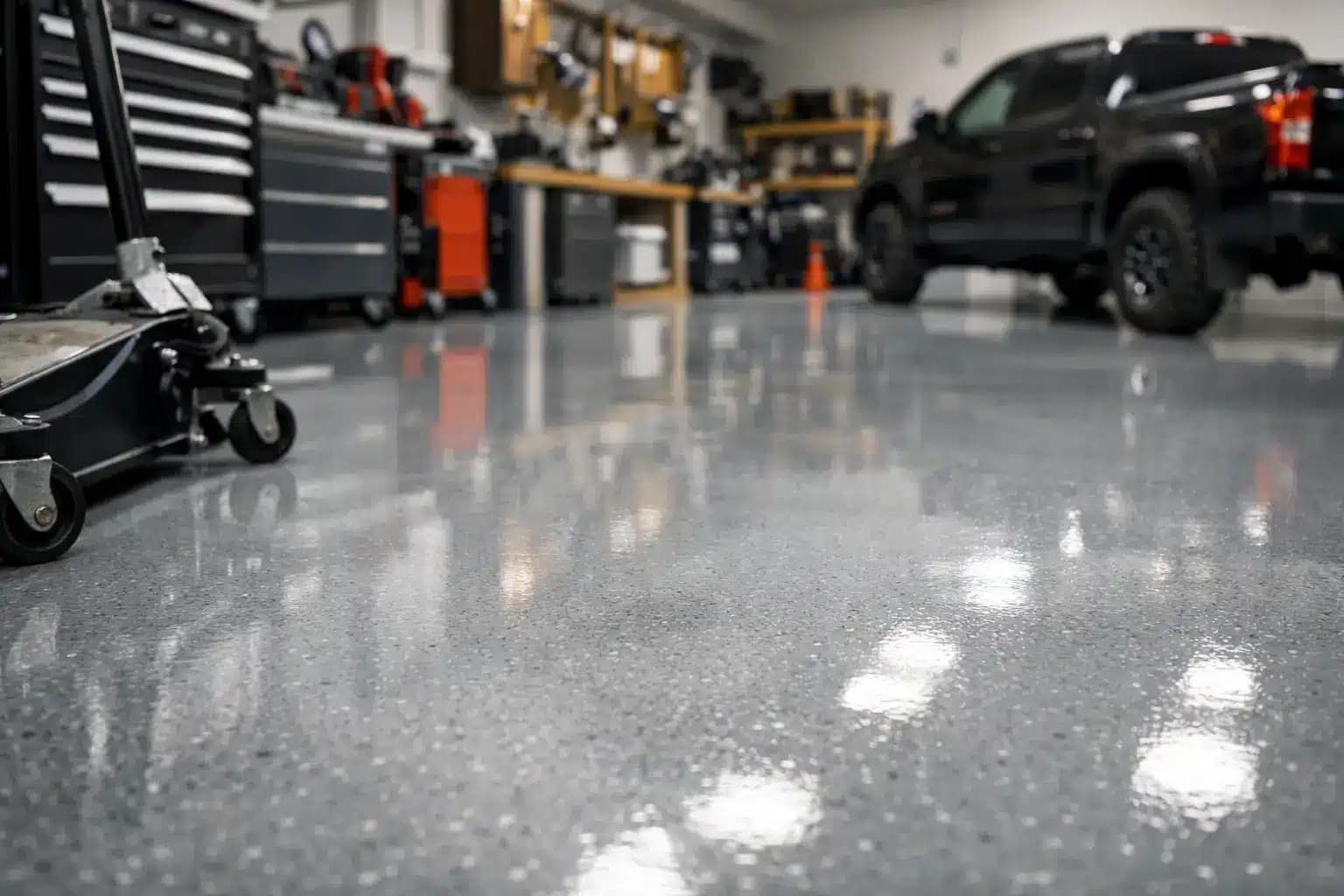
A workshop floor usually tells the story before anyone says a word. Oil marks that never quite come out, concrete dust tracking into other areas, tyre wear near entry points, and small cracks that slowly turn into bigger maintenance issues – these are common signs that plain concrete is no longer doing the job. A workshop epoxy floor is designed to solve those practical problems, not just make the space look better.
For workshops, performance matters more than appearance alone. The floor needs to handle vehicle traffic, dropped tools, chemical spills, foot traffic and regular cleaning without turning into a constant repair job. That is where epoxy stands apart from untreated concrete. When the system is properly prepared and professionally installed, it creates a hard-wearing, low-maintenance surface that supports safer and cleaner day-to-day operations.
Why a workshop epoxy floor makes sense
In a working environment, the floor takes more punishment than most people realise. Mechanics, fabricators, service centres, home workshops and industrial work bays all place different demands on the surface, but the common requirement is durability. Bare concrete absorbs oil, coolant and other contaminants easily. Once that happens, cleaning becomes harder and the floor starts to look worn well before the structure itself is actually compromised.
An epoxy coating changes the way the surface performs. It seals the concrete, reduces dust, improves resistance to staining and gives the floor a more controlled finish. That matters in workshops where cleanliness is tied to efficiency and safety. A floor that is easier to sweep, mop and maintain saves time over the long run.
There is also the question of presentation. For commercial workshop owners, the floor affects how customers see the business. A clean, consistent finish gives the space a more professional look. For private workshop owners, it turns a rough, dusty slab into a usable area that feels properly finished.
What workshops need from an epoxy floor
Not every workshop uses the floor in the same way, so the right result depends on how the space operates. A mechanical workshop may need stronger chemical resistance and extra slip control in washdown or service areas. A fabrication workspace might be more focused on impact resistance and surface toughness. A home workshop may prioritise easier cleaning and a cleaner overall appearance.
That is why the system needs to suit the environment rather than follow a one-size-fits-all approach. The thickness of the coating, the type of epoxy used, the condition of the slab underneath and whether a non-slip finish is needed all affect long-term performance.
A good workshop epoxy floor should deliver four things consistently: it should protect the concrete, reduce cleaning effort, improve safety underfoot and hold up under traffic and daily use. If one of those is overlooked, the floor may still look fine at first but can become a maintenance issue later.
Surface preparation is what decides the outcome
Most epoxy flooring problems start before the coating goes down. If the concrete is not properly assessed and prepared, even premium materials can fail. That is why surface preparation is not the extra step – it is the job.
Concrete grinding is usually required to open the surface and create the right profile for adhesion. If the slab has old coatings, grease contamination, weak surface layers or minor damage, those issues need to be dealt with first. Cracks and localised defects may also need repair before coating begins.
In workshop settings, this part matters even more because the floor is expected to handle tougher use than a standard residential area. Shortcuts in preparation often lead to peeling, bubbling or early wear in high-stress sections. Proper grinding, repairs and moisture checks help avoid that.
For businesses that need the work completed with minimal disruption, planning is also part of preparation. A professional contractor will look at site access, curing time, ventilation and how to stage the work so the space can return to service as efficiently as possible.
Workshop epoxy floor options and finishes
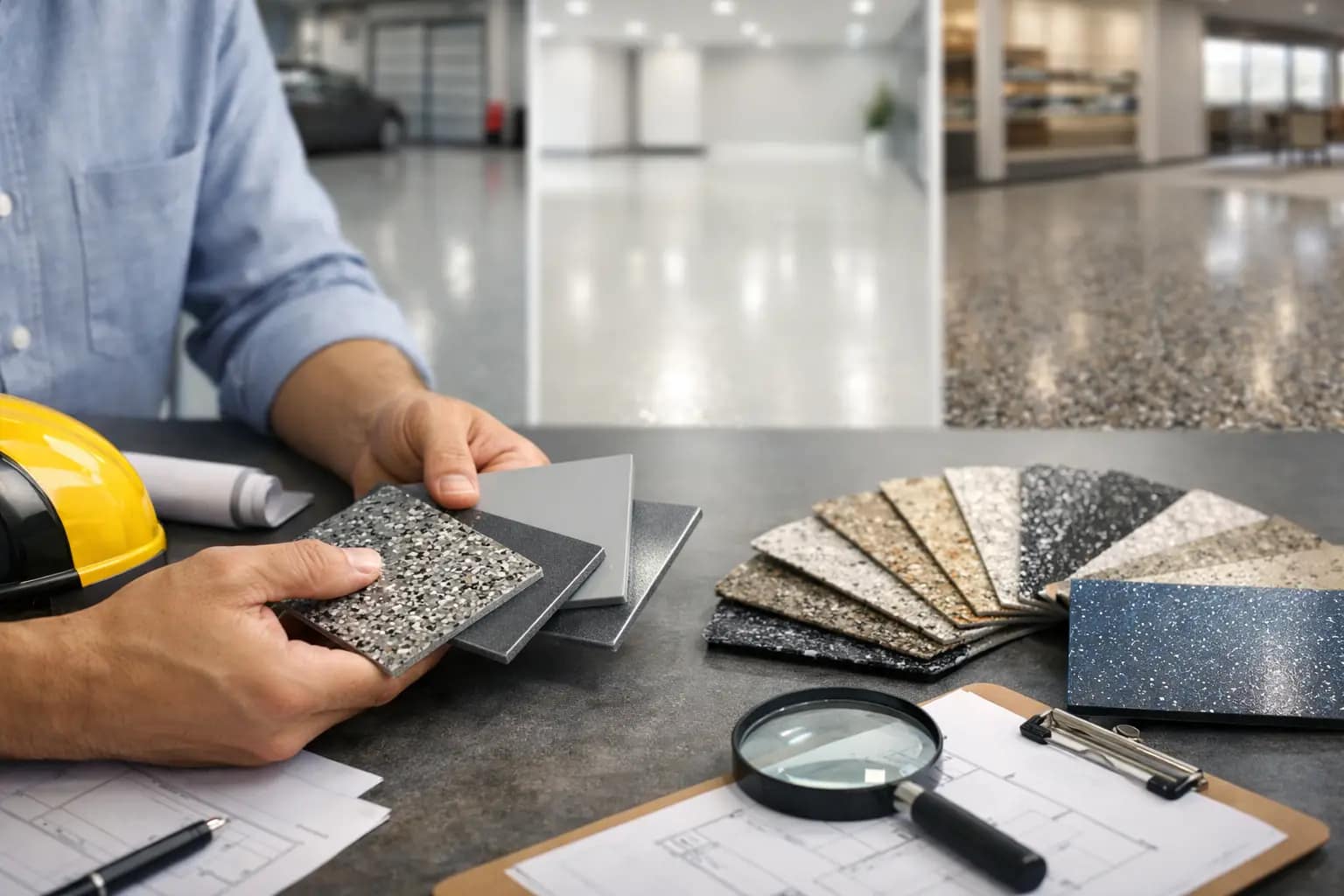
The best finish depends on what the workshop actually needs day to day. Some customers want a clean solid-colour floor that is easy to inspect and maintain. Others prefer a flake finish that adds texture, hides minor dirt and gives a more decorative appearance. In functional spaces, looks matter, but not at the expense of performance.
Non-slip finishes where safety matters
Slip resistance is a major consideration in workshops, especially where water, oil or fine dust may be present. A non-slip additive can be incorporated into the system to improve grip underfoot. The balance here is practical – more texture can improve safety, but it can also slightly change how easy the floor is to mop. The right level depends on the use of the area.
Chemical and stain resistance
Many workshop owners ask whether epoxy can handle oils, fuels and common workshop fluids. In general, yes, but performance depends on the specific coating system and how quickly spills are cleaned. Epoxy provides a much more resistant surface than bare concrete, which is one of the main reasons it is widely used in garages and workshops.
Colour and visibility
Lighter colours can brighten a workshop and improve visibility, which can help in work bays and service areas. Darker tones may better hide tyre marks and everyday dirt. Neither is automatically better – it depends on whether the priority is presentation, maintenance appearance or lighting improvement.
Where epoxy works best in a workshop
A workshop epoxy floor is well suited to automotive workshops, mechanical repair bays, detailing areas, storage zones, equipment rooms and private workspaces attached to homes or sheds. It also works well in mixed-use environments where part of the workshop is customer-facing and part is strictly operational.
That said, the existing slab condition is always part of the conversation. If the concrete has significant structural cracking, rising moisture issues or contamination from years of heavy use, those conditions need to be assessed before the coating system is specified. Epoxy is a high-performance finish, but it still relies on a stable, properly prepared base.
For workshop owners across Sydney, that is often the difference between a floor that lasts and one that starts showing problems too early. Local conditions, usage patterns and slab age all shape the right recommendation.
What to expect from a professional installation
A professional process should be straightforward. First, the site is inspected so the slab condition, use case and performance requirements can be assessed properly. From there, the floor system can be recommended based on actual site conditions rather than guesswork.
Preparation follows, which may include grinding, repairing damaged sections and cleaning the surface thoroughly. Once the slab is ready, the coating system is applied in stages, with curing time allowed between coats where required. The final result should be even, clean and suited to the way the workshop operates.
Good contractors will also be clear about practical expectations. Epoxy floors are highly durable, but they are not indestructible. Dragging sharp steel across the surface, leaving aggressive chemicals to sit for extended periods, or using the wrong cleaning methods can still cause wear over time. Honest advice matters because it helps customers get better long-term value from the floor.
Long-term value over short-term patch jobs
Some workshop owners hold off on floor upgrades because the existing slab still seems usable. In many cases, that leads to more ongoing cleaning, a rougher work environment and repeated minor repairs that never really fix the underlying issue. A properly installed epoxy system is not just about appearance – it can reduce dust, protect the slab and make the whole space easier to manage.
That long-term value is especially relevant in active workshops where downtime, cleaning effort and safety concerns all affect productivity. For homeowners, it often means a workshop that feels more organised and easier to use. For businesses, it supports a cleaner, more professional and lower-maintenance environment.
If the floor is already showing wear, staining or surface breakdown, waiting usually does not improve the situation. The better approach is to have the slab assessed, understand the options and choose a system that fits the way the space is actually used.
A workshop should be built for work, but the floor still needs to support that standard every day. When the surface is clean, durable and easier to maintain, the whole space works better – and that is usually the point where an epoxy floor starts paying for itself.