If you have a garage, shop, warehouse, or commercial kitchen, you are probably chasing the same thing: a floor that stays clean, doesn’t dust, and doesn’t turn into a chipped mess after the first year of traffic.
That’s where the confusion usually starts. One supplier calls it “epoxy paint.” Another quotes an “epoxy coating system.” Both promise toughness. They are not the same – and the wrong choice typically shows up as hot-tire pickup, peeling around the edges, or worn-through pathways right where you need durability most.
Epoxy paint vs epoxy coating: the plain-English difference
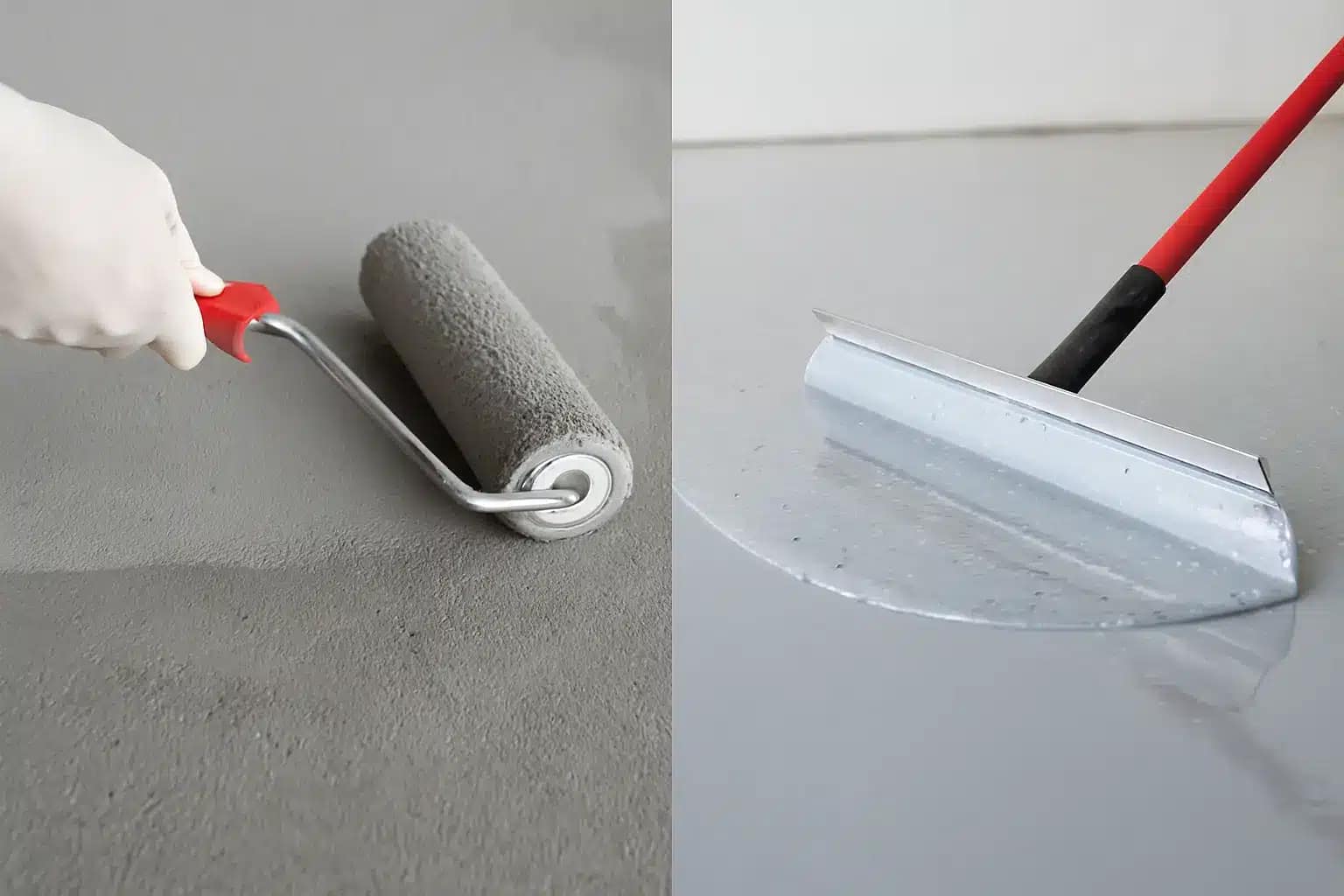
At the simplest level, epoxy paint is a paint product that includes some epoxy in the formula, usually as a one-part or light-duty two-part product designed to roll on like paint. It’s made for convenience and appearance first.
An epoxy coating is a true resin-based system (most commonly a two-part epoxy) built to cure into a thicker, harder film that chemically bonds to properly prepared concrete. It’s designed for performance first – abrasion resistance, chemical resistance, and long service life.
The names get used interchangeably in ads, so don’t rely on the label. What matters is the chemistry (true two-part resin vs paint-like product), the installed thickness, and the surface preparation underneath.
Where epoxy paint fits (and where it doesn’t)
Epoxy paint can be a reasonable choice when expectations are modest and the environment is forgiving. Think low foot traffic, minimal turning tires, and no frequent chemical spills. It’s also used when the main goal is a quick cosmetic refresh and the slab is already in decent condition.
But epoxy paint has limits. Because it tends to go down thinner, it wears through faster. And because many “epoxy paints” are formulated for easy application, they often don’t bite into dense concrete the way a true coating system does. On busy floors, that usually shows up as scuffing and dull patches first, then chipping or peeling in high-stress spots like door thresholds and turning zones.
If you are managing a working space – a home garage that actually houses cars, a warehouse aisle with pallet jacks, a workshop with grinding dust and oils – epoxy paint is usually a short-term win that becomes a medium-term redo.
What an epoxy coating system is actually built to do
A proper epoxy coating system is more than a single roll-on layer. It’s a combination of surface prep, repairs, primer (when needed), a build coat, and sometimes a topcoat. The goal is adhesion plus thickness plus the right texture for safety.
When installed correctly, epoxy coating systems are the ones that deliver the results most property owners are looking for:
Long-wearing protection in traffic lanes, not just a nicer color.
Better chemical resistance to oils, cleaners, and common workshop fluids.
Easier cleaning because the surface seals the concrete pores that trap dust.
Options for non-slip texture so the floor is safer when wet.
You can also tailor epoxy coatings to the environment. Some areas need more grip, others need a smoother finish for sweeping and hygiene, and some need a UV-stable topcoat if there’s strong sun exposure.
Thickness, solids, and why the floor feels different underfoot
A big practical difference in epoxy paint vs epoxy coating is film build – how much material is actually left on the floor after it cures.
Paint-style products typically apply in thinner coats and often have more solvent or water in the mix, so less “solid” material remains once it dries. That’s one reason they can look good initially but don’t keep their body under abrasion.
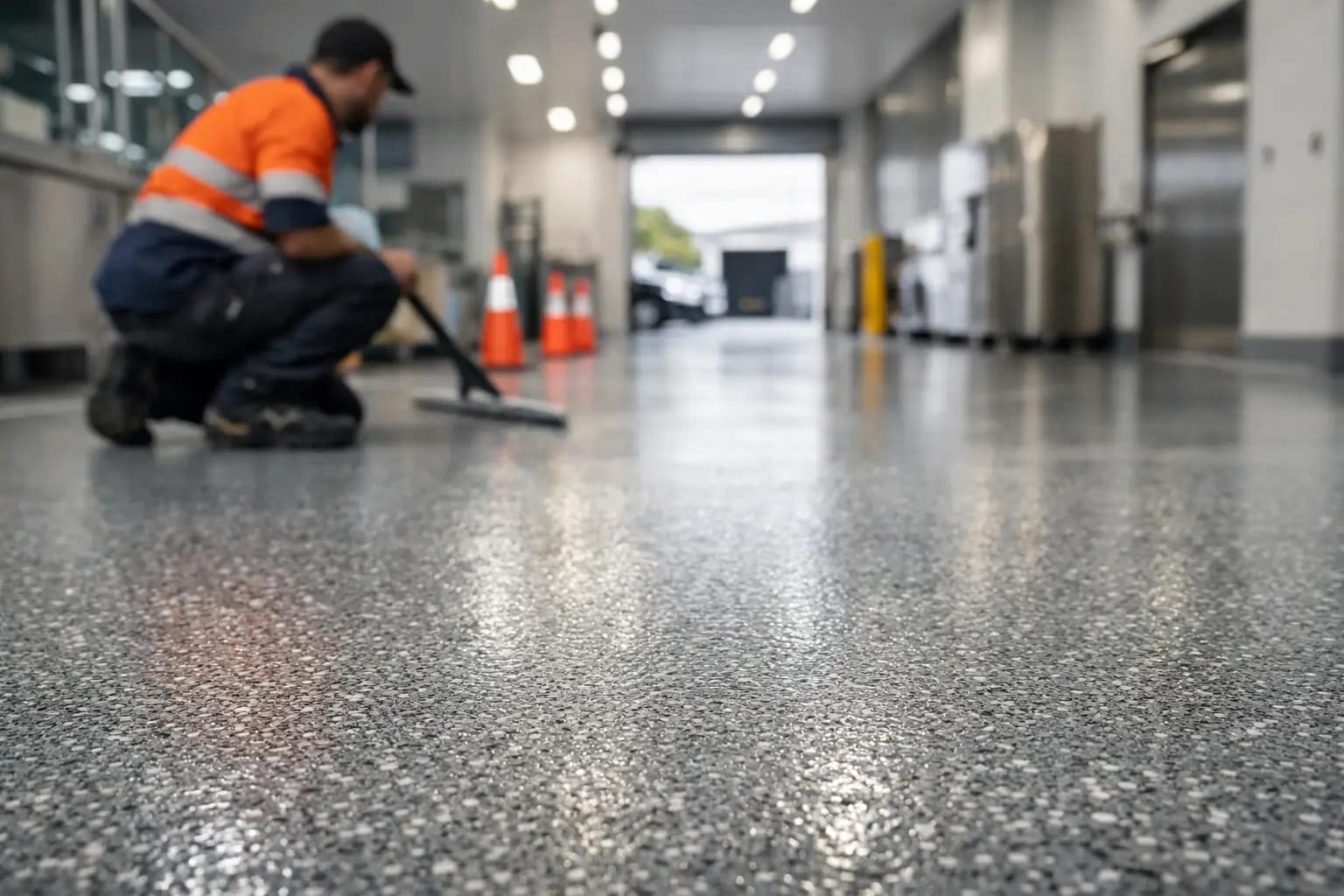
A true epoxy coating is designed to build thickness. That added film build is what takes the punishment instead of your concrete. It also changes how the floor behaves: it feels more substantial, it resists scratching better, and it holds decorative flake or quartz broadcasts more reliably.
If you want a floor that still looks sharp after years of use, you want a system designed to be a coating, not a paint.
The make-or-break factor: surface preparation
Most failures blamed on “bad epoxy” are really adhesion failures caused by poor preparation.
Concrete needs to be mechanically profiled so the epoxy can anchor into it. Acid etching and quick DIY prep methods may clean the surface, but they often don’t create the consistent profile needed for a long-lasting bond, especially on hard, dense slabs.
Professional prep typically involves diamond grinding with dust control, followed by targeted repairs (cracks, spalls, divots) so the coating doesn’t bridge weak points. If moisture is present, the system selection matters even more. Moisture vapor can push coatings off the slab if it isn’t addressed upfront.
This is where “epoxy paint” can sound attractive – less prep, faster application. The trade-off is that the floor is less forgiving. The thinner the product and the lighter the bond, the more any prep shortcut shows up later as peeling.
If the floor is in a working environment, it’s usually smarter to invest in proper grinding and repairs and install a coating system that can actually capitalize on that preparation.
Slip resistance: clean floors still need grip
A glossy floor looks clean. It can also be a liability if it gets wet or oily.
With epoxy paint, slip resistance options are limited because the product is thinner and often not designed to hold aggregates well. You might add a grit additive, but it’s easy to end up with an uneven texture or a surface that’s hard to mop.
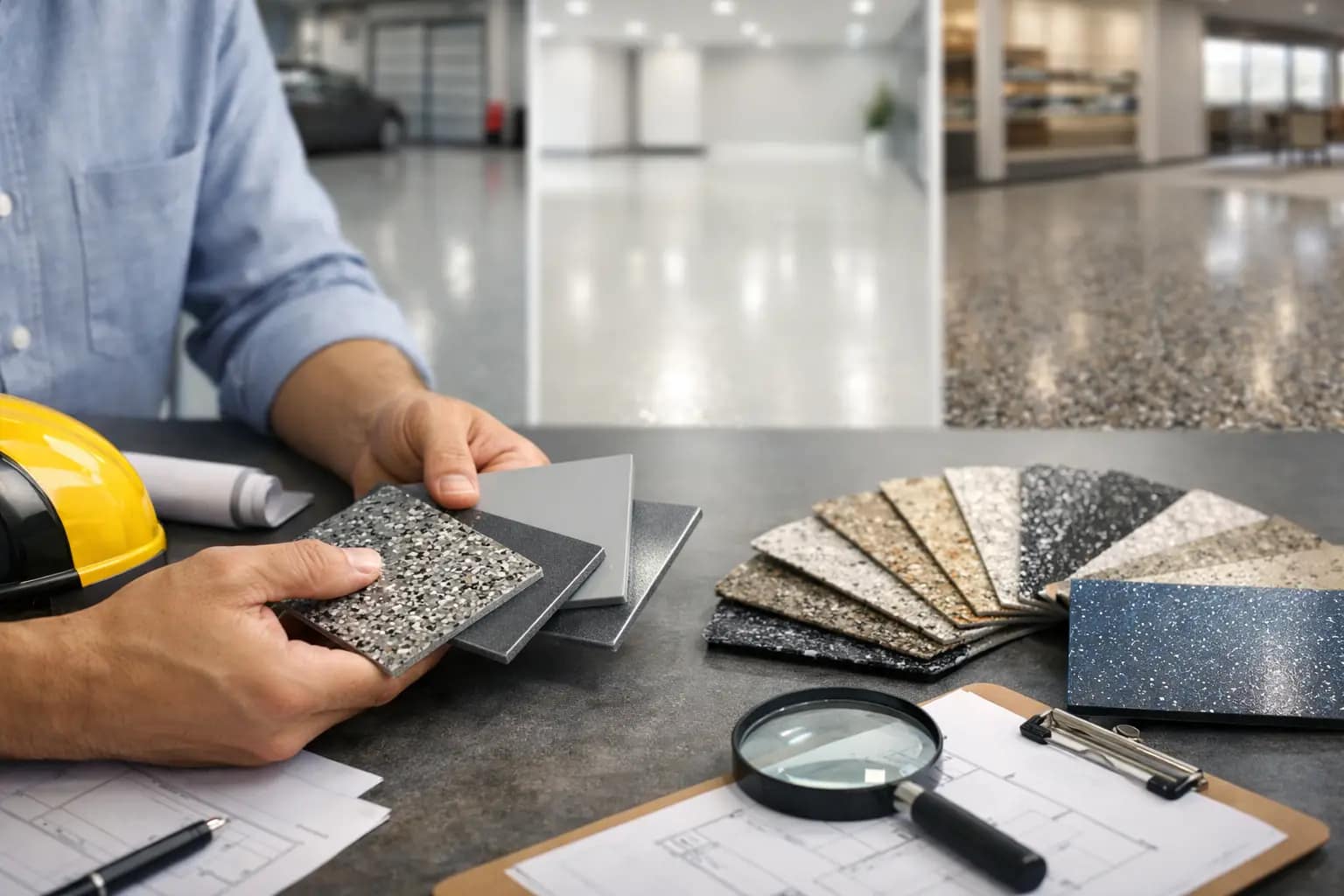
Epoxy coating systems give you more control. You can broadcast anti-slip media into the coating and lock it in with a topcoat, dialing in the texture for the space – from light orange-peel for a garage to a more aggressive profile for commercial wet zones.
For businesses, that safety control matters. For homeowners, it’s peace of mind when kids run through in wet shoes or when you’re washing the car.
Hot-tire pickup and turning wear in garages
If you’re coating a garage in Sydney or across NSW, hot-tire pickup is one of the fastest ways to find out whether you installed a paint-like product or a true epoxy system.
As tires heat up during driving, they can soften certain lower-grade films. When you park, the tire can bond slightly to the coating. When you pull out, it can lift the finish – often in neat strips that look like peeling tape.
A well-built epoxy coating system, installed over properly ground concrete and finished with an appropriate topcoat, is far more resistant to that failure mode. It’s not only about the product – it’s about prep, cure time, and matching the system to the garage’s real use.
Chemical resistance and cleaning: what your mop will reveal
Warehouses, workshops, and even busy home garages see more chemical exposure than most people expect: brake fluid, degreasers, detergents, pool chemicals, fertilizers, and battery acid residues.
Epoxy paint may discolor or soften under repeated exposure, especially if it’s a lighter-duty formula. That makes cleaning harder because dirt embeds into micro-abrasions and dull patches.
Epoxy coatings are chosen specifically for chemical and abrasion resistance. The surface stays tighter, so grime releases more easily. For many owners, that’s the biggest day-to-day benefit: sweeping and mopping feel more effective, and the floor doesn’t look “dirty” right after you clean it.
Cost and value: what you’re really paying for
Epoxy paint is cheaper upfront because the material cost is lower and the application is simpler.
Epoxy coating systems cost more because they require real surface prep, more material on the floor, and more steps to get the performance you’re paying for.
The better comparison is cost per year of service. A cheaper job that needs redoing sooner is rarely a bargain – especially for commercial spaces where downtime, moving stock, and safety risks are part of the equation. Even for homeowners, stripping a failed coating is messy and usually costs more than doing it right the first time.
If you want predictable outcomes, ask any contractor to break out the scope clearly: how the slab will be prepped, what repairs are included, what system is being installed, and what slip resistance will be provided.
How to choose the right option for your space
If the floor is mostly decorative and lightly used, epoxy paint can make sense as a short-term refresh.
If the floor is part of daily operations – vehicles, trolleys, foot traffic, wet cleaning, or any kind of production or storage – choose a true epoxy coating system and treat preparation as non-negotiable.
When you’re comparing quotes, don’t get stuck on the word “epoxy.” Ask what type of product it is (one-part vs two-part), what thickness and coats are planned, and how the concrete will be mechanically prepared. Those answers tell you far more than the sheen level or color chart.
If you want a clear recommendation for your slab and how it’s actually used, Floor Masters can quote the right prep-and-coat system end to end at https://Floormasters.com.au.
A good epoxy floor isn’t something you “hope” holds up. It’s something you build on purpose – with the right prep, the right system, and the right amount of grip for the way people move through the space.