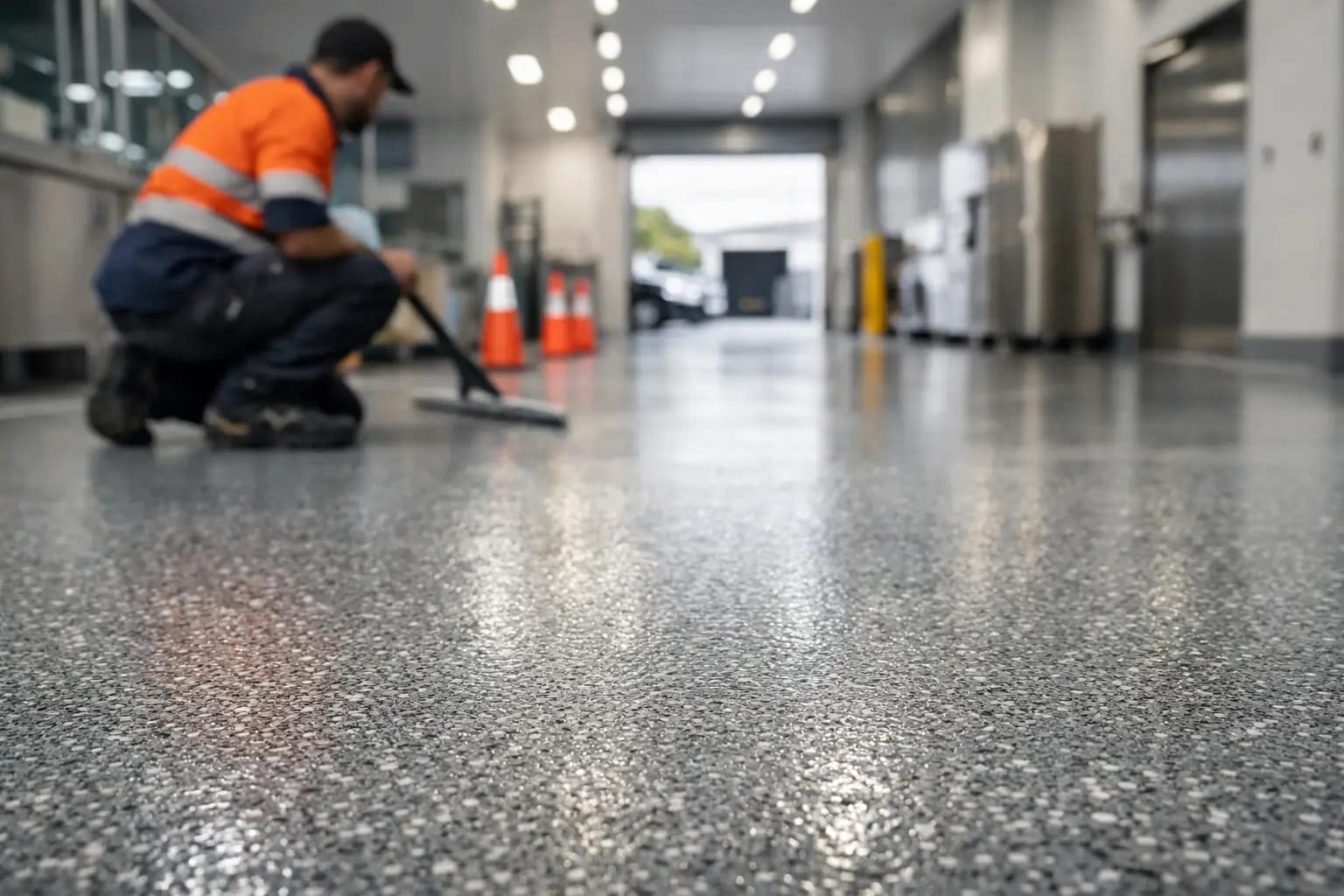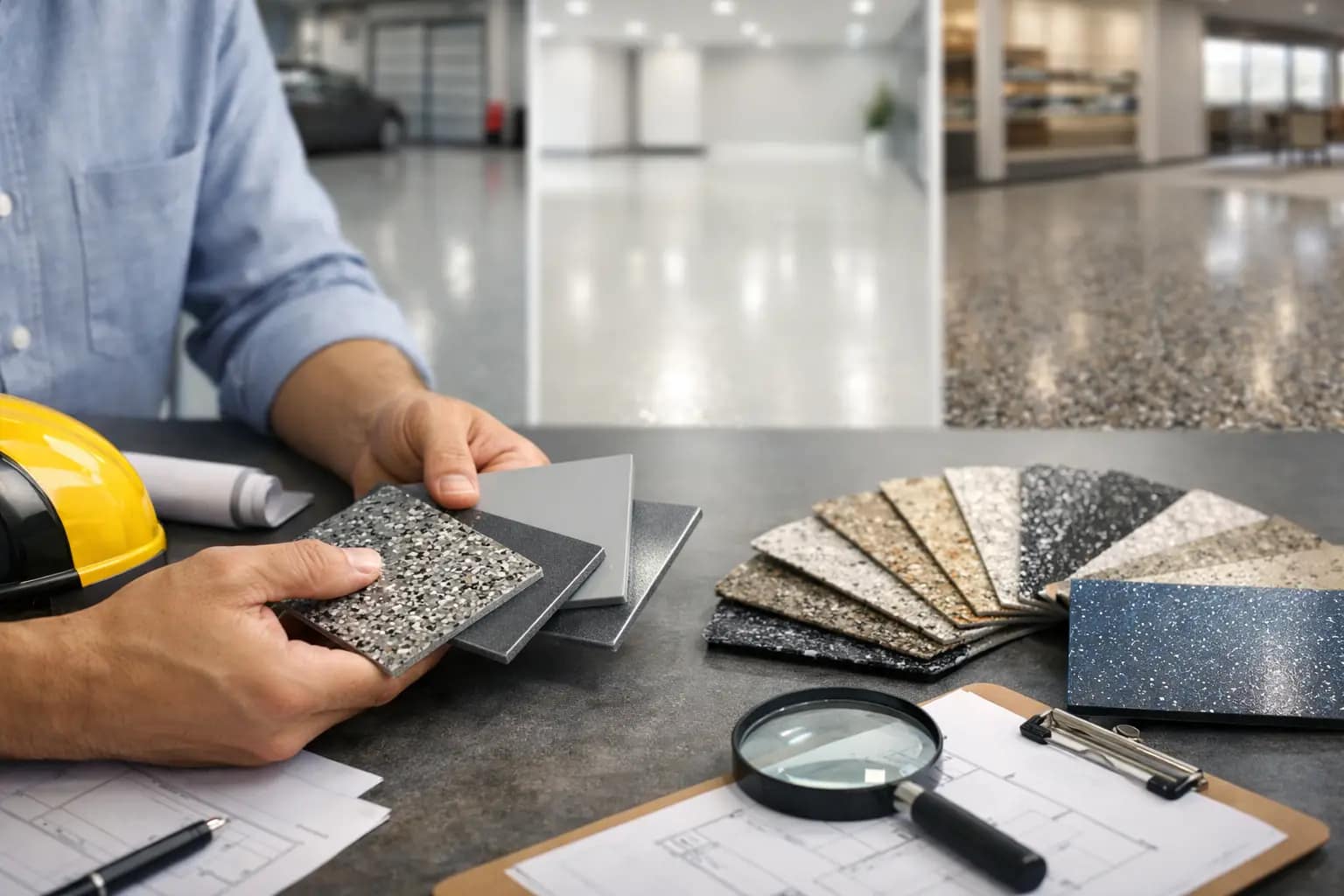

A garage floor that looks great on day one can turn into a tire-marked, slippery headache in six months. The difference usually is not the brand of paint in a box. It’s the finish system – and whether it was specified for your traffic, moisture, and cleaning routine.
If you’re weighing the best epoxy floor finish options, start with a simple truth: epoxy is a system, not a single coat. The “finish” is the top layer you live with, but its performance depends on what’s underneath – concrete preparation, primers, build coats, and the right topcoat. Below are the finish options we recommend most often, with the trade-offs that actually matter on site.
What “finish options” really means with epoxy
When people say “epoxy finish,” they might mean the color, the texture, or the final sheen. On a job site, we’re talking about a few distinct levers.
One is the broadcast media (flake, quartz, or none) that affects slip resistance, visual hiding of dirt, and how easy it is to clean. Another is the topcoat chemistry (epoxy vs polyurethane vs polyaspartic) that affects scratch resistance, UV stability, and chemical tolerance. The third is texture – whether you want a smooth showroom look or a safety-first grip.
You can absolutely get a beautiful floor that’s also safe and hard-wearing. You just have to choose based on how the space is used, not what looks best in a sample photo.
1) Solid-color epoxy with a clear topcoat
This is the clean, modern, “new slab” look: a pigmented epoxy base, then a clear protective topcoat.
It’s a strong option for mechanical rooms, storage areas, utility spaces, and garages that are more parking than workshop. It’s also a good fit if you want a specific color match or simple lines for a tidy property.
The trade-off is that solid colors show what the floor is doing. Tire marks, fine scratches, and dust are more visible than they are in a flake system. If you’re the type who wants it to look freshly detailed all the time, plan on more frequent cleaning or consider a finish that hides wear better.
2) Full-flake epoxy (decorative vinyl flake)
If we’re talking popularity for garages, home workshops, and many retail back-of-house areas, full flake is up there for a reason. You broadcast decorative flakes into the coating, then lock it in with a clear coat.
Flake finishes do a great job of hiding dirt, minor imperfections, and day-to-day scuffs. They also give you a more forgiving surface visually, which matters in real life when concrete has saw cuts, patches, or older repairs.
The trade-off is texture. A flake floor can be finished fairly smooth, but it’s rarely as glassy as a solid-color system. That’s not a bad thing – that slight texture can improve footing – but if you want an ultra-sleek mop-and-go surface for food handling or a space with tight cleaning protocols, you’ll want to talk about topcoat build and final profile.
3) Quartz broadcast epoxy for high-grip performance
Quartz systems use colored sand aggregate broadcast into the coating. The look is more “commercial” than flake, but the performance is the headline.
Quartz is a top choice for wet zones, entries that see rain, commercial kitchens, wash-down areas, and anywhere slip risk is a serious concern. It can be built into a more aggressive non-slip profile while still keeping the floor cleanable, which is the balance most facilities need.
The trade-off is comfort and cleaning effort. More grip can mean a slightly harsher feel underfoot and more attention during cleaning, especially if you choose a heavy texture. Done right, it’s still practical – but it should be specified around your cleaning method (mop, auto-scrubber, degreaser use) so you don’t end up with a surface that’s safer but frustrating to maintain.
4) Non-slip topcoat additives (clear grit options)
Sometimes you want the simplicity of a solid color or flake floor, but you need extra slip resistance. That’s where a non-slip additive in the topcoat makes sense.
This approach is common for ramps, garage steps, breezeways, commercial entries, and any area that goes from dry to wet without warning. It can also be used selectively – for example, adding more grip near a roller door or sink zone while keeping the rest of the floor easier to clean.
The trade-off is that more grit can trap dirt and can slightly dull the “wet look” gloss. That’s a fair exchange in safety-critical areas. The key is choosing the right grit size and loading for the space – too fine and you don’t get real benefit, too aggressive and you’ll notice it every time you sweep.
5) Polyurethane (PU) topcoat over epoxy base
If your floor will see regular cleaning chemicals, scuffing, or abrasion, a polyurethane topcoat over an epoxy base is a dependable upgrade.
PU topcoats are widely used in commercial fit-outs and industrial environments because they hold up well to scratching and can keep their appearance longer under foot traffic and carts. They also tend to be more UV-stable than straight epoxy, which matters if you have natural light coming in through doors or windows.
The trade-off is that PU is less forgiving to apply than a basic epoxy clear. You want consistent film build and the right cure conditions to get the performance you’re paying for. This is where workmanship and surface prep show up fast – if the base isn’t properly prepped or the timing between coats is off, the best topcoat in the world won’t bond the way it should.
6) Polyaspartic topcoat for fast return-to-service
Polyaspartic topcoats are often chosen when downtime is expensive. They cure faster than traditional epoxies and many urethanes, which can help get garages, shops, and working areas back into service sooner.
They’re also valued for UV resistance and gloss retention, especially in brighter spaces. If you have a roller door that stays open, or a showroom feel you want to maintain, this can be a smart finish path.
The trade-off is that fast cure times reduce your margin for error. You need tight site control, experienced installers, and a plan for temperature and humidity. On some floors, especially older slabs with moisture history, you also want to confirm the right primer and moisture-mitigation approach so speed doesn’t come at the cost of adhesion.
7) High-build epoxy for heavy-duty impact and wear
High-build epoxy systems focus on thickness and toughness. They’re common in warehouses, light industrial spaces, plant rooms, and areas with pallet jacks, trolleys, and repeated point loads.
A thicker system can better handle abrasion and can provide a more substantial “wear layer” before you start seeing the effects of traffic. If the space is function-first and needs to take a beating, this is one of the best epoxy floor finish options to ask about.
The trade-off is that high-build does not automatically mean non-slip or chemical-proof. You still need to specify texture and topcoat chemistry. Also, thicker coatings are less tolerant of weak concrete or poor prep. If the slab has laitance, old adhesives, or soft patches, grinding and repairs are not optional – they’re the foundation of the entire system.
How to choose the right finish without overbuying
Most clients don’t need the most expensive system. They need the right system. A good specification starts with a few practical questions.
First, what actually touches the floor? Hot tires, forklift traffic, oil drips, boiling water, degreasers, steel wheels, dragging toolboxes – each one points to a different balance of hardness, flexibility, and chemical resistance.
Second, how wet does it get, and where? If the answer is “occasionally,” you may only need targeted non-slip zones. If the answer is “daily wash-down,” quartz or a more aggressive grip profile becomes a safety decision, not a cosmetic one.
Third, what is your tolerance for visible wear? A solid-color floor can look sharp, but it will show scuffs sooner. Flake and quartz hide more while still looking professional.
Finally, what is the slab condition? Cracks, pitting, and old coatings are normal in real properties. The finish you choose should be paired with the right prep plan – grinding to open the pores, dust-controlled processes to keep the site clean, and skim-coat repairs where needed so you’re not “highlighting” defects under a glossy topcoat.
The part most people miss: preparation decides the lifespan
Finishes get the attention, but surface prep decides whether the coating stays bonded.
Concrete needs to be mechanically profiled so the epoxy can bite in. If contaminants are ground into the slab or the surface is left too smooth, you risk peeling, hot-tire pickup, and delamination – even if the coating itself is premium. Cracks and spalls should be repaired properly so they don’t telegraph through the finish, and moisture needs to be assessed because vapor pressure can push coatings off over time.
This is also where safety and cleanliness matter. Dust-controlled grinding is not just nicer for the customer – it’s part of professional site control, especially in occupied homes or active commercial spaces.
If you want a contractor to specify the finish based on how you actually use the space, Floor Masters can quote a complete system – from concrete grinding and repairs through to the final topcoat – with non-slip options where they make sense. You can reach the team at https://Floormasters.com.au.
A good epoxy floor should feel boring after the install – it just works, cleans easily, and keeps looking sharp while life happens on top of it.