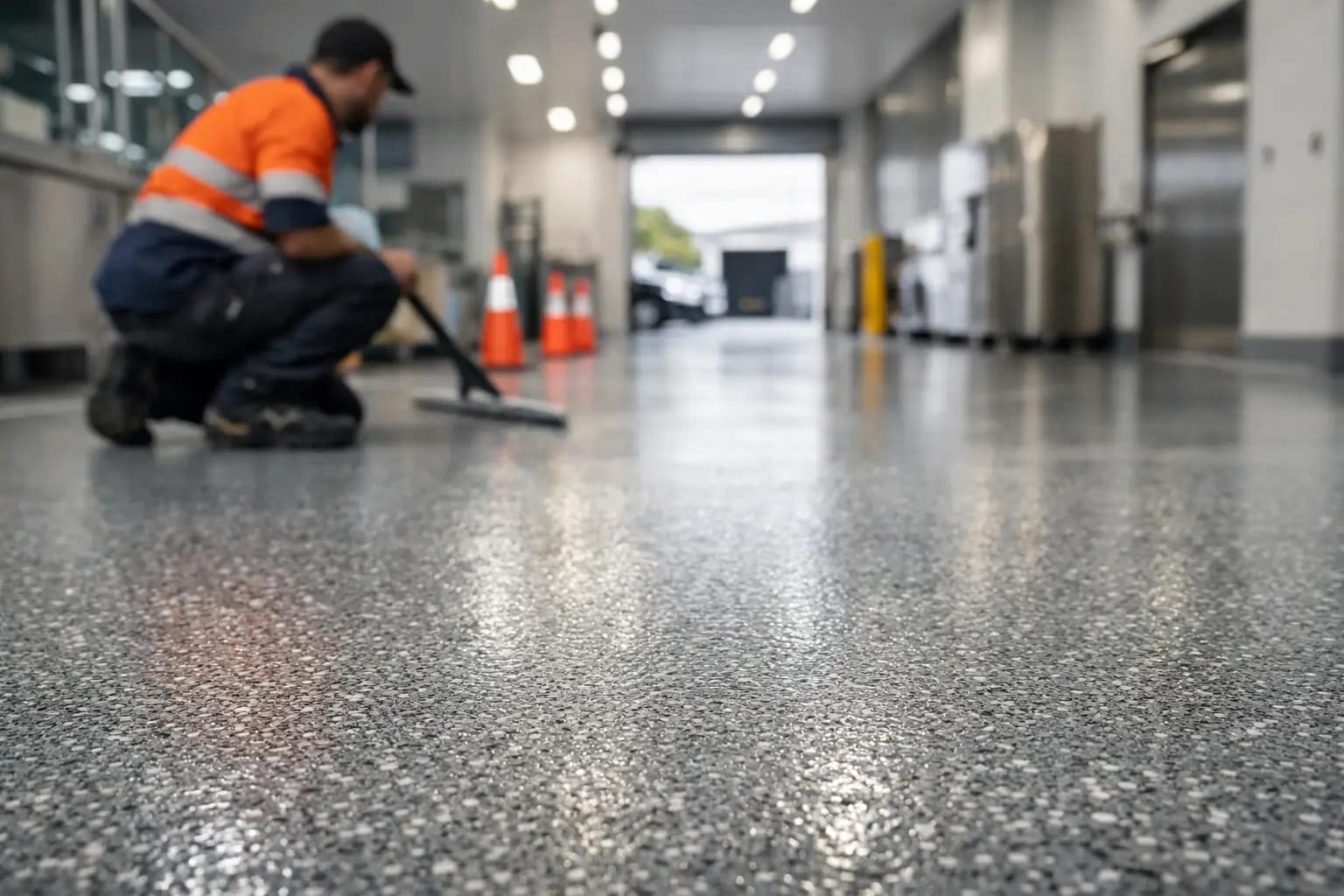

A forklift drips hydraulic fluid near the roller door. A detergent spill sits a little too long in the wash bay. A homeowner tips paint thinner in the garage and hopes the concrete won’t darken forever. These are the moments that separate plain concrete (or a budget coating) from a floor system that’s built for chemicals.
A chemical resistant epoxy floor coating is designed to do two jobs at once: protect the slab from aggressive liquids and give you a surface that stays clean, safe, and predictable under traffic. But “chemical resistant” isn’t one-size-fits-all. The right system depends on what’s hitting the floor, how often, and whether the concrete underneath is prepared properly.
What “chemical resistant” really means
Chemical resistance is not a marketing badge. It’s a performance characteristic based on exposure. Most epoxy coatings resist a long list of common substances, but the results change with concentration, temperature, dwell time (how long the spill sits), and whether the epoxy is fully cured.
In practical terms, chemical resistance is about preventing three common failures. The first is staining – where the spill discolors the coating even if it doesn’t eat through it. The second is softening – where the film becomes gummy or loses hardness, which then leads to tire marks, scratches, and rapid wear. The third is delamination – where the coating loses bond to the slab and starts peeling, often triggered by a combination of moisture, poor prep, and chemical attack at weak points.
If your space handles oils, fuels, cleaners, food acids, pool chemicals, or industrial fluids, you want more than a “garage epoxy.” You want a specified system with the right thickness, topcoat, and slip resistance for the conditions.
Where chemical-resistant epoxy earns its keep
Chemical exposure looks different in a home than it does in a facility. In residential garages, the usual culprits are petrol drips, brake fluid, degreasers, and battery acid. In commercial and light industrial settings, it can be harsher and more frequent: forklift battery charging areas, wash-down zones, workshop bays, plant rooms, and warehouses where pallets leak unknown liquids.
Commercial kitchens and food prep areas add another layer. Cleaning chemicals are used daily, and hot water plus detergents can be tougher on coatings than people expect. If the floor is constantly wet, you also have to think about slip risk and moisture movement through the slab.
The big win of a correctly installed epoxy system is control. Spills stay on the surface, so they can be cleaned up before they soak in. The floor stays brighter, easier to inspect, and less likely to become a safety issue.
Not all epoxy systems resist chemicals the same way
Most people picture epoxy as one product, rolled on like paint. In real installs, chemical resistance comes from the full system build-up – primer, body coats, and topcoat – plus the film thickness and cure.
Water-based vs solvent-based vs 100% solids epoxy
Water-based epoxies are often chosen for low odor and easier handling, but they’re typically thinner and less tolerant of harsh exposure. They can be fine for light-duty areas, but they’re not usually the first choice when chemical resistance is the priority.
Solvent-based epoxies penetrate well and can perform strongly, but they bring higher odor and stricter ventilation needs. They’re also more sensitive to application conditions.
100% solids epoxy is commonly used for high-performance floors because it builds thickness quickly and cures into a dense film with strong chemical and abrasion resistance. That thickness matters because it buys you time against spills and wear.
The topcoat matters more than most people think
Many chemical resistance complaints trace back to the topcoat decision. Some spaces need a polyurethane or polyaspartic topcoat for better UV stability, easier cleaning, and improved stain resistance. Other spaces benefit from a dedicated chemical-resistant urethane topcoat chosen around the site’s actual exposures.
If the area sees hot tire pickup, frequent scrubbing, or harsh cleaners, a tougher topcoat can be the difference between “still looks new” and “looks tired after six months.”
Quartz and flake aren’t just for looks
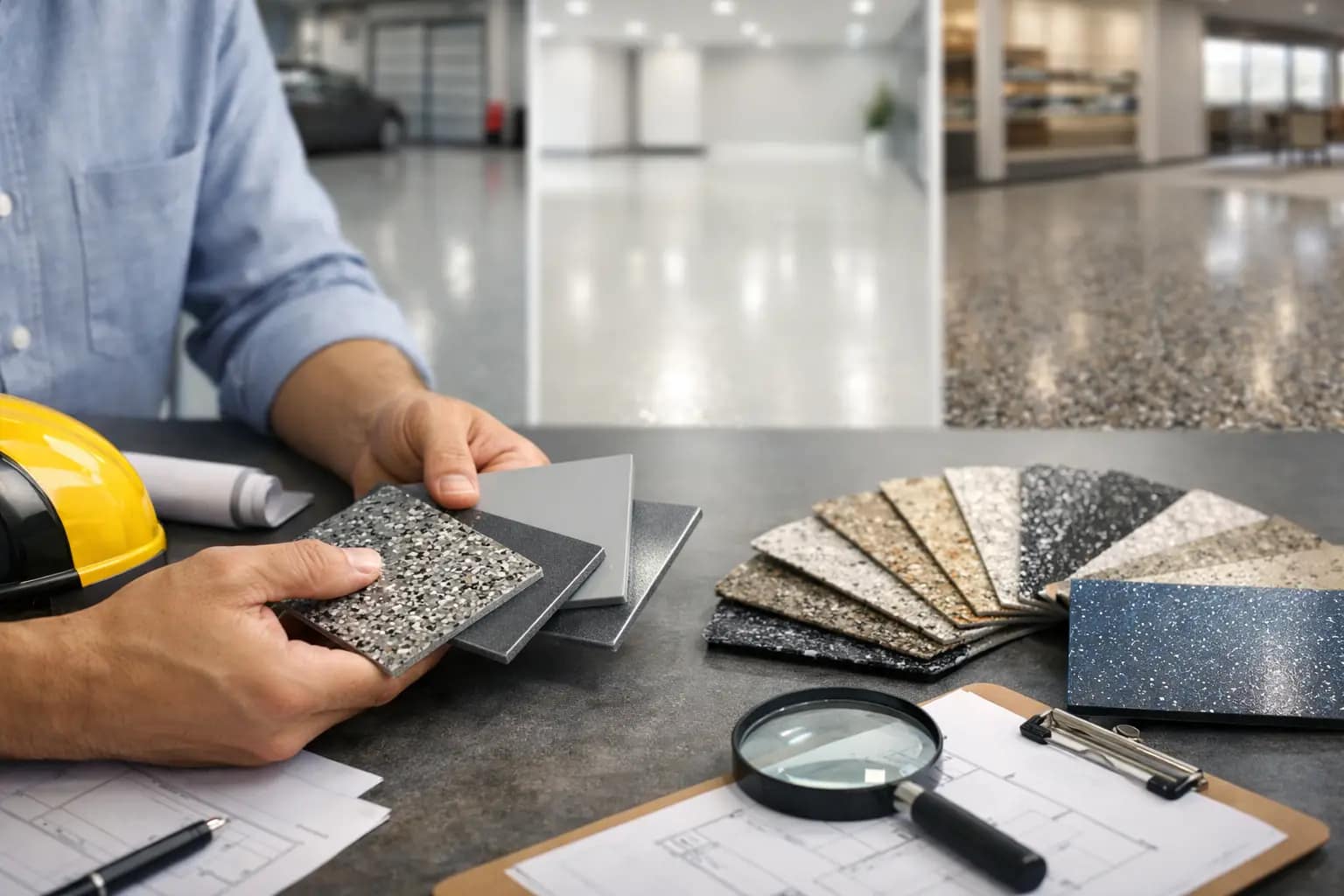
Decorative flake finishes and quartz systems can improve traction and hide day-to-day marks. In chemical-exposure zones, they also change how easy it is to clean. A smoother finish wipes down faster. A more textured, non-slip finish is safer when wet, but it can hold grime if cleaning practices aren’t matched to the texture. That trade-off is worth discussing up front.
The real make-or-break factor: surface preparation
Chemical resistance doesn’t help if the coating isn’t bonded. And epoxy doesn’t “stick to concrete” the way people assume – it bonds mechanically into a properly profiled surface.
That’s why professional installs start with concrete grinding using the right equipment and dust control. Grinding removes contaminants (like oils or curing compounds), opens the pores, and creates the profile the epoxy needs to lock in. If the slab has weak top cream, old sealers, or paint, those have to go. If there are cracks, pitting, or spalled areas, they should be repaired before coating so chemicals can’t migrate into those weak spots and start lifting the system.
Moisture is the other major factor. In parts of Sydney and across NSW, slabs can hold moisture, especially in older garages, ground-level commercial spaces, or areas with limited vapor barriers. If moisture vapor pressure is high, you may need a moisture-tolerant primer or a moisture mitigation step. Skipping that can lead to blistering or peeling regardless of how “chemical resistant” the product label sounds.
What chemicals are we talking about?
Most quality epoxy systems perform well against common automotive fluids, oils, and many household cleaners when spills are cleaned in a reasonable timeframe. Where you need extra caution is with strong acids, high-concentration solvents, and frequent exposure at elevated temperatures.
Even with a high-performance system, it’s smart to set expectations. Some chemicals can etch gloss, dull the finish, or stain if they’re left to sit. Battery acid, for example, is a different challenge than engine oil. The goal is to specify a system that matches your risk and then set practical site rules: clean spills quickly, rinse strong chemicals, and avoid using “mystery degreasers” without testing.
If you manage a facility, the best starting point is a simple list: what is stored, what is used for cleaning, and what gets spilled. That information drives the coating selection far more than the room’s name.
Thickness, cure time, and traffic planning
Chemical resistance improves when epoxy is applied at the right thickness and allowed to cure properly. Rushing a floor back into service is one of the fastest ways to mark it, imprint it, or reduce its early-life performance.
For homes, that might mean planning the garage so vehicles stay off the coating until it reaches the required cure. For commercial sites, it often means staging: coating one section at a time, scheduling around deliveries, or using fast-curing topcoats where the operational window is tight.
There’s a trade-off here. Faster return-to-service coatings can be a great solution, but they still need correct prep and correct install conditions. The job is not just “put it down fast.” It’s “put it down right so it lasts.”
Safety options: chemical resistance plus slip control
Chemical exposure and slip risk usually travel together. If your floor can get wet from wash-down, spills, or condensation, slip resistance should be designed into the system, not added as an afterthought.
A non-slip additive in the topcoat can improve safety while keeping the surface cleanable. The key is selecting the right level of texture. Too smooth can be risky. Too aggressive can be hard on knees, harder to mop, and may trap grime. The right balance depends on footwear, traffic, and cleaning routines.
What a well-chosen system looks like in the real world
A high-performing chemical resistant epoxy floor coating is the one you don’t have to think about. It resists staining, holds gloss longer, and doesn’t start shedding under pallet jacks. It makes leaks visible, supports routine cleaning, and reduces the chance that a spill turns into a permanent floor repair.
That said, epoxy isn’t the answer for every scenario. If you have constant high-heat exposure, extreme chemical immersion, or very heavy thermal shock, you may need a different resin system or a specialized build. That’s where a site-specific recommendation matters.
For most garages, workshops, warehouses, and back-of-house areas, epoxy remains the workhorse because it delivers a strong blend of chemical resistance, abrasion resistance, and value – provided the substrate is prepared correctly and the system is matched to the environment.
Getting it specified and installed correctly
If you’re deciding on a floor for a garage, warehouse, shop, or commercial workspace in Sydney or across NSW, the smartest move is to treat the coating like a system, not a can. Ask what prep will be done, how moisture is handled, what topcoat is included, and what slip rating you’re targeting. Those answers tell you whether the floor is being built for real-life exposure or just for a quick visual upgrade.
At Floor Masters, we approach chemical-resistant epoxy floors as a full package – dust-controlled grinding, repairs where needed, premium materials, and finish options that prioritize safety and long-term performance. If you want a clear recommendation and transparent pricing, you can request a fast quote at https://Floormasters.com.au.
A good epoxy floor doesn’t make your space perfect. It makes it predictable – so the next spill is a cleanup, not a renovation.