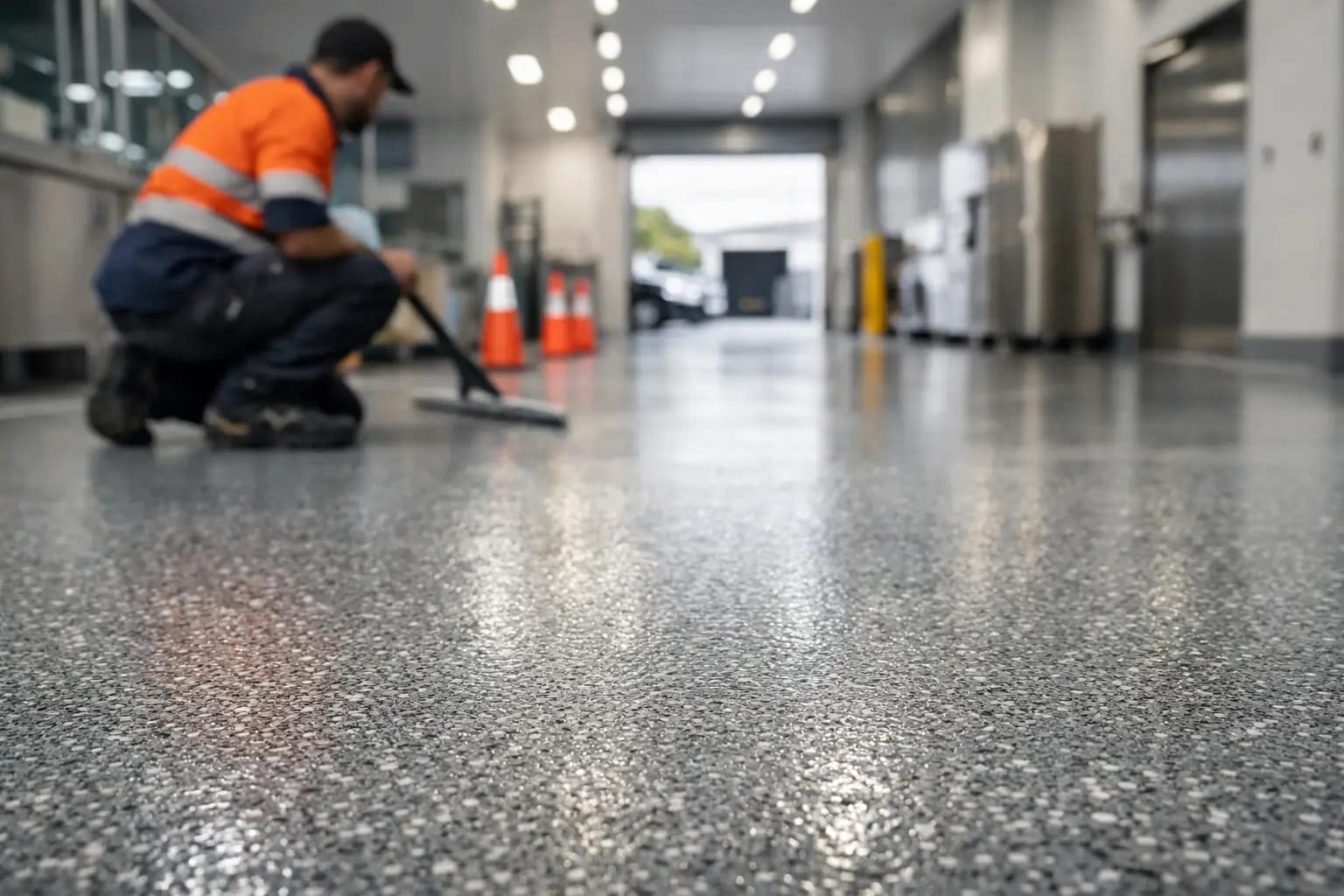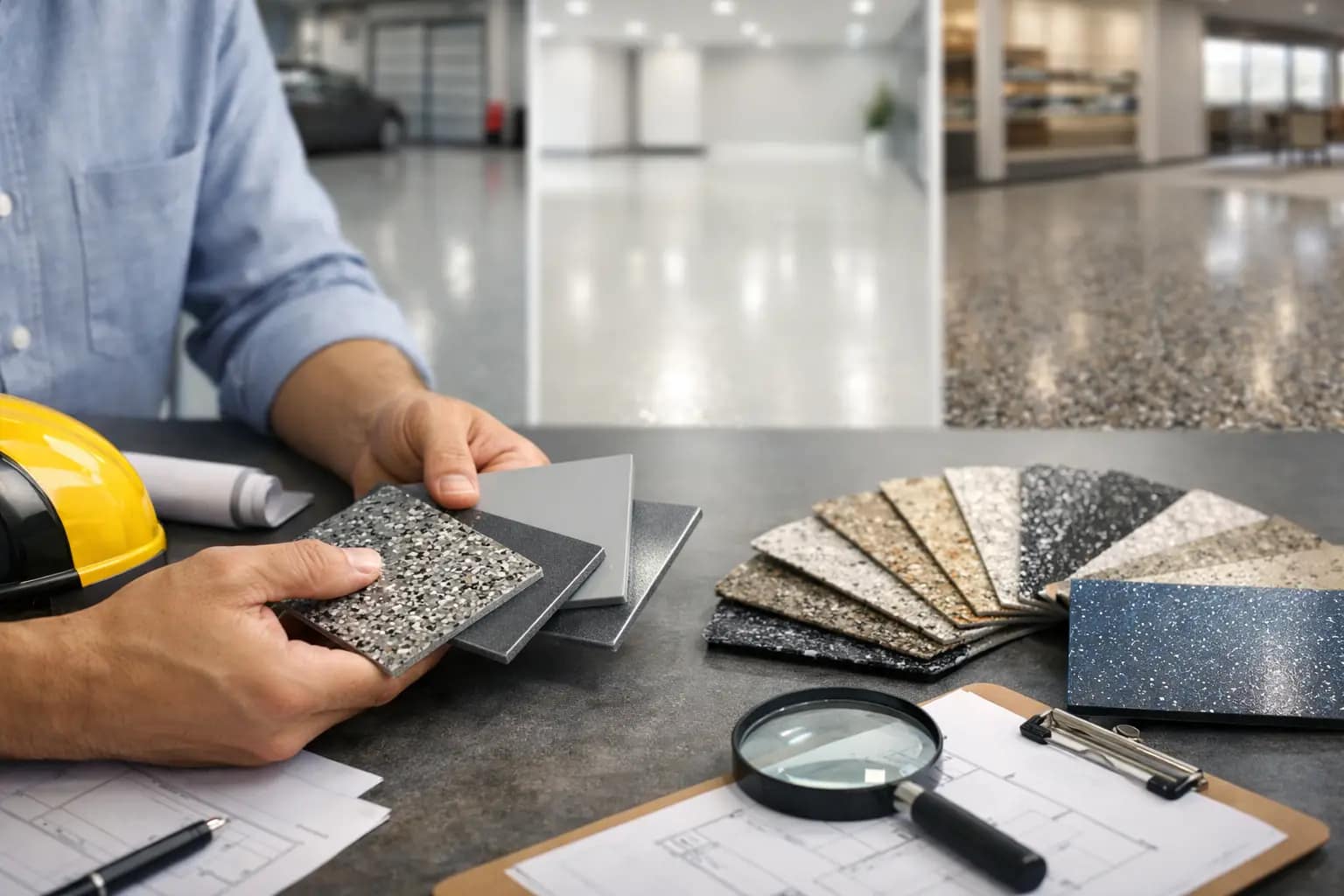

You can usually tell within the first month if an epoxy floor was installed properly. The surface stays tight and glossy (or evenly matte), it cleans easily, and you don’t see early scuffs telegraphing through. When it’s done poorly, the signs show up fast – hot-tire pickup in garages, peeling near doorways, dark patches from moisture, or a slippery finish that never feels safe when wet.
Epoxy flooring is one of the best-performing finishes you can put over concrete, but it’s not magic paint. The performance comes from the system you choose and, even more, the surface preparation underneath it. If you’re weighing epoxy for a garage, kitchen, warehouse, shop, or a high-traffic area, here’s how to think about it like a buyer who wants predictable outcomes.
What epoxy flooring is (and what it isn’t)
Epoxy flooring is a resin-based coating system that chemically cures into a hard, bonded surface. Installed over properly prepared concrete, it creates a dense finish that resists wear, stains, and frequent cleaning. It can be built in layers – primer, base coats, decorative broadcast (like flakes), and a protective topcoat – depending on the environment.
What it isn’t: a one-coat DIY “epoxy” from a big-box shelf that you roll on like wall paint and hope for the best. Many retail products are water-based and thin, and some aren’t true epoxy at all. They can look fine on day one and still fail early because they don’t have the build, bond strength, or chemical resistance a real floor system needs.
Where epoxy flooring makes the most sense
If the goal is a floor that stays clean-looking under real use, epoxy is hard to beat. In residential settings, garages are the classic choice because epoxy handles tire traffic, oil drips, and constant sweeping without turning into a dusting problem. It also works well in workshops and storage areas where you want better light reflectivity and an easy mop-up surface.
In commercial spaces, epoxy is often chosen because it holds up under foot traffic, trolleys, pallets, and routine cleaning. Kitchens, back-of-house areas, retail storerooms, and light industrial facilities benefit from a finish that can be specified for slip resistance and chemical exposure.
The “it depends” part is the substrate and the environment. If your slab has moisture issues, existing coatings, or structural movement, the epoxy system has to be selected and installed with that reality in mind. That’s not a reason to avoid epoxy – it’s a reason to avoid shortcuts.
The performance benefits buyers actually care about
Most owners don’t care about resin chemistry. They care about whether the floor will still look good after daily use and whether it reduces maintenance headaches.
A properly installed epoxy flooring system is built to take abrasion without constantly showing wear paths. It also seals porous concrete, which makes routine cleaning dramatically easier – dust, grime, and spills stay on the surface instead of soaking in.
Safety is another practical driver. A high-gloss floor can look impressive, but in many settings (especially when water is present), you want traction. Non-slip textures can be added in a controlled way so the floor grips without becoming impossible to mop.
And when aesthetics matter, epoxy gives you options that plain concrete doesn’t. Decorative flake finishes hide everyday dirt and small marks, while solid-color systems can be matched to a clean, professional look.
Why epoxy floors fail: the real reasons
When epoxy fails, it’s usually blamed on the product. Most of the time, it’s the concrete underneath or the preparation that didn’t match the site conditions.
The most common cause is inadequate surface preparation. Concrete needs to be mechanically profiled – typically by grinding – so the coating can bond. Acid etching is not a substitute for proper mechanical prep when you’re aiming for long-term performance.
Moisture is another major factor. Concrete can transmit moisture vapor, and if that vapor pressure builds under an impermeable coating, it can cause blistering, bubbling, or delamination. This is especially relevant in older slabs, areas with poor drainage, or where the slab was never properly moisture-managed.
Contamination also matters. Oil, silicone, curing compounds, and old sealers can prevent adhesion. If those are present, the solution is not “apply a thicker coat.” The solution is correct grinding, targeted cleaning, and repairs before any coating goes down.
Concrete grinding and repairs: the part you shouldn’t skip
Think of epoxy as the finish coat, not the foundation. The foundation is the surface profile and the integrity of the concrete.
Concrete grinding does two things: it removes weak surface laitance and opens the concrete so primers can penetrate and lock in. It also levels high spots and helps the finished floor look consistent. For many sites, dust-controlled grinding is a big deal – it keeps the work area cleaner, protects adjacent spaces, and reduces disruption, especially in commercial properties.
Then there are repairs. Cracks, spalls, and pitted areas need to be addressed before coating. A skim-coat repair layer is often the difference between a floor that looks “fine from far away” and one that looks professionally finished up close.
If you’re comparing quotes, pay attention to how the prep is described. “Clean and etch” is not the same as mechanical grinding with repairs, and the lifespan you get will reflect that.
Choosing the right epoxy flooring system for the space
A garage floor and a warehouse floor don’t need the same system. The right choice depends on traffic, exposure, and how you want the floor to feel underfoot.
For garages, hot-tire resistance and stain resistance matter, and a flake broadcast with a durable topcoat is a common approach because it hides dust and looks good for years. For kitchens and wet areas, traction and cleanability are key, so you’re often balancing non-slip with a texture that still mops efficiently.
In warehouses and light industrial spaces, build thickness and abrasion resistance are usually the priorities. If forklifts and pallets are part of daily operations, the system needs to be designed for impact and wear, not just appearance.
There’s also UV exposure to consider. If the area gets consistent sunlight, certain topcoats will hold color and gloss better than others. That doesn’t mean epoxy can’t work – it means the top layer should be specified for the job.
Glossy vs matte, smooth vs textured: a practical trade-off
A high-gloss epoxy floor reflects light and can make a space feel brighter and cleaner. The trade-off is that gloss highlights surface imperfections more and can be slippery if the finish is smooth and the floor gets wet.
Texturing improves grip and safety, but the more aggressive the texture, the more effort it can take to scrub. The goal is a controlled non-slip finish that suits how the area is used. For a commercial back-of-house, you may accept a bit more texture for safety. For a residential garage, a moderate texture often hits the sweet spot.
This is where experienced installers earn their keep – not by overselling, but by matching the finish to real-world use so you’re not frustrated after the first week of cleaning.
What the installation process should look like
A quality epoxy flooring project is straightforward when it’s run properly. The site is assessed, the slab is tested and inspected, and the prep plan is set based on what’s actually there – not what someone hopes is there.
Grinding comes first, followed by repairs and detail work around edges and joints. After that, the coating system is installed in layers with proper curing windows. Rushing recoat times can compromise bonding between layers, and rushing return-to-service can mark or dull the finish before it’s fully cured.
You should also expect clear communication about access and downtime. Residential garages often need a couple of days before vehicle traffic, while commercial environments may require staging to keep parts of the site operational.
How to compare epoxy flooring quotes without getting burned
Most price gaps come from prep standards, system thickness, and topcoat quality. If two quotes look wildly different, don’t assume one contractor is simply “more expensive.” Ask what’s included.
At a minimum, you want to understand what mechanical prep is being performed, whether repairs and skim-coat work are included, what coating system is being installed (not just “epoxy”), and what slip resistance options are available. You also want realistic cure times in writing so you can plan access.
If you’re in Sydney or across NSW and want a floor that’s built for performance, Floor Masters focuses on end-to-end delivery – dust-controlled grinding, concrete repairs where needed, and premium epoxy floor systems with non-slip options where safety matters. You can request a fast quote at https://Floormasters.com.au.
A closing thought before you commit
Treat epoxy flooring like a long-wearing system, not a cosmetic upgrade. When the prep is done right and the finish is matched to how the space is actually used, you don’t spend your weekends patching peel marks or fighting stains – you just get a floor that stays clean, safe, and dependable year after year.