
If your garage floor in Sydney is always dusty, stained, or shedding grit onto your driveway, the issue usually is not “old concrete.” It’s exposed, porous concrete doing what it does best – absorbing moisture, oils, and grime, then slowly breaking down under tires, salt air, and everyday use. Epoxy flooring fixes that, but only when the system is specified correctly and the concrete is prepared properly.
This is the ultimate guide to garage epoxy flooring in Sydney for homeowners, landlords, and operators who want a floor that looks clean, stays easy to maintain, and holds up under real traffic.
Why epoxy makes sense for Sydney garages
Sydney’s weather swings matter. Warm days, cool nights, and humidity can drive moisture vapor through concrete. Coastal areas add salt and moisture, while western suburbs can see hotter slab temps that stress coatings. A quality epoxy system gives you a dense, protective layer that resists hot-tire pickup, oil stains, and abrasion. It also makes the garage brighter and easier to sweep or hose out.
The trade-off is that epoxy is not “paint.” If the slab has moisture issues, contamination, or weak surface paste, epoxy will show it quickly through bubbling, peeling, or patchy gloss. The coating is only as reliable as the substrate beneath it.
The two things that decide whether epoxy lasts
Most garage epoxy failures come down to two avoidable issues: moisture and surface preparation.
Moisture is the silent one. Concrete can look bone-dry and still be pushing vapor. If that pressure builds under a non-breathable coating, it can cause blistering or delamination. That’s why a contractor should assess the slab and, when needed, use moisture-tolerant primers or vapor barrier systems.
Surface prep is the deal-breaker. Smooth, sealed, or contaminated concrete will not bond properly. The correct approach is mechanical grinding to open the surface and create a consistent profile for adhesion, plus repairs where the slab is cracked, spalled, or uneven.
Understanding garage epoxy systems (and where each fits)
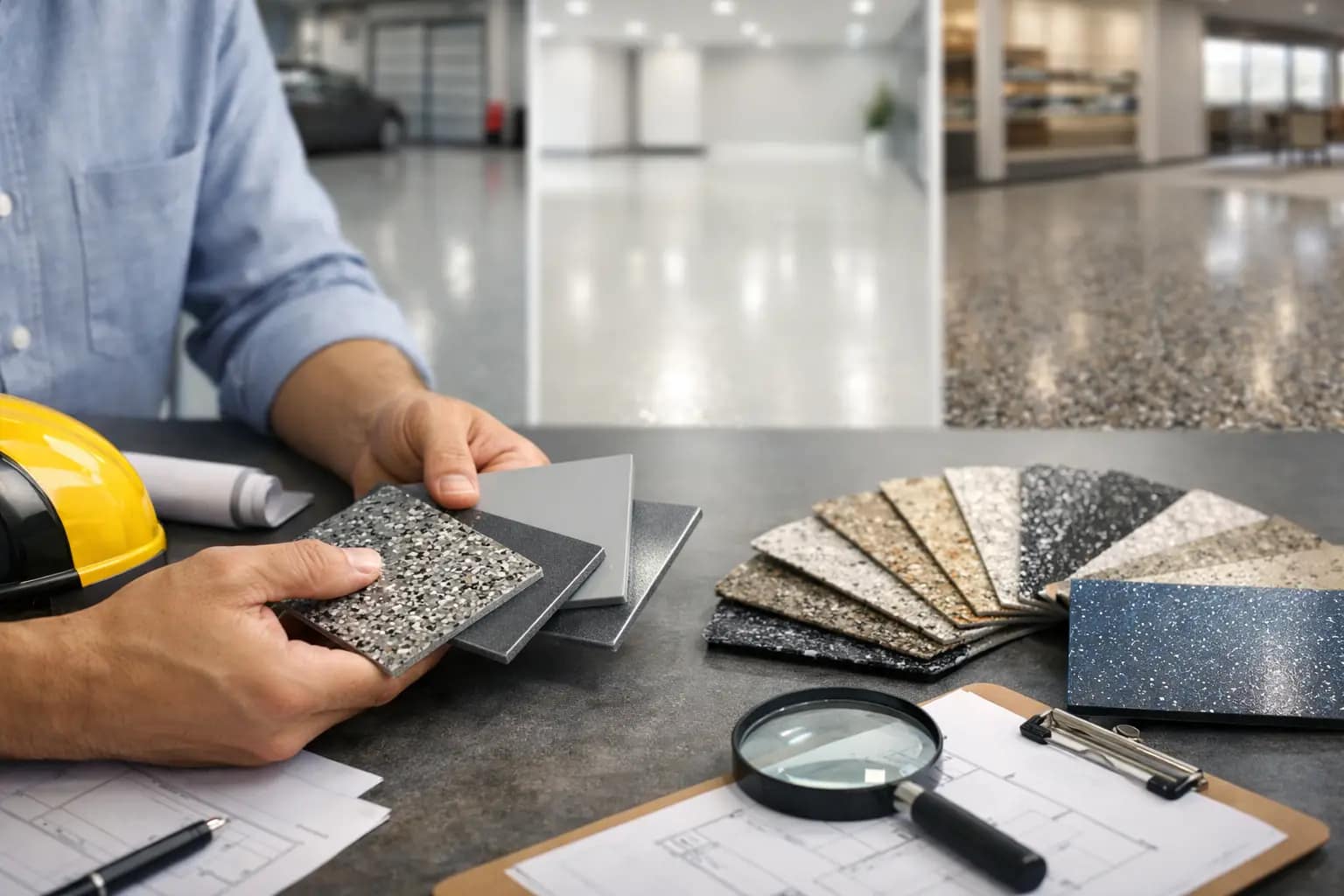
Not all “epoxy floors” are the same. In Sydney garages, the right system depends on how the space is used, how much traction you need, and the condition of the concrete.
Solid-color epoxy (clean and functional)
A solid-color epoxy system gives a tidy, uniform finish that’s easy to mop and holds up well to daily parking. It’s a popular choice for homeowners who want a clean look without visual noise.
This option is often the most cost-effective, but it can show scratches more easily than a flake system and may need a topcoat chosen specifically for abrasion and tire resistance.
Flake epoxy (the everyday favorite)
Decorative flake systems hide dust, minor imperfections, and tire marks better than solid colors. They also allow a more forgiving look over time, which is why many garages, workshops, and strata properties prefer them.
Flake also helps with slip resistance when paired with the right clear topcoat and additive. The key is balance – too aggressive on texture and the floor becomes harder to mop; too smooth and it may be slippery when wet.
Quartz and non-slip broadcast systems (safety-forward)
If you’re moving tools, storing equipment, or dealing with wet conditions, a broadcast system can deliver higher traction. This is common in commercial areas, shared driveways, or garages that double as utility rooms.
The trade-off is cleanup. Higher grip finishes can trap more dirt, so you want a surface that’s safe without being overly rough.
Polyaspartic and urethane topcoats (where performance lands)
Epoxy is excellent for build and bond, but topcoats often carry the UV and scratch resistance. If your garage gets direct sun or the door stays open all day, a UV-stable topcoat reduces yellowing and keeps the finish looking consistent.
A contractor may recommend epoxy as the base with a tougher, clearer topcoat depending on use and exposure.
The real process: what a proper install looks like
A professional garage epoxy job is not a quick roll-on. Expect a process that’s built around adhesion, flatness, and safety.
Concrete grinding (not acid washing)
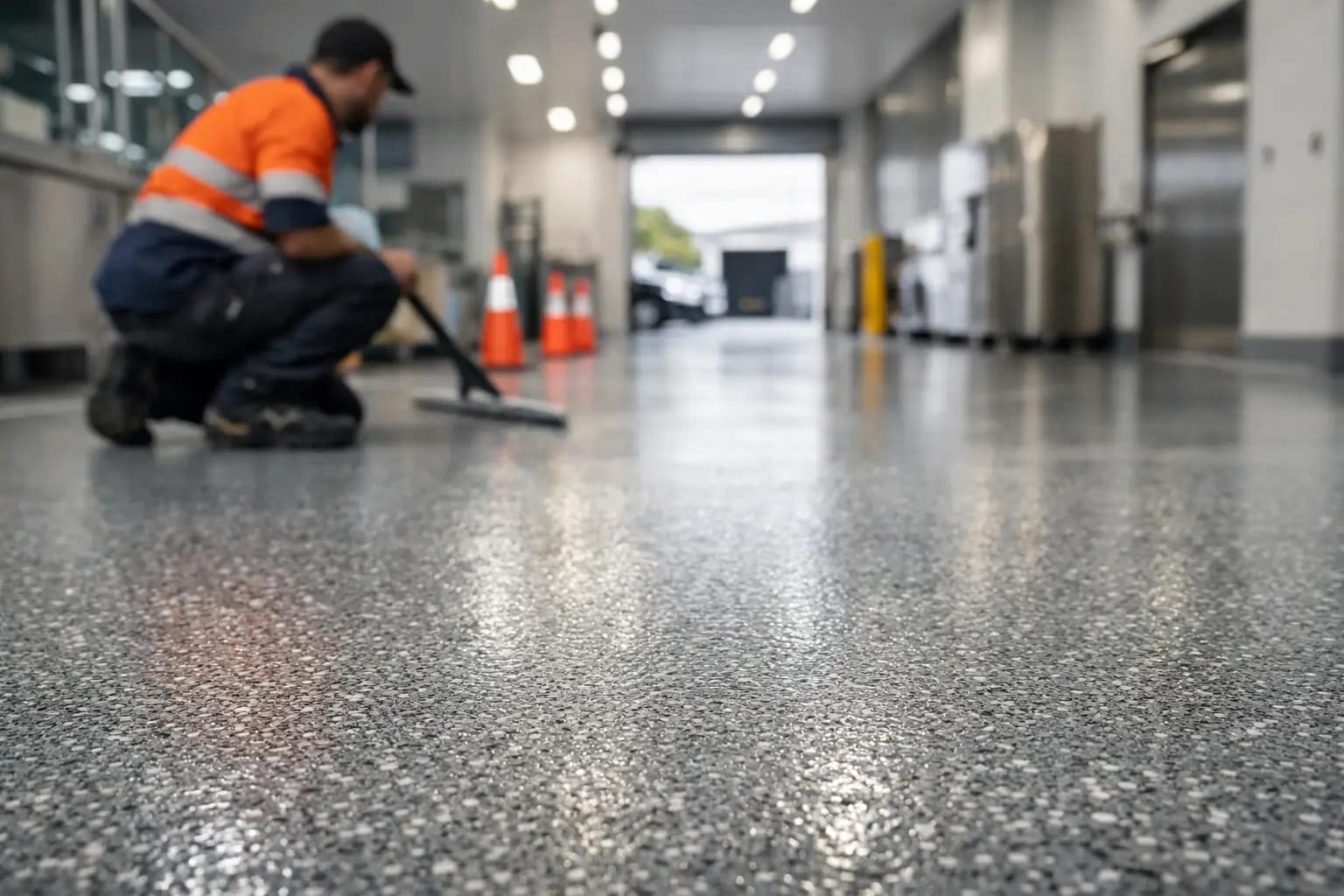
Grinding mechanically removes weak surface paste and contaminants and gives the coating something to bite into. Dust-controlled equipment matters here – it keeps the site cleaner and improves working conditions during prep.
If a contractor suggests acid etching alone, ask why. Etching can be inconsistent, especially on hard, steel-troweled slabs, and it won’t correct surface defects.
Repairs and skim coats where needed
Cracks, divots, and spalling should be repaired before coating. Some floors also benefit from skim coating to even out rough patches or transitions.
This is also where honesty matters. Not every crack can be made “invisible” forever – slabs move. A good installer aims for a stable, clean repair and sets expectations if movement is likely to telegraph later.
Moisture assessment and priming
Moisture testing and slab assessment help decide whether you need a moisture-tolerant primer or vapor barrier. In some Sydney garages, especially on older slabs or areas with poor drainage, this step is what prevents future blistering.
Base coat, broadcast (optional), and topcoat
After prep and priming, the base coat goes down. Flake or quartz is broadcast into the wet coat if that’s the chosen system, then scraped and vacuumed after cure before the clear topcoat seals everything.
The topcoat is where you lock in gloss level, chemical resistance, and traction. A slightly lower sheen can hide scuffs better; higher gloss looks sharp but can highlight surface marks.
How long does garage epoxy take to install?
Most residential garages can be completed in a tight window, but cure time matters more than speed. Depending on the system, you may be able to walk on it within a day and park within a few days.
Temperature and humidity affect cure. Sydney’s weather can shift quickly, so planning around rain and dew point helps avoid surface issues like blushing or improper cure. If you need the garage back fast, ask about fast-curing systems – but don’t sacrifice prep to meet a deadline.
What affects price in Sydney (and what to ask in a quote)
Garage epoxy pricing is not just about square footage. Two garages that look the same can require very different prep.
The biggest cost drivers are slab condition, how much grinding is required, moisture mitigation, crack and spall repairs, and the system type (solid, flake, quartz, and the specific topcoat). Edge work, steps, and stem walls can also add time.
When comparing quotes, clarity beats a low number. Ask what prep method is included, whether repairs are included or provisional, what coating system is being installed (including primer and topcoat), and what slip resistance options are available. If you have moisture concerns, ask how they’re addressing it – not whether they think it’s “fine.”
Slip resistance, gloss, and cleaning: choosing a finish you’ll actually live with
A garage floor should be easy to keep clean, but also safe when wet. If you regularly wash cars inside, store wet gear, or walk in with rain on your shoes, traction matters.
Non-slip additives can be blended into the topcoat, and broadcast systems can increase texture. The “right” amount depends on your tolerance for texture and how you clean. If you use a squeegee or mop, moderate texture is usually the sweet spot. If you need maximum grip, accept that you may spend a bit more time on cleanup.
For cleaning, most epoxy floors do well with a soft broom and occasional mop using a pH-neutral cleaner. Avoid harsh degreasers unless they’re compatible with the topcoat. The win here is that spills stay on the surface instead of soaking in.
Common garage epoxy problems (and how to avoid them)
Peeling at the edges often points to poor prep or contamination. Bubbling or blisters can indicate moisture vapor pressure or solvent issues during install. Yellowing typically comes from UV exposure when a UV-stable topcoat wasn’t used. Hot-tire pickup can happen when low-grade coatings are applied too thin or without the right chemistry.
If you want a floor that stays put, the safest approach is simple: insist on mechanical prep, a system suited to your slab conditions, and a topcoat designed for tires, abrasion, and sun exposure.
When epoxy might not be the best answer
Epoxy is a strong solution, but it depends. If your slab is actively heaving, constantly wet due to drainage failures, or contaminated with deep oil saturation, you may need corrective work before any coating makes sense. In some cases, improving drainage, repairing the slab, or using a specialized moisture barrier system is the difference between a floor that lasts and a floor that fails.
If you want an expert set of eyes on your garage and a clear scope that covers prep, repairs, and the right coating system, Floor Masters can quote the job end-to-end across Sydney and NSW. Details are at https://Floormasters.com.au.
A garage floor should make your life easier, not give you something else to worry about – choose the system that matches how you use the space, and prioritize prep so the finish earns its keep.