A bare concrete garage floor has a way of telling on you. One oil drip turns into a dark stain you can’t scrub out. Wet footprints make the surface slick. Concrete dust ends up on shelves, tools, and the car tires. And the more you use the space as a gym, workshop, or storage room, the more the floor looks like it’s losing the fight.
That’s the real reason this conversation keeps coming up across Sydney – garages aren’t just for parking anymore. Homeowners want a floor that looks clean, stays safer underfoot, and doesn’t need constant patch jobs. For a lot of properties, epoxy flake is becoming the go-to answer.
Best garage floor coating: why Sydney homeowners are switching to epoxy flake
When people search for the best garage floor coating, they’re usually trying to avoid two outcomes: a coating that peels, or a coating that turns into a slippery, stained mess after a year or two. Epoxy flake systems are winning favor because they address both performance and practicality.
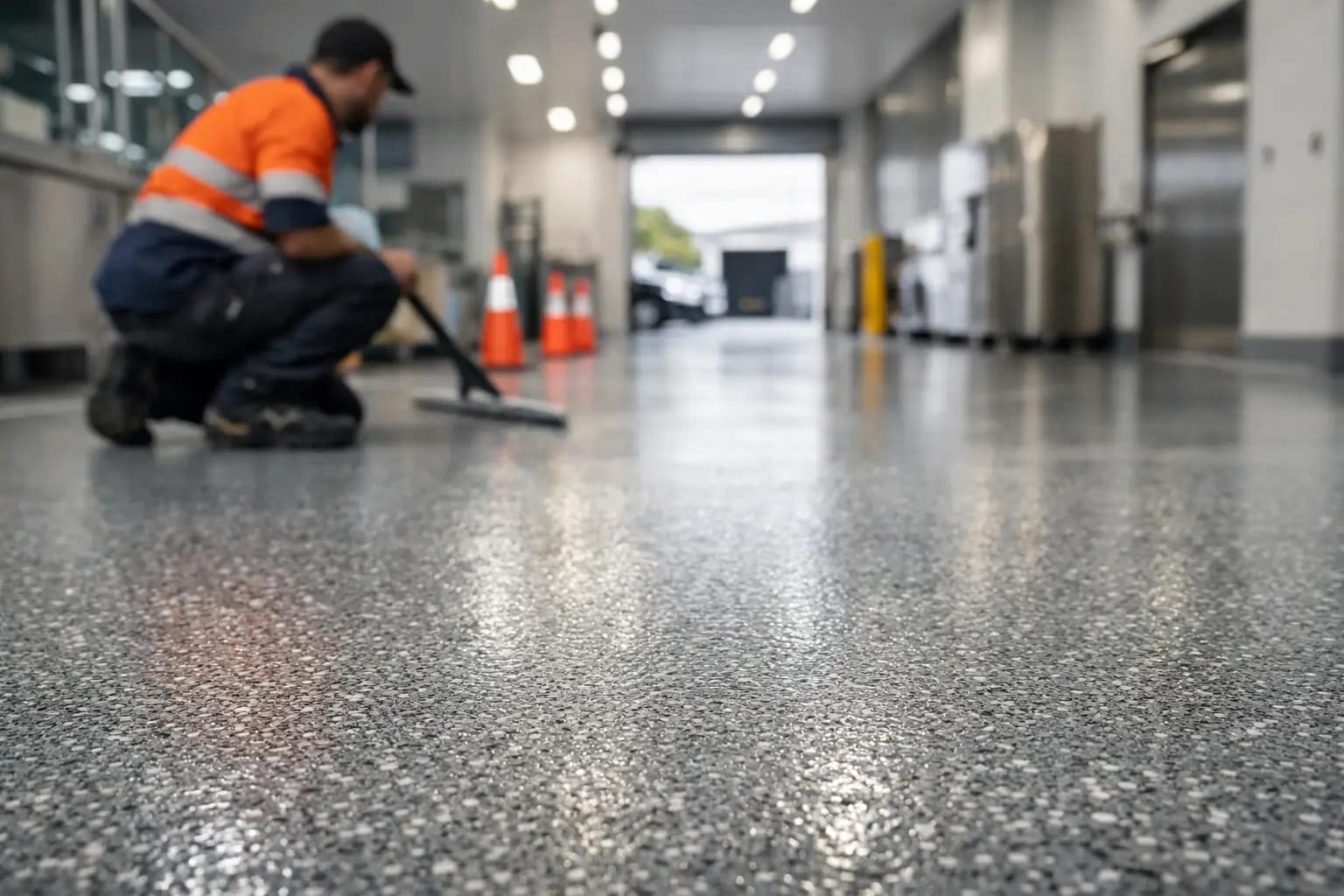
At a high level, an epoxy flake floor is a multi-layer system. The base coat bonds to properly prepared concrete, decorative vinyl flakes are broadcast into the wet coating, then the surface is sealed with a clear topcoat. The flakes aren’t just for looks – they add texture, help hide minor marks, and create a more forgiving, more uniform finish than plain painted concrete.
In Sydney conditions, that matters. Many garages deal with humid days, storm-driven water at the threshold, and temperature swings that expose weak coatings fast. A correctly installed epoxy flake system is designed to hold up in those real-world conditions, not just look good on day one.
What homeowners actually notice after the install
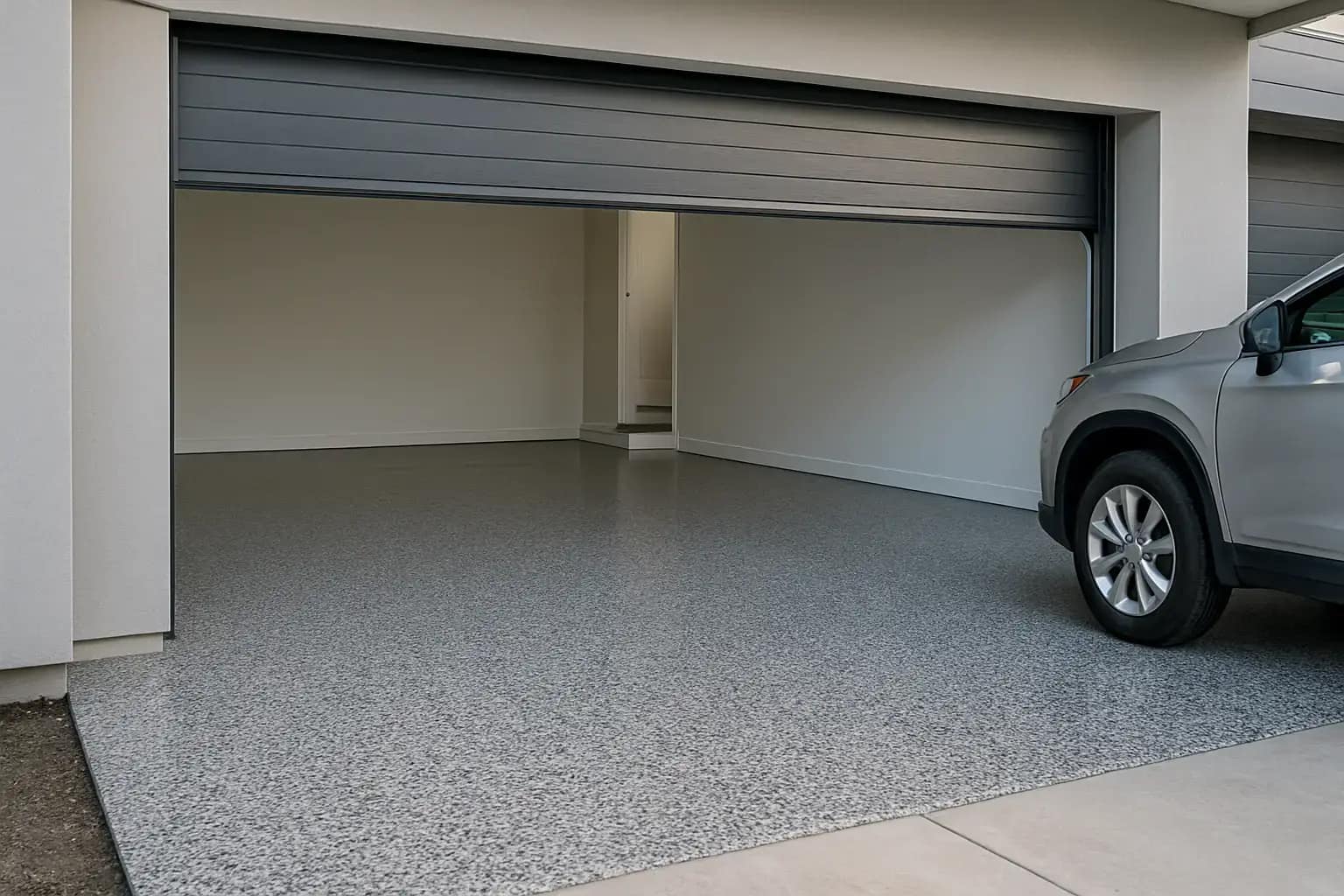
The most immediate change is visual. Epoxy flake takes a dull, blotchy slab and turns it into a consistent, professional-looking surface. Because the flakes create a patterned finish, everyday dust and small scuffs don’t stand out the way they do on a single-color coating.
The second change is cleaning. Bare concrete is porous, so it absorbs oils and grime and releases concrete dust. With an epoxy flake system, the floor becomes far less absorbent, so you’re not chasing stains into the slab. For most garages, routine cleaning becomes a simple sweep and occasional mop, instead of repeated degreasing and scrubbing.
The third change is confidence underfoot. Many homeowners want a surface that feels more stable when it’s wet, especially near the entry door, laundry access, or the garage threshold where rainwater gets tracked in. Epoxy flake can be built with non-slip options, which is a smart upgrade if kids are running through, you’re carrying groceries, or the space doubles as a home gym.
The big reason coatings fail: surface prep
A garage floor coating is only as good as what it’s bonded to. The most common complaints we hear about “epoxy not lasting” usually trace back to prep that didn’t go far enough.
Concrete needs mechanical preparation – not just an acid wash – to open the surface, remove contaminants, and create the right profile for adhesion. If old paint, curing compounds, sealers, or ground-in oils are left behind, the coating can delaminate. If the slab has soft or weak concrete at the surface, the coating may stay attached to the epoxy layer but release from the concrete itself.
Cracks and pitting matter too. If they’re not repaired correctly, they can telegraph through the finished surface or become entry points for moisture movement. A proper install includes grinding, detailed edge work, and targeted repairs so the coating system is bonding to sound concrete across the whole floor.
This is also where dust control becomes more than a “nice to have.” Dust-controlled grinding keeps the job cleaner, protects adjacent areas, and helps the coating go down onto a properly prepared surface rather than settling dust.
Why epoxy flake suits Sydney garages specifically
Sydney homes cover a wide mix of slab ages and conditions – from newer builds with relatively smooth, dense concrete to older garages with oil contamination and patched repairs. Epoxy flake is flexible in the sense that it can be paired with the right prep and repair approach, then finished to a consistent look.
It also performs well for common garage use cases:
If you park cars inside, it stands up to hot tires and day-to-day abrasion better than paint-style coatings.
If you use the garage as a workshop, the sealed surface is less likely to hold onto dust and grime, and the flake pattern helps disguise minor scuffs.
If the garage is a pass-through to the home, the cleanability and non-slip options make the space feel less like a “utility zone” and more like a finished part of the property.
And for landlords, a coated garage floor is a practical durability upgrade that keeps the space presenting well between tenants.
How epoxy flake compares to other common options
There are plenty of “garage floor” products on the market, but most homeowners are comparing three categories: paint kits, plain epoxy, and epoxy flake.
Paint kits are appealing because they’re cheap and fast, but they’re typically thin-film coatings. That means lower abrasion resistance and a higher chance of wear-through on traffic lines. They can look fine initially and then deteriorate quickly in real use.
Plain epoxy (a single-color system) can be a solid option, especially in commercial settings, but it tends to show dust, swirls, and marks more easily. If you want a clean, consistent look that stays forgiving, flake usually wins.
Epoxy flake costs more than a basic coating because it’s a multi-layer system and it’s more labor-intensive. The payoff is a floor that looks better longer, hides minor wear, and can be finished with a grippier topcoat for safer footing.
There are trade-offs. If you want an ultra-smooth surface for rolling very small wheels or moving heavy equipment on hard casters, a high-build smooth epoxy may roll a bit easier. If your top priority is the most aggressive chemical resistance in a demanding industrial environment, the right specification might be different again. For most residential garages, though, epoxy flake hits the best balance of appearance, durability, and everyday usability.
Choosing the right topcoat: gloss, feel, and grip
Homeowners often focus on color and flake blend, but the topcoat choice is where performance and safety are tuned.
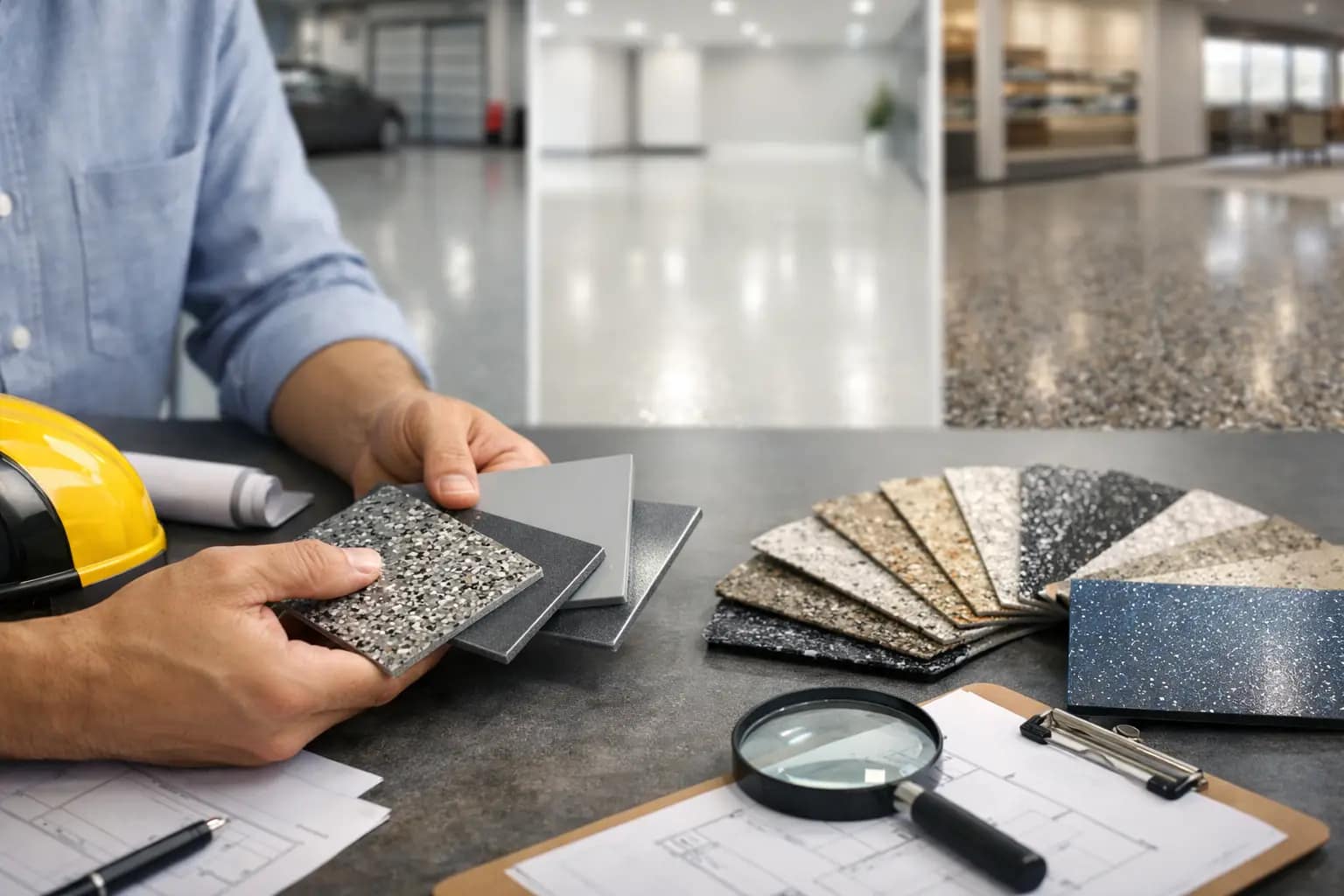
A high-gloss finish looks sharp and brightens the garage, but it can show reflections and may feel slicker if it’s not formulated and installed with traction in mind. A satin or matte finish can reduce glare and often feels more forgiving, especially in a garage that gets wet near the opening.
Non-slip additives can be incorporated to improve traction. The key is choosing the right level. Too little and you don’t gain much safety. Too much and it can feel rougher under bare feet or make mopping harder. A contractor who installs these systems regularly will specify a finish that matches how you actually use the garage.
Moisture and concrete condition: when “it depends” matters
Not every slab is ready for a coating the moment you decide you want one. Some garages have moisture vapor coming up through the concrete, especially if drainage around the property isn’t ideal or the slab lacks an effective moisture barrier. Moisture issues don’t always show up as visible water – they can show up as blistering or loss of adhesion over time.
That doesn’t mean you can’t coat the floor. It means the system has to be selected and installed with the substrate in mind. In some cases, additional prep steps, moisture-tolerant primers, or alternative coating approaches are needed. If a contractor promises a one-size-fits-all system without checking slab condition, that’s a risk.
The same goes for heavily contaminated concrete. If the slab has decades of oil saturation, there are situations where removal and deep grinding are necessary to get to sound concrete. Skipping that step may lower the upfront price, but it raises the odds of failure.
What the installation process should look like
A professional epoxy flake install is not a “roll it on and hope” job. The timeline and steps vary with slab condition and weather, but the process should include mechanical grinding, repairs as needed, then the coating system built in layers with the right cure times.
You should also expect clear communication about access and downtime. A good contractor will tell you when you can walk on the floor, when you can move light items back in, and when it’s safe to park a vehicle. Rushing cure time is a common cause of early damage, especially from hot tires.
If you want a straightforward quote and a system built for performance, this is the type of work Floor Masters installs across Sydney and NSW – full surface prep, premium materials, and non-slip options where safety matters. You can start with a fast quote at https://Floormasters.com.au.
Is epoxy flake the “best” garage floor coating for your home?
For most Sydney homeowners who want a durable, clean-looking garage floor without constant maintenance, epoxy flake is hard to beat. It’s especially well-suited if you want the space to feel finished, you care about slip resistance, or you’re tired of concrete dust and permanent stains.
But the honest answer is that “best” depends on how you use the space and what your slab is doing. If the garage is a light-use storage area and budget is the primary driver, a simpler system may be enough. If you’re running heavier equipment, doing automotive work daily, or you have known moisture issues, you’ll want a contractor to specify the system rather than defaulting to a standard package.
The good news is this: when epoxy flake is installed over properly prepared concrete and finished with the right topcoat, it stops your garage floor from being the weakest surface in the house. It becomes the easiest one to live with – and that’s the upgrade most homeowners are really chasing.