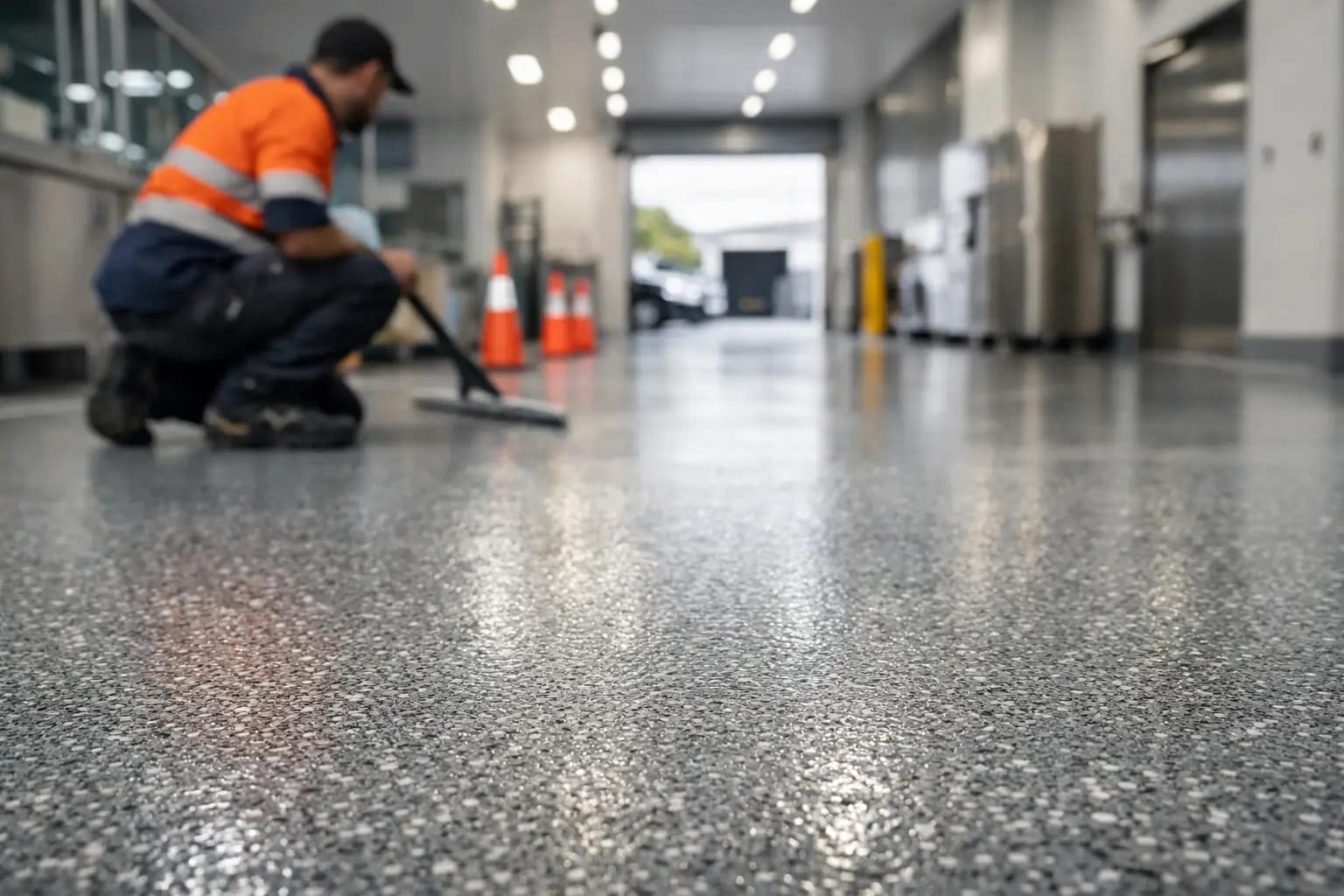

A good epoxy garage floor should not be hard to live with. If yours already looks dusty an hour after sweeping, or it is starting to show tire marks, oil spots, and dull traffic lanes, the issue is usually not the coating. It is the cleaning method.
Knowing how to clean epoxy garage floor surfaces properly makes a real difference to how long the finish stays sharp, safe, and easy to maintain. Epoxy is built for performance, but like any hard-wearing floor, it holds up best when dirt, grit, and spills are dealt with before they start wearing on the surface.
Why cleaning method matters on epoxy
Epoxy is tougher than bare concrete, but it is not indestructible. Fine dust, sand, and workshop debris can act like sandpaper under foot traffic and vehicle tires. Over time, that can dull the gloss and leave the floor looking older than it is.
The other issue is safety. In garages, it is common to deal with water, oil, brake fluid, and muddy tires. Even on a non-slip finish, buildup can reduce traction and make the floor harder to clean later. A simple maintenance routine protects both appearance and slip resistance.
If the floor was installed with proper preparation and quality materials, regular cleaning should be straightforward. The goal is not aggressive scrubbing every weekend. It is consistent, low-impact maintenance that keeps grime from settling in.
How to clean epoxy garage floor day to day
For routine cleaning, keep it simple. Start by removing loose dust and grit with a soft broom, dust mop, or vacuum suited to hard floors. This step matters more than most people think because dry debris is what causes a lot of surface scuffing.
Once the loose dirt is gone, mop the floor with warm water and a mild cleaner. A pH-neutral floor cleaner is usually the safest choice. You want enough cleaning power to lift dirt and light residue without leaving a film behind. A microfiber mop works well because it picks up fine dust instead of just pushing it around.
Do not flood the floor. Epoxy is moisture-resistant, but excessive water makes cleanup slower and can push grime into edges, control joints, and door tracks. A damp mop is usually enough for residential garages, while commercial spaces with heavier traffic may need more frequent passes and spot cleaning through the week.
The best tools to use
The right tools make the job faster and reduce the chance of scratching the finish. In most cases, a soft-bristle broom, microfiber dust mop, microfiber wet mop, and a bucket of warm water with mild cleaner are all you need.
If you are cleaning a larger garage or a light-industrial area, a soft floor scrubber can help, as long as the pad is non-abrasive. That is where many people get it wrong. Harsh pads and stiff deck brushes can leave the floor looking worn even though the coating itself is still intact.
Clean spills quickly, especially oil and chemicals
One of the advantages of epoxy is that many spills sit on the surface instead of soaking straight in like bare concrete. That does not mean they should be left there.
Oil, fuel, degreasers, and automotive fluids should be wiped up as soon as possible with an absorbent cloth or paper towel. After that, clean the area with warm water and a mild cleaner to remove the residue. If the spill has any slickness left, go over it again. Safety comes first in a garage, especially where cars, tools, and foot traffic mix.
For dried marks or stubborn grime, let your cleaning solution sit for a few minutes before lightly scrubbing with a soft brush or microfiber pad. Usually, a little dwell time works better than more force.
What to do about tire marks
Tire marks are one of the most common concerns on epoxy garage floors. Some are just surface residue and come up with a mild cleaner and soft scrub. Others are a form of plasticizer staining, which can happen depending on tire type, heat, and how long the vehicle sits in one spot.
This is one of those it-depends situations. Light marks often improve with routine cleaning. Heavier staining may not disappear completely, especially on lighter-colored floors. The best approach is regular cleaning and avoiding overly harsh chemicals that can damage the finish while chasing a mark that may be partly embedded.
What not to use on epoxy
If you want the coating to stay looking good, avoid cleaning products and tools that are stronger than the job requires. Soap-heavy products can leave a haze or slippery film. Acidic cleaners and strong solvents can dull the surface or affect the topcoat. Citrus cleaners, bleach mixes, and heavy degreasers are not automatic no-gos in every setting, but they should never be your default option.
Steel wool, abrasive scouring pads, and stiff wire brushes are also a bad idea. They can scratch the finish, reduce gloss, and create areas that attract more dirt later.
Pressure washing inside a garage is another one to be careful with. It can be useful in some commercial environments or for heavily soiled areas, but in a standard home garage it often creates more mess than benefit. Excess water, splash-back, and poor drainage turn a simple clean into a bigger job.
How often should you clean an epoxy garage floor?
That depends on how the space is used. A garage used mainly for parking one or two vehicles may only need weekly sweeping and a proper mop every few weeks. A workshop garage with grinding dust, sawdust, or regular tool use will need more frequent attention.
Commercial and warehouse-style spaces should be cleaned on a schedule that reflects traffic, safety requirements, and the type of material handled on site. Waiting until the floor looks dirty usually means you are already behind.
As a practical rule, remove loose grit often and wet clean before residue starts building in traffic paths. That keeps the coating easier to maintain and helps preserve the clean, professional look epoxy is chosen for in the first place.
Dealing with stains without damaging the coating
Not every stain responds the same way. Mud, dust, and general traffic residue are routine. Rust, battery acid exposure, paint drips, and long-set oil marks are different.
Start with the least aggressive method first. Use a mild cleaner, warm water, and a soft scrub. If that does not shift the stain, step up carefully with a cleaner designed for coated floors. Test it in a small area first. The wrong product can leave a patch that looks worse than the stain.
If you are dealing with repeated staining, the bigger question may be whether the floor needs a better maintenance plan, a sacrificial mat in a problem area, or in some cases a professional inspection of the coating condition.
Keeping the finish looking sharp long term
Cleaning is only part of maintenance. Prevention matters too. If your garage doubles as a work area, use mats under motorcycles, lawn equipment, or bins that tend to leak. Put protective pads under metal stands and heavy storage that gets dragged across the floor.
Try not to let grit build up near the garage door where vehicles track it in. That entrance zone takes the most punishment. Regular attention there goes a long way.
It also helps to understand that gloss level affects what you notice. High-gloss finishes tend to show dust, smudges, and swirl marks more readily than satin or slip-resistant systems. That does not mean one is better than the other. It means maintenance expectations should match the finish you chose.
When a deeper clean or professional help makes sense
If the floor still looks dull after proper cleaning, the issue may not be dirt alone. Surface wear, residue from the wrong cleaners, or minor topcoat damage can all change the appearance. In commercial settings, heavy traffic and aggressive cleaning methods can accelerate that.
That is usually the point where expert advice is worth getting. A professional can tell you whether the floor simply needs a corrective clean, a fresh topcoat, or repairs in isolated areas. If your epoxy was installed over poorly prepared concrete, cleaning will not solve underlying adhesion problems.
For property owners who want a floor that stays easy to clean, the installation standard matters from day one. Proper concrete preparation, quality materials, and a coating system matched to the space all affect how the floor performs under traffic, moisture, and daily use. That is why many clients speak with Floor Masters before problems get worse, especially when they want a garage or work area that looks clean, performs safely, and lasts.
A clean epoxy floor should feel low-maintenance, not high-maintenance. If your routine is getting harder instead of easier, that is usually a sign the floor needs a better system, not just more scrubbing.