
A warehouse floor usually tells the truth before anyone on site does. Tyre marks, dust build-up, worn traffic lanes and patch repairs all point to the same issue – the surface is working harder than it was designed to. That is why choosing the right warehouse floor coating systems matters. The right system helps protect concrete, improves safety under traffic, reduces cleaning problems and gives you a floor that performs properly day after day.
For warehouse operators, builders and facility managers, the decision is not simply about appearance. It is about whether the floor can handle forklifts, pallet jacks, foot traffic, spills and cleaning routines without becoming a maintenance problem. A coating system needs to suit the way the warehouse actually runs, not just look good on handover day.
What warehouse floor coating systems are really designed to do
At a practical level, warehouse floor coating systems are there to protect the concrete slab and make the surface more functional. Bare concrete tends to dust over time, absorbs contaminants and wears down in high-traffic areas. Once that starts, cleaning gets harder, line marking loses clarity and the floor can begin to look neglected even when the building is well managed.
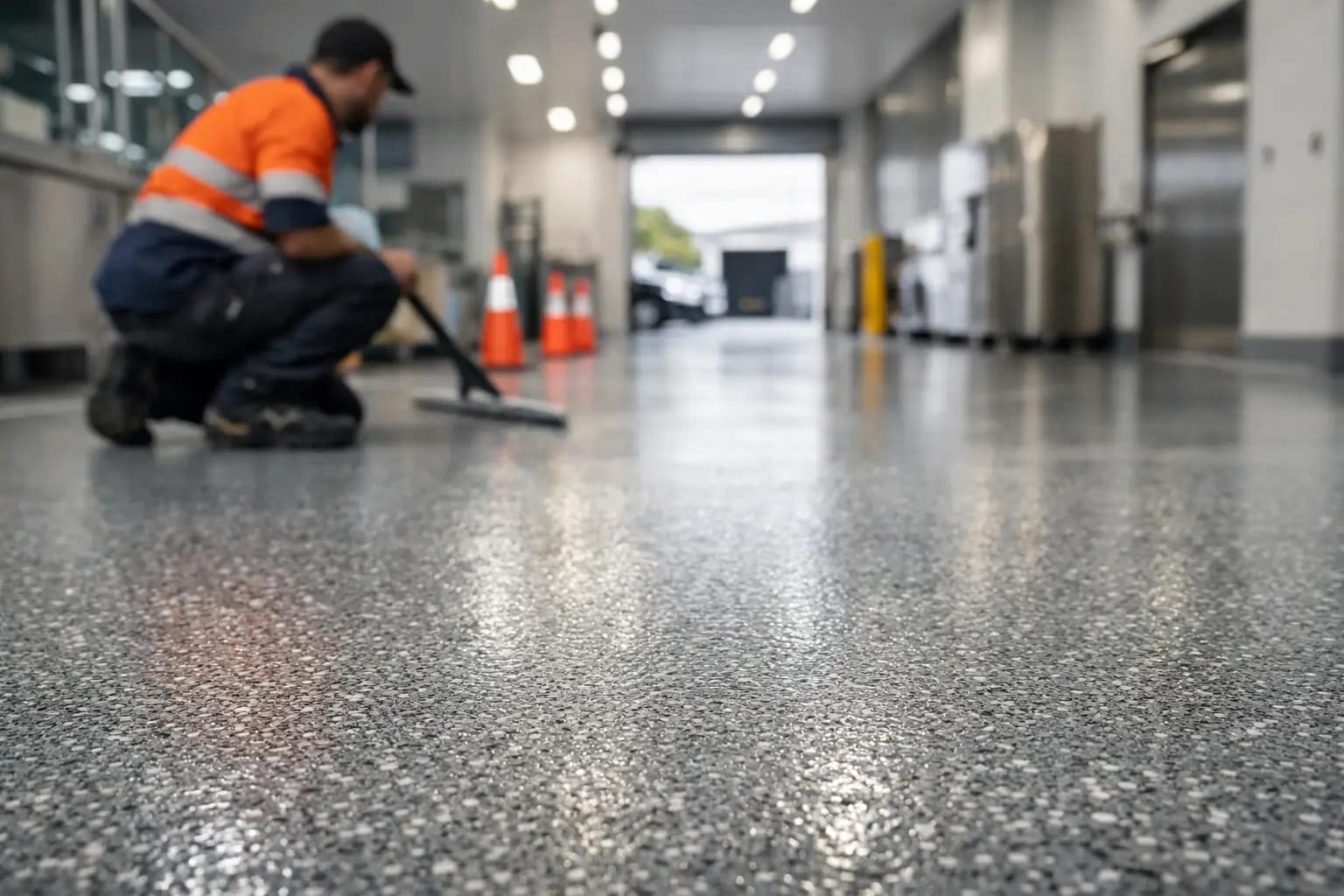
A properly installed coating system creates a harder, easier-to-clean wearing surface over the slab. Depending on the environment, it can also improve slip resistance, support better hygiene and make it easier to separate pedestrian and vehicle zones with clear markings. In busy operational spaces, those are not cosmetic extras. They affect safety, presentation and day-to-day efficiency.
Not every warehouse needs the same finish, though. A dispatch facility with constant forklift traffic has different demands from a storage warehouse with mostly static loads. A food-related site will have different cleaning and hygiene expectations from a mechanical workshop or industrial unit. The best result comes from matching the system to the environment.
The main factors that affect coating performance
The biggest factor is usually traffic. Repeated forklift movement, turning points and loading zones place concentrated stress on a floor. In these areas, the issue is not just abrasion. Hot tyre pickup, impact and constant wheel pressure can all shorten the life of a poorly selected coating.
The next consideration is the condition of the existing concrete. If the slab has surface laitance, oil contamination, moisture issues or old failing coatings, no new product will perform properly until those issues are addressed. This is where many floor failures start. Good materials matter, but surface preparation matters more.
Cleaning methods also play a part. Warehouses that are hosed down regularly, exposed to chemical spills or cleaned with aggressive degreasers need a system that can cope with that environment. If the floor sees only dry traffic and occasional scrubbing, the specification may be different.
Then there is downtime. Some sites can shut down sections in stages, while others need a very tight installation window. That can affect system selection, staging and planning just as much as technical performance.
Common warehouse floor coating systems and where they fit
Epoxy coating systems are one of the most common choices for warehouse environments because they provide strong adhesion, a hard-wearing finish and good resistance to wear and staining. They suit many commercial and industrial floors, particularly where a clean, durable surface is needed and the slab is properly prepared.
Within that broad category, there is still a difference between a light-duty coating and a heavy-duty system. A thinner roll-applied coating may suit lower-demand storage areas, but high-traffic operational zones often need a more substantial build. In some cases, that may include additional layers, non-slip additives or a system designed specifically for tougher industrial wear.
Polyurethane and other specialist resin systems can also have a role, especially where flexibility, chemical resistance or UV stability are important. The right choice depends on how the warehouse is used. There is no single best product for every site, which is why a proper assessment matters before any recommendation is made.
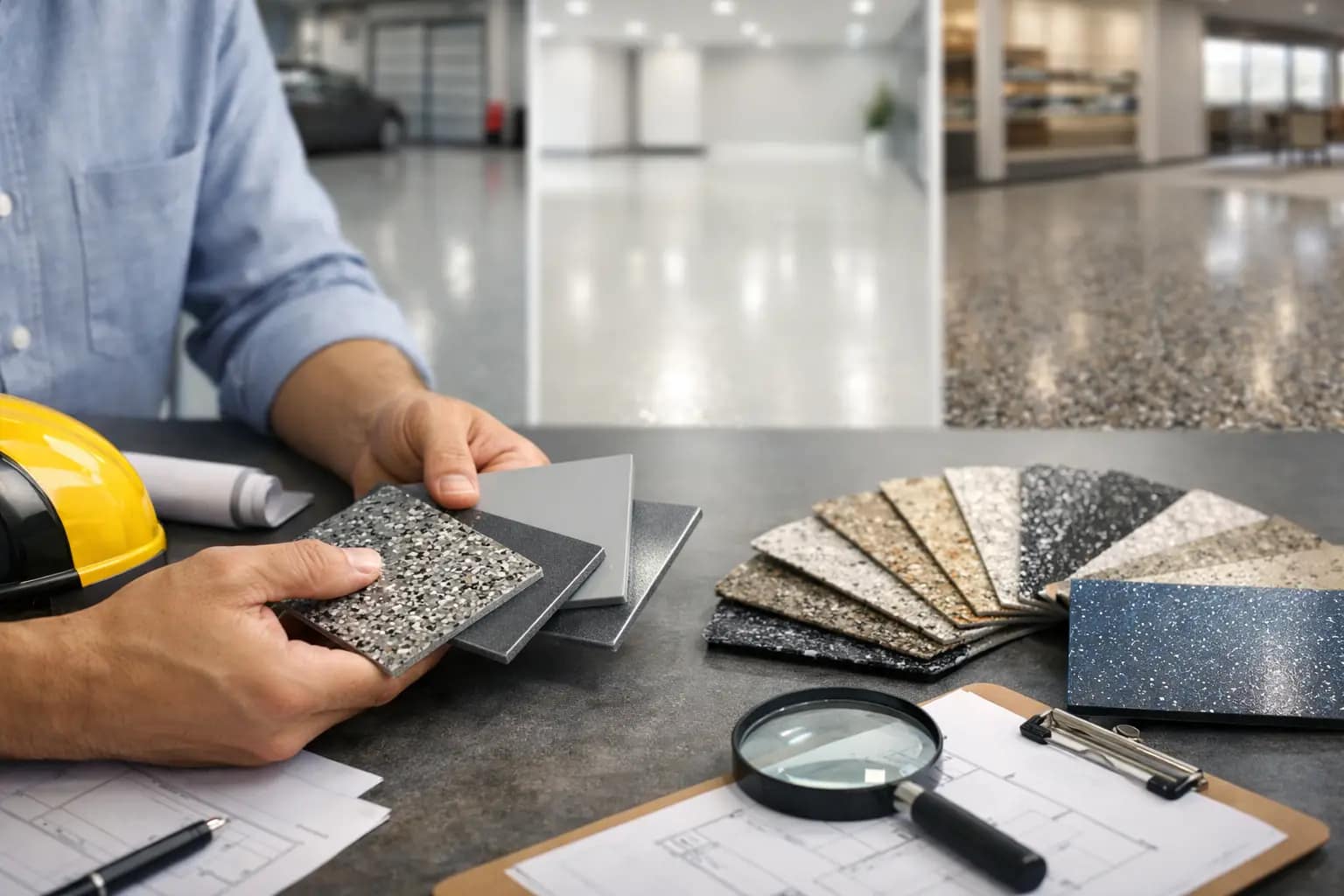
For many warehouse clients, the conversation also includes line marking, safety zoning and finish texture. A smooth gloss finish may be easier to clean, but in some environments it may not provide the slip resistance needed for safe movement. On the other hand, a more textured finish can improve grip, though it may hold more dirt and require more effort to clean. That trade-off needs to be weighed against the way the site operates.
Why surface preparation is the part you cannot skip
If there is one thing that determines whether a warehouse floor coating lasts, it is preparation. Coatings do not bond properly to weak, dusty, contaminated or poorly prepared concrete. Grinding, repairs and careful inspection are what turn a coating job from a short-term patch into a long-term flooring solution.
Mechanical grinding is often the preferred approach because it opens the concrete surface and removes weak material without simply masking defects. It also helps create the surface profile needed for strong adhesion. Where cracks, pitting or surface damage are present, those areas need to be repaired before the coating goes down.
Moisture is another issue that should be checked properly. If moisture pressure is coming through the slab, that can cause coating failure regardless of how good the topcoat is. The same applies to old coatings that are already lifting or flaking. Coating over those problems only buries them for a short time.
This is one reason experienced contractors put so much emphasis on site assessment. The visible condition of the floor is only part of the picture. What matters is whether the slab is sound enough to support the system being proposed.
Safety and compliance are part of the flooring decision
In warehouse settings, floor safety is not separate from floor performance. It is the same discussion. Slippery patches, poor visibility in traffic areas and excessive dust all create avoidable risk. A suitable coating system can help reduce those problems when it is planned correctly.
Slip resistance needs to be balanced carefully. Too smooth, and the floor may become hazardous when wet or dusty. Too aggressive, and it can become harder to clean or less suitable for some wheeled traffic. The right level depends on the site, the tasks being carried out and whether the floor is typically dry, damp or exposed to spills.
Clear line marking also matters. Marked walkways, loading zones and hazard areas are easier to maintain on a properly coated floor than on worn, dusty concrete. In busy warehouses, that visual control can make movement safer and site presentation more professional.
What to expect from a professional installation
A good warehouse floor project starts with questions, not products. How is the site used? What traffic does it carry? Are there existing coating failures? Is staged access needed? Those answers shape the specification.
From there, the process usually involves inspection, moisture and substrate assessment, mechanical preparation, repairs where required, and application of the selected coating system. Timing should be discussed clearly from the start, particularly if the warehouse needs to stay partly operational during works.
Clean workmanship matters just as much as product choice. Dust-controlled preparation, tidy staging and realistic communication about curing times all help reduce disruption. For warehouse clients, that level of planning is often the difference between a project that fits operations and one that creates avoidable headaches.
For businesses across Sydney and wider NSW, that local understanding can be valuable. Warehouses vary widely, from smaller trade units to large logistics spaces, and each one places different demands on the floor. Floor Masters approaches these projects with that practical focus – assess the slab properly, specify the right system and install it to suit how the site actually works.
How to choose the right warehouse floor coating systems
The best starting point is to think about performance before finish. Ask what the floor needs to handle over the next several years, not just how you want it to look next month. Traffic levels, cleaning routines, spill exposure, safety requirements and downtime limits all need to be factored in early.
It also helps to be honest about the condition of the existing slab. If the concrete is damaged or contaminated, a proper repair and preparation program is not an optional extra. It is part of getting value from the coating system.
Finally, choose a contractor who is clear about process. You want straightforward advice, realistic expectations and a specification that fits the site. If a recommendation sounds too generic, it probably is. Warehouse floors work hard, and the coating system should be selected with that in mind.
A warehouse floor does not need gimmicks. It needs to stay safe, clean and durable under real operating pressure. When the system is chosen properly and installed on a well-prepared slab, the result is a surface that supports the way your business runs – not one that keeps pulling attention for the wrong reasons.