The floor in a retail space does more work than most people give it credit for. It carries foot traffic all day, copes with trolleys and stock movement, and still has to look clean under bright lighting. That is why choosing the right retail shop floor coating matters – not just for appearance, but for safety, maintenance and long-term value.
A poor coating choice usually shows up fast. You start seeing tyre marks near stock areas, worn patches at the entry, slippery spots after cleaning, or a finish that looks tired well before the rest of the fit-out does. In a shop environment, that affects more than the floor. It changes how customers see the space and how easily staff can keep it running.
What a retail shop floor coating needs to do
Retail floors sit in a middle ground that can be harder to plan for than a warehouse or a home garage. They need to be durable enough for constant use, but they also need to present well. A purely industrial finish can feel too harsh for a customer-facing store, while a decorative surface without the right build underneath may not stand up to daily wear.
The best result usually comes from treating the floor as a working surface first and a design feature second. That means looking at traffic patterns, cleaning routines, slip resistance, moisture risks and the condition of the existing concrete before choosing a system.
For many shops, a professionally installed epoxy or resin-based coating makes sense because it creates a dense, sealed surface that is easier to clean and more resistant to staining than bare concrete. It can also be tailored to suit the use of the space, whether that means a smoother finish for easier maintenance or added texture where extra grip is needed.
Why retail environments are harder on floors than they look
A fashion boutique, liquor store, showroom and suburban convenience shop might all be classed as retail, but they place very different demands on a floor. A clothing store may deal mostly with foot traffic, while a bottle shop has regular pallet jack movement and a higher risk of impact damage. A food retailer may need stronger resistance to spills, moisture and frequent cleaning.
This is where many floor problems begin. A coating is chosen based on colour or price alone, without enough attention to how the shop actually operates. The finish may look right on day one, but if the substrate was not prepared properly or the coating was not suited to the traffic load, the surface can start failing early.
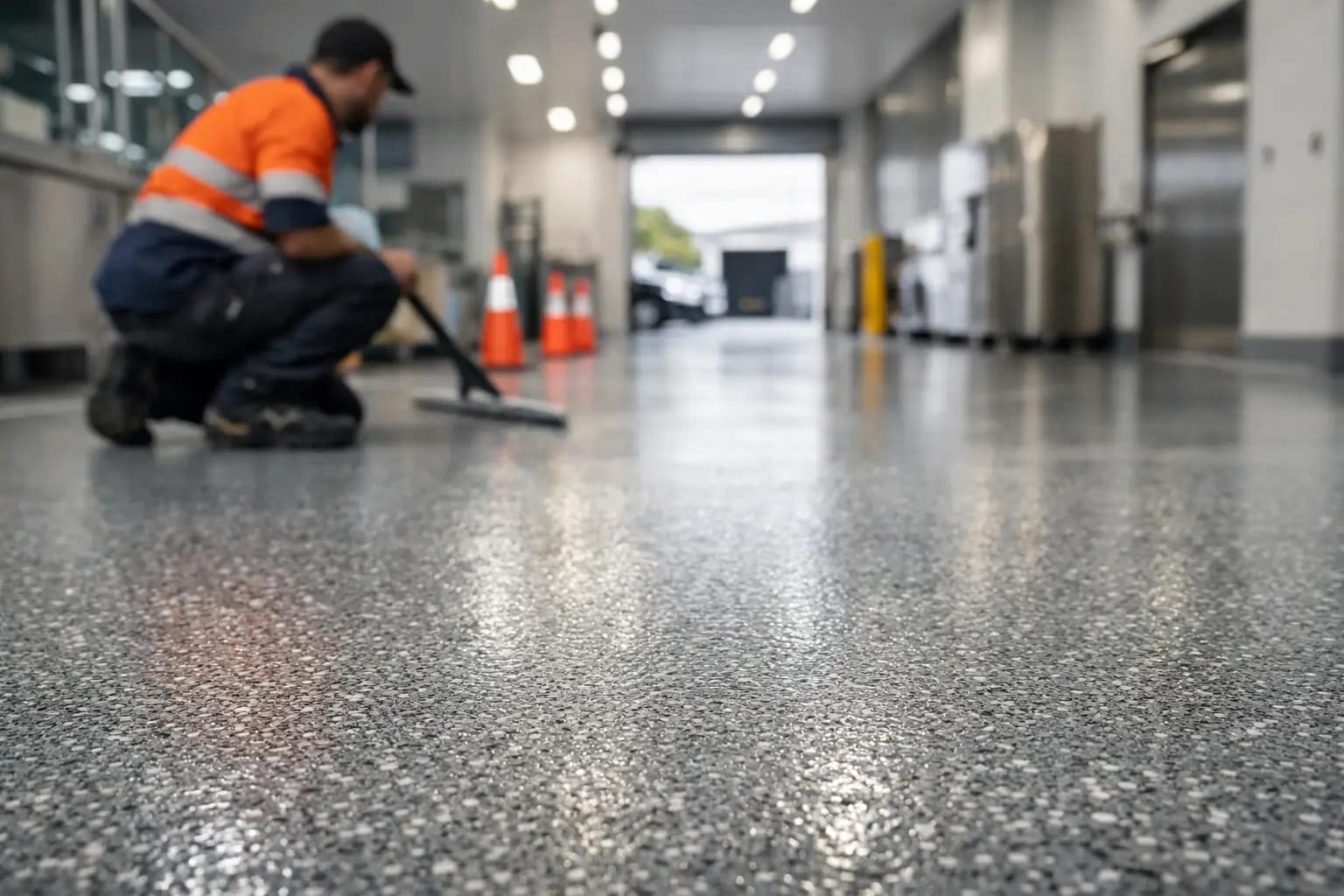
Preparation is a big part of that. Cracks, weak concrete, old adhesives, contaminated areas and uneven patches all affect how well a coating bonds. If those issues are skipped over, the final finish is only as good as the surface beneath it.
The main benefits of a coated retail floor
A quality retail shop floor coating can make day-to-day operations simpler. Sealed floors are generally easier to sweep and mop, they hold less dust than raw concrete, and they are better at resisting spills from drinks, dirt carried in from outside and scuffing from foot traffic.
There is also a safety benefit. In retail, slips are not just a maintenance issue. They are a business risk. The right non-slip profile can improve underfoot grip without making the floor difficult to clean. That balance matters, because an overly rough surface can trap dirt and become frustrating for staff to maintain.
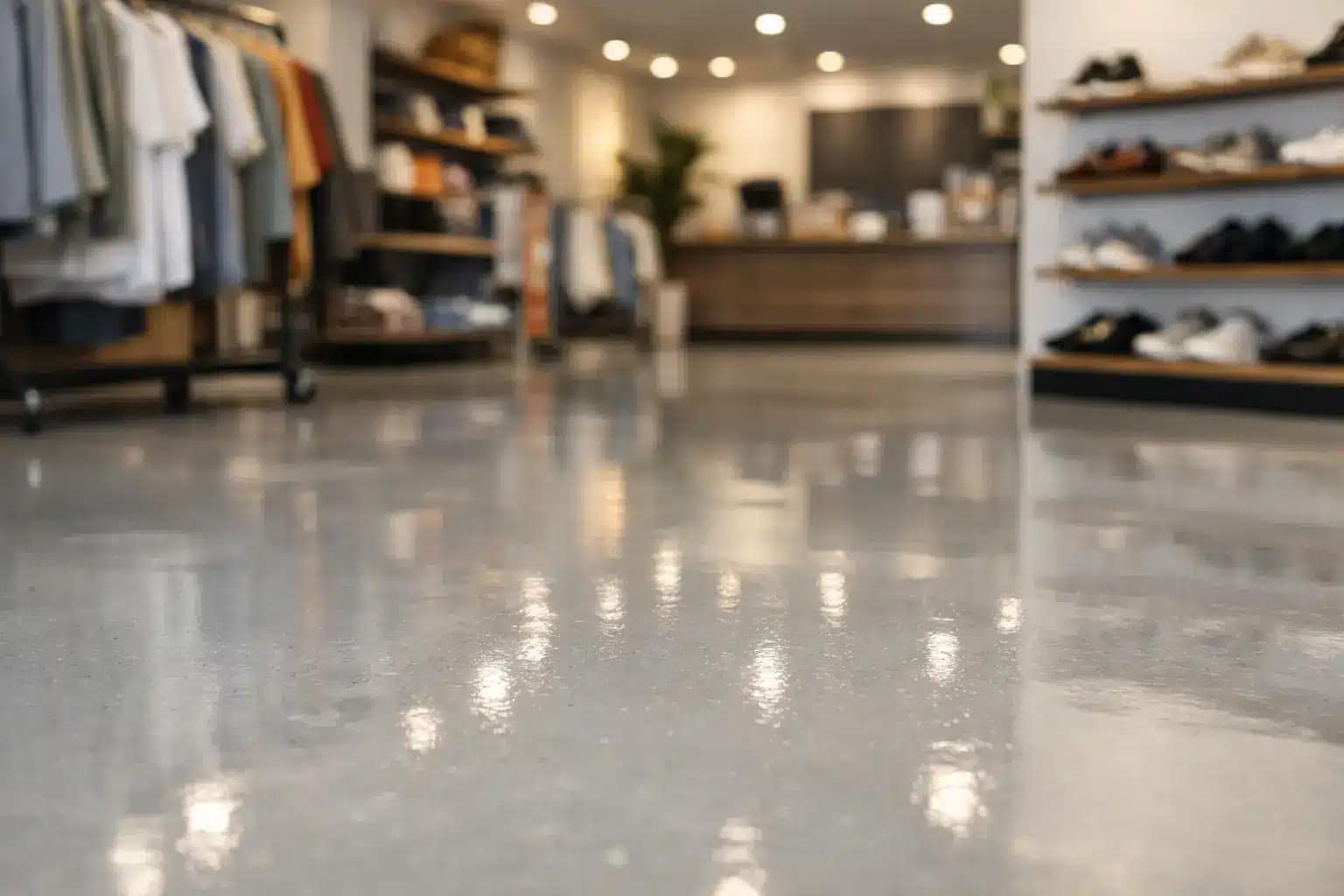
Appearance matters too, but in a practical way. A clean, consistent floor helps the whole shop feel more professional. It frames displays better, reflects light more evenly and gives customers a stronger sense that the business is well kept. That is useful whether the space is high-end, functional or somewhere in between.
Choosing the right retail shop floor coating system
There is no single coating that suits every store. The right system depends on how the space is used, what the existing slab is like and how much downtime is acceptable during installation.
Epoxy coatings for strength and clean presentation
Epoxy is a common choice for retail settings because it delivers a hard-wearing, attractive surface with good resistance to abrasion and staining. It suits many shop interiors, especially where owners want a finish that looks clean and professional without becoming difficult to maintain.
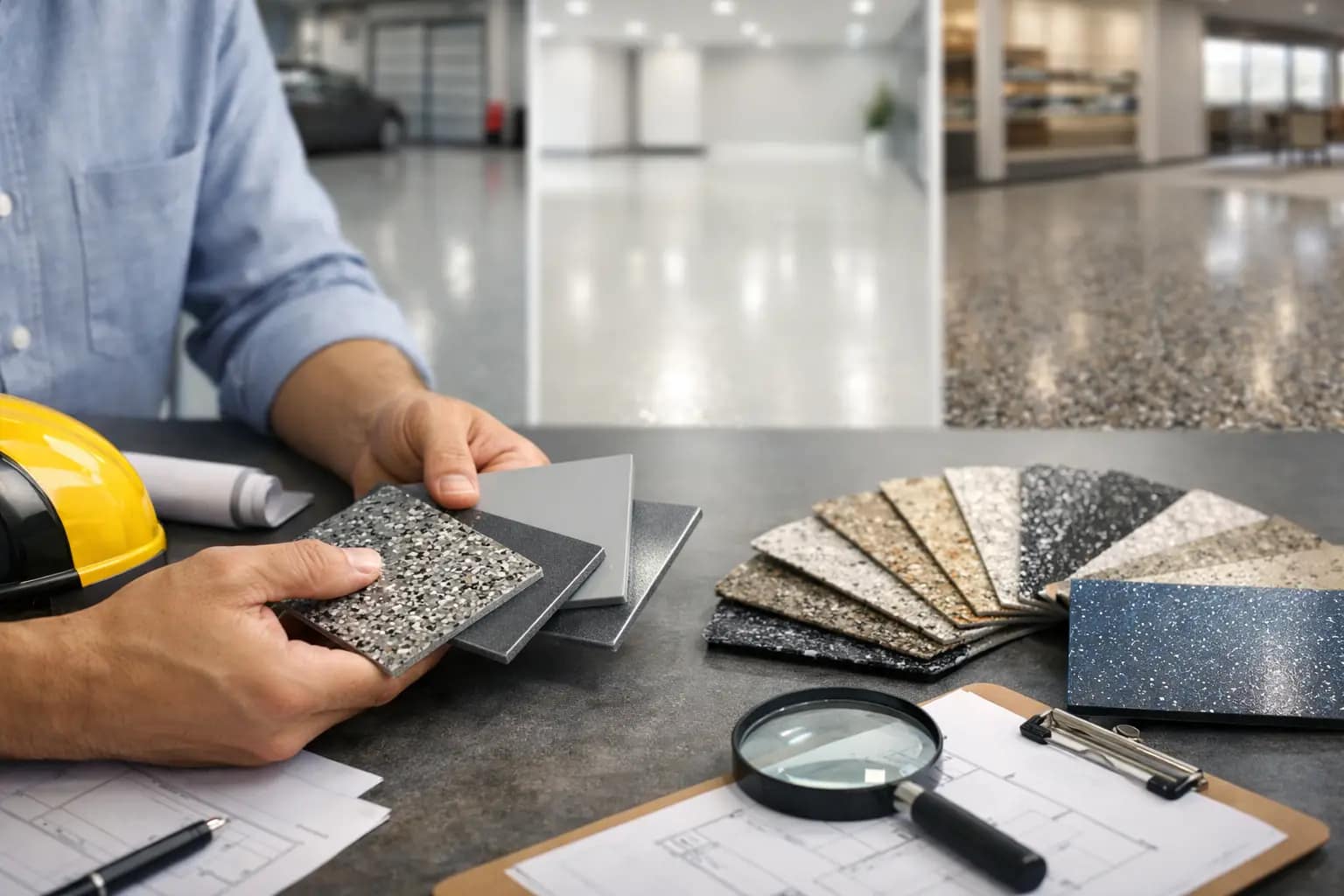
Epoxy also gives some flexibility in appearance. Depending on the site and use, the finish can be plain, decorative or include non-slip additives. The key is matching the finish level to the shop’s real conditions rather than choosing the glossiest option by default.
Non-slip finishes where safety matters most
Entries, service counters, food areas and any zone exposed to moisture may need a more slip-resistant profile. This does not always mean the entire store needs a heavily textured floor. In many cases, it is smarter to adjust the coating system by area.
That way, customer-facing sections can remain easy to clean and visually sharp, while wet or higher-risk zones get the extra grip they need. A good contractor will usually talk through that balance early, because slip resistance is one of those details that should be planned, not added as an afterthought.
Surface repairs before coating
If the concrete is chipped, cracked or uneven, repairs often need to happen before any final coating goes down. This step is easy to underestimate, but it has a direct effect on both durability and appearance.
A smooth finish laid over damaged concrete rarely stays looking good for long. Proper repair work and grinding help the coating bond properly and create a cleaner, more consistent end result.
What to ask before committing
The most useful questions are usually practical ones. How much traffic does the floor take each day? Are there trolleys, pallet jacks or stock cages moving over it? Does the shop need to stay open during stages of the work, or can it shut temporarily? Are there existing coatings that need removal?
You should also ask how the surface will be prepared. This is often the difference between a floor that lasts and one that starts peeling around the edges or wearing through too early. Dust-controlled grinding, proper cleaning and realistic repair work are all signs that the contractor is focused on performance rather than rushing to the topcoat.
For retail operators, downtime matters just as much as durability. A professional contractor should be upfront about curing times, access restrictions and how the work will affect trading. Fast turnaround is important, but not if it comes at the expense of bond strength or finish quality.
Common mistakes with shop floor upgrades
One of the biggest mistakes is treating the floor as a cosmetic job only. A retail fit-out can look excellent from the shelving up, but if the floor underneath is already weak or poorly coated, it tends to drag the whole space down within months.
Another common issue is choosing a finish that is too smooth for the cleaning regime or too textured for the style of store. Both can create problems. A smooth floor may become risky when wet, while a rougher one may collect grime and make routine cleaning harder than it needs to be.
There is also the temptation to avoid preparation in order to save time. That can be expensive later. If the existing slab has moisture issues, surface contamination or failed old coatings, those problems usually come back through the new system unless they are dealt with first.
Why professional installation matters in retail spaces
Retail environments are visible spaces. Every defect shows up under lighting, and every closure affects trade. That makes workmanship especially important.
A professionally installed coating is not just about rolling on product evenly. It is about assessing the slab, preparing it correctly, choosing the right build for the site and delivering a finish that performs in the real world. Clean edges, consistent texture and proper curing all matter when the floor will be seen by customers every day.
For shops across Sydney and wider NSW, local experience can also help. Conditions vary from one site to another, especially in older buildings where previous floor coverings, repairs or moisture issues may already be part of the picture. A contractor who understands those realities is better placed to recommend a system that works for the space, not just one that looks good in a brochure.
At Floor Masters, the focus is on that practical outcome – strong preparation, clean finishing and coating systems that suit how the floor will actually be used.
A better floor supports a better retail space
When a retail floor is done properly, people notice the result without always noticing the floor itself. The shop feels cleaner, safer and easier to maintain. Staff spend less time dealing with dust, marks and ongoing patch jobs, and the space presents the way it should from the moment customers walk through the door.
If you are planning an upgrade, the right starting point is not colour selection. It is understanding what the floor needs to handle every day, and building the coating system from there.