Pool decks don’t fail all at once – they start with little annoyances: the concrete looks tired, bare spots stay damp, you feel that slick patch underfoot, and every cleanup turns into a pressure-washing marathon. If you’re trying to make the area safer and easier to maintain without ripping everything out, a spray on concrete coating for pool deck surfaces is often the most practical upgrade.
It’s also one of the easiest systems to misunderstand. Some “spray-on” finishes are thin cosmetics that look good for one summer and then peel. Others are purpose-built textured coatings installed over properly prepared concrete, designed to handle UV, pool chemicals, wet traffic, and temperature swings. The difference isn’t the brochure – it’s the surface prep, the right product for your conditions, and the slip-resistance options you choose.
What a spray-on concrete pool deck coating actually is
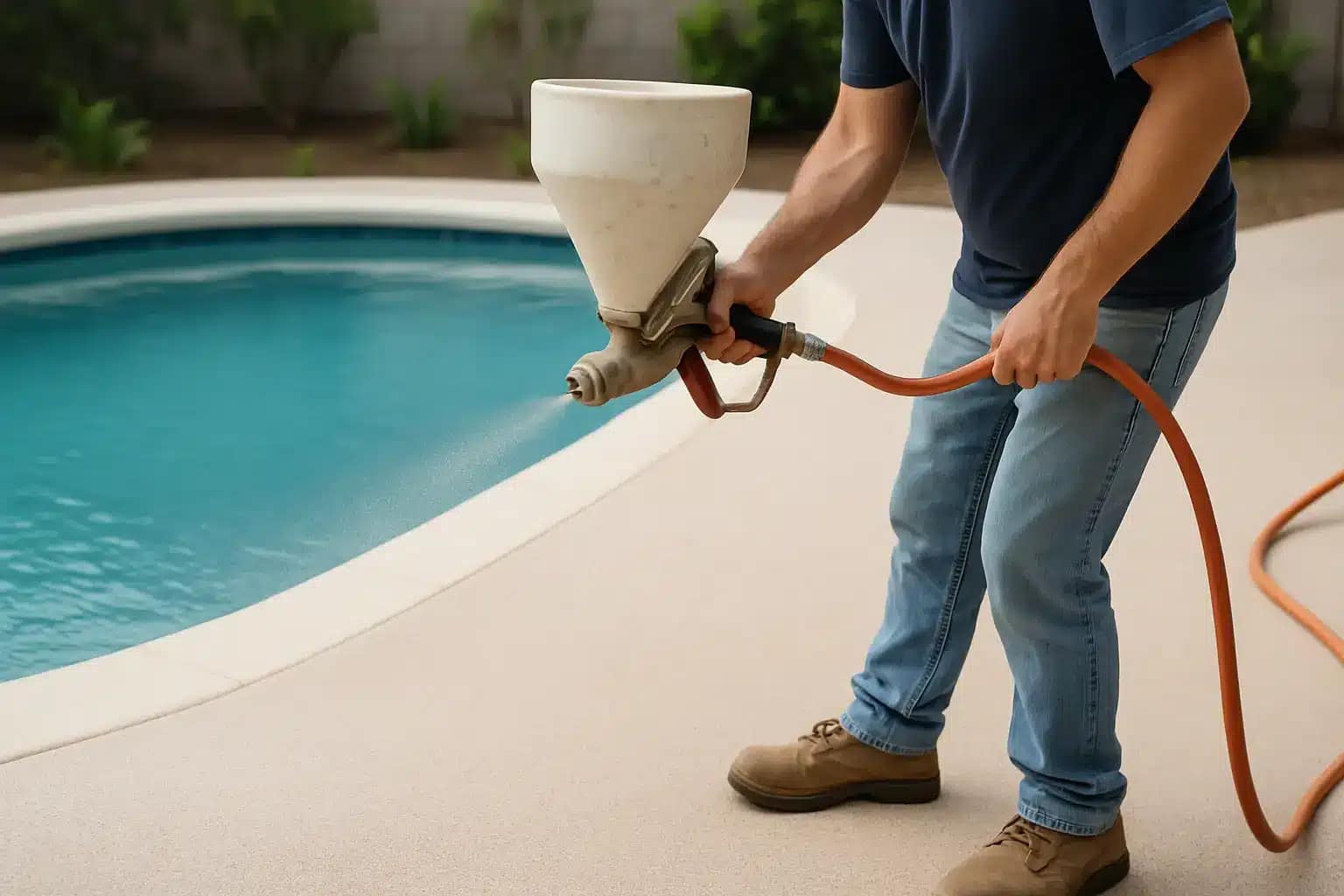
A spray-on deck coating is a liquid-applied system that’s sprayed and then textured to create grip and a uniform finish over existing concrete. It’s commonly used around pools because it can be made slip-resistant, it reduces the “raw concrete” look, and it can bridge minor surface imperfections.
Most pool deck spray systems fall into two buckets: acrylic-based textured coatings (often used for outdoor surrounds) and resin-based systems that incorporate texture and a UV-stable topcoat. The best choice depends on how your deck is used, how much sun it gets, whether it holds moisture, and the condition of the concrete underneath.
The goal is not just aesthetics. Around a pool, the coating needs to perform in three ways: provide traction when wet, resist UV fading and chalking, and hold up to chlorine and cleaning chemicals without getting brittle or slippery.
Why pool decks are tough on coatings
Pool environments are harsher than most outdoor slabs. Water sits on the surface longer, foot traffic is often bare and constant, and the deck gets hit with sunscreen oils, drinks, salt (in coastal areas), and cleaning products. On top of that, pool decks in Sydney and across NSW can see strong UV and big day-to-night temperature changes.
That combination exposes weaknesses fast. A coating that isn’t UV-stable can fade and powder. A coating applied over dirty or weak concrete can delaminate. A finish without the right texture can become a liability the first time someone runs out of the pool.
If you’re considering spray-on, think like a facility manager: you’re buying a safety surface as much as a visual upgrade.
When spray-on is a good fit (and when it’s not)
Spray-on coatings are a strong option when the slab is structurally sound but looks worn, has hairline cracks, minor spalling, or patchiness from past repairs. It’s also a good choice when you want a consistent, clean look that’s cooler underfoot than darker materials and easier to maintain than bare concrete.
It’s not the right fix if the concrete is actively moving (large cracks that continue to open), if there’s significant heaving or settlement, or if moisture is coming up through the slab with enough pressure to push coatings off. Likewise, if the deck has been repeatedly sealed with unknown products, that can complicate adhesion unless the surface is properly ground back.
This is where an honest site assessment matters. A contractor should be willing to tell you when prep and repairs will cost more than you expect – because skipping them costs more later.
The make-or-break factor: preparation
If you remember one thing, make it this: spray-on coatings don’t fail because they were sprayed. They fail because the concrete wasn’t prepared.
Pool decks collect contaminants that are invisible until a coating rejects them – sunscreen residue, ground-in dirt, old sealers, algae, and mineral deposits. On top of that, many older slabs have a hard, smooth surface layer that looks fine but doesn’t provide a mechanical profile for a coating to bond to.
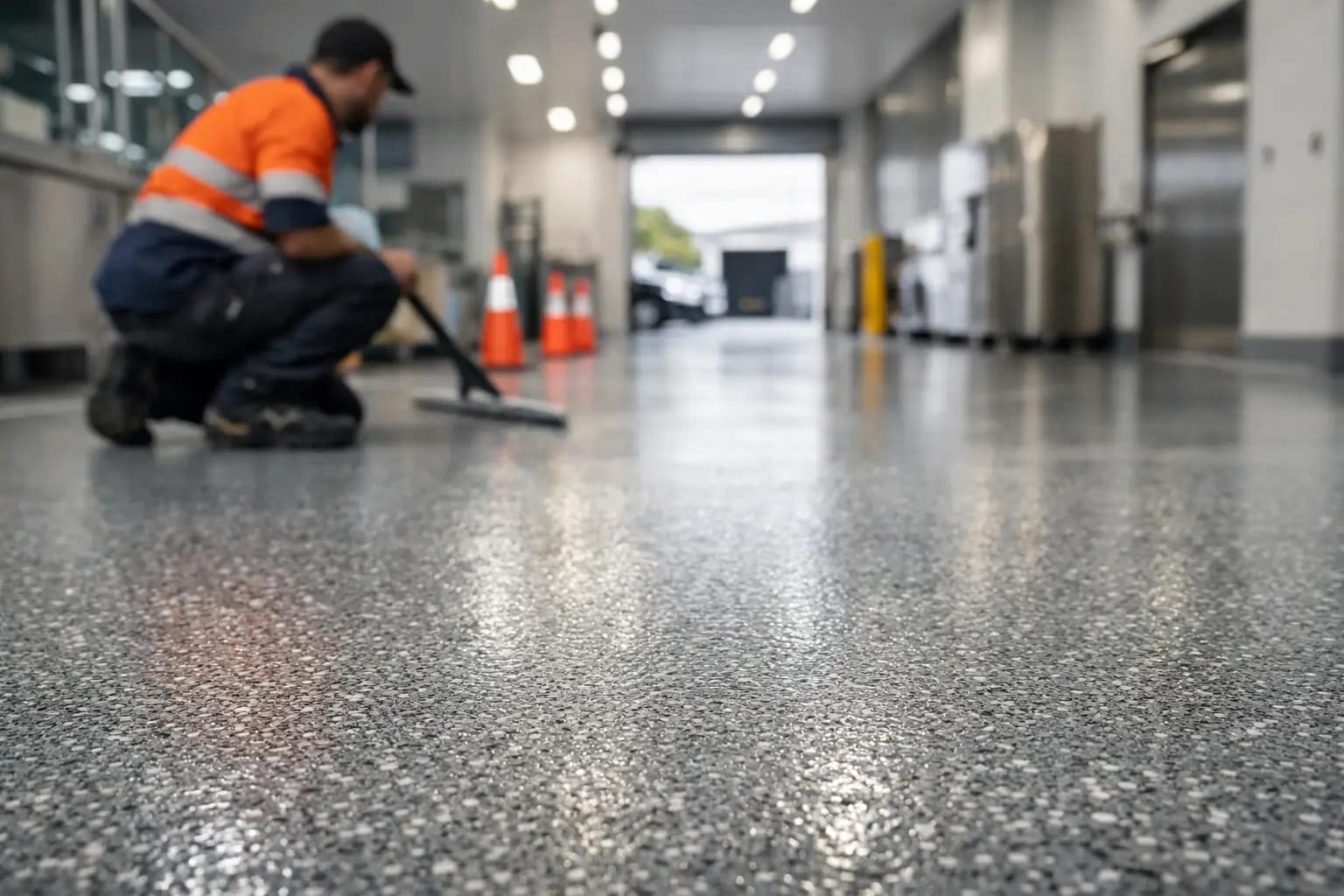
Proper preparation typically involves concrete grinding to remove weak surface material and open the pores of the slab. For pool surrounds, dust-controlled grinding is a big deal. It keeps the worksite cleaner, reduces airborne dust, and helps protect nearby landscaping, outdoor furniture, and the pool area itself.
Repairs also matter. Chips, divots, and spalled edges need to be patched with compatible repair mortars, then blended so the texture looks intentional rather than like a series of bandaids. If there are cracks, they should be assessed and treated based on whether they’re cosmetic or movement-related. A coating can disguise minor cracking, but it shouldn’t be used to pretend structural issues don’t exist.
Slip resistance: what to ask for
“Non-slip” is not a single setting. It’s a range, and the right level depends on who uses the pool deck and how.
A family pool with kids running around needs a higher traction profile than a decorative courtyard that only sees light use. Commercial or strata environments often need stronger safety margins again, especially where duty of care is a factor.
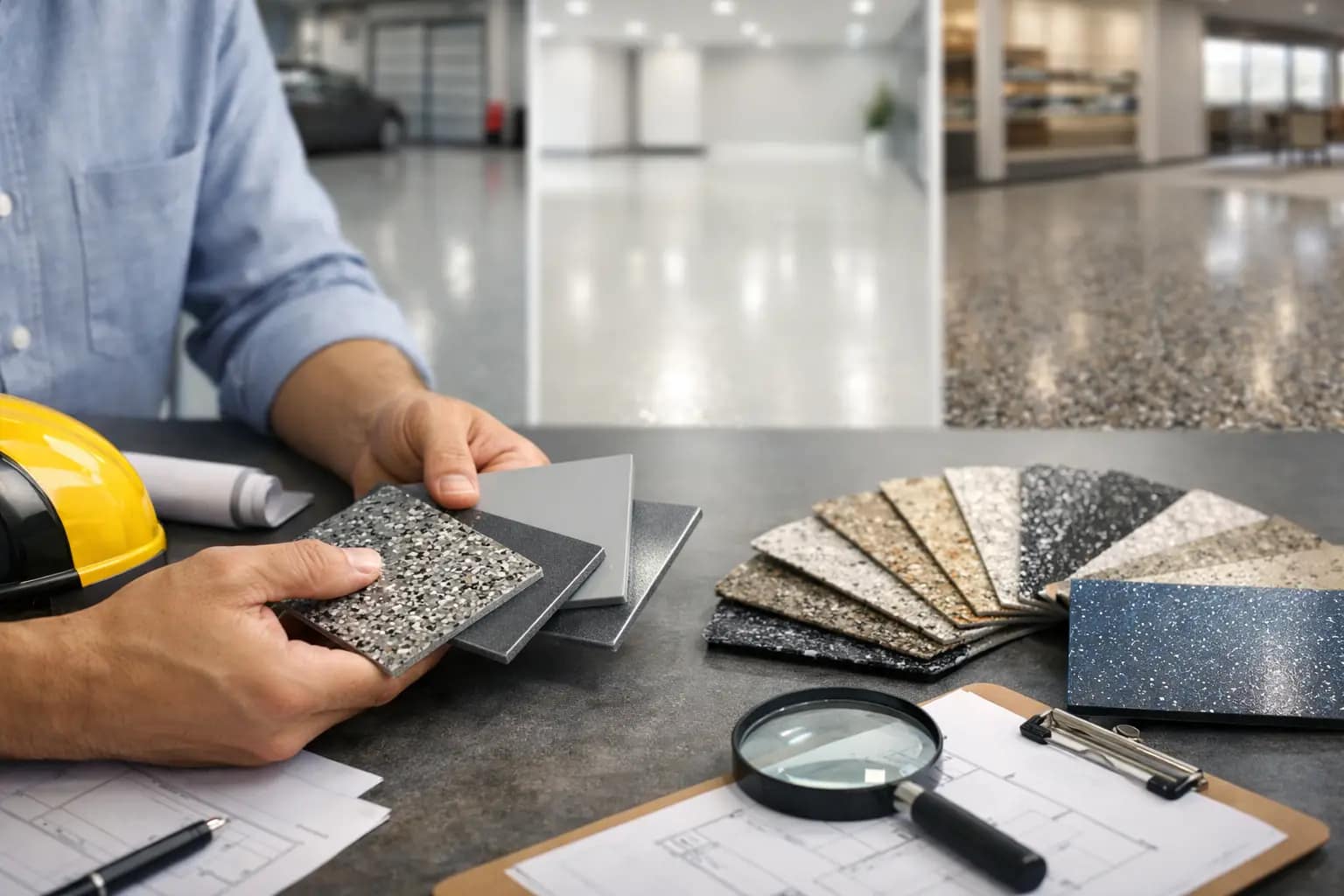
A good installer should talk you through texture options rather than pushing a one-size-fits-all finish. In practice, slip resistance comes from the broadcast aggregates and the texture pattern built into the spray system, then locked in with the topcoat. Too little texture can be risky when wet. Too much texture can be uncomfortable on bare feet and can hold dirt, making cleaning harder.
The sweet spot is a finish that feels secure underfoot when wet but is still easy to hose down and keep clean.
Heat, glare, and comfort underfoot
Pool areas are barefoot zones, so comfort matters. Spray-on textured coatings can help by providing a more forgiving feel than raw broom-finished concrete, and lighter color selections can reduce heat absorption.
That said, any outdoor surface can get hot in direct sun. If “cool underfoot” is a top priority, ask about light-reflective color options and the way texture affects heat and drying. Texture can improve drainage and reduce slickness, but it can also slightly increase surface area, which changes how the deck warms and cools.
Glare is another overlooked point. A high-gloss finish around a pool can be uncomfortable visually. Most pool-deck spray systems are finished in a low-sheen or satin topcoat for that reason.
What durability looks like in the real world
A quality spray-on coating can last for years, but longevity isn’t just about the product. It’s about matching the system to the site.
If your deck gets blasted with afternoon sun, UV stability is non-negotiable. If the area stays damp or shaded, mildew resistance and drainage become more important. If you use aggressive cleaning chemicals, the topcoat needs to handle it without getting slippery or soft.
Expect normal wear in high-traffic zones like steps, outside doors, and the path from the pool to the house. The advantage of a coating system is that it can often be cleaned and refreshed with a maintenance recoat down the line, rather than demolished and replaced.
Installation timing and disruption
Most homeowners want to know two things: how long it takes, and when they can use the pool again.
Spray-on coatings are typically installed over a short window, but the exact schedule depends on prep requirements, weather, and curing time. Humidity, temperature, and overnight dew can affect when coatings can be applied and how quickly they set. A contractor who works outdoors regularly will plan around those variables rather than forcing the job through and hoping for the best.
You should also expect a professional team to manage masking and overspray risk carefully. Pool surrounds often have glass fencing, sliding doors, rendered walls, and landscaped edges – all of which can be damaged or made messy by sloppy prep.
Maintenance: keeping it clean without damaging it
Once the coating is down, maintenance is usually simple, but there are a few habits that extend its life.
Regular hosing and a mild detergent wash will keep sunscreen oils and grime from building up. For algae-prone shaded areas, occasional treatment may be needed, but harsh acids and overly strong chlorine mixes should be used carefully and rinsed thoroughly. High-pressure cleaning is fine in moderation when done correctly, but getting too close or using an aggressive tip can erode texture and prematurely wear the topcoat.
If you want the deck to look consistently “new,” the smartest move is to treat it like a finished surface, not like bare concrete. Clean it earlier and more gently, rather than waiting until it’s filthy and attacking it with maximum pressure.
Cost factors that change the quote
Pool deck coating prices vary because the prep varies. Two decks can be the same size and cost very different amounts if one needs heavy grinding, patching, crack treatment, and edge detailing.
Design choices also affect cost. A single, uniform texture and color is typically more efficient than multi-tone patterns or detailed border work. Higher slip-resistance options and premium UV-stable topcoats can increase material costs, but they’re often where the value is for outdoor performance.
If you’re comparing quotes, look for clarity on what preparation is included. A cheap number that glosses over grinding and repairs is rarely cheap once the coating starts lifting.
Choosing a contractor: what “good” looks like
You’re not just hiring someone to spray product – you’re hiring a process.
A reliable installer will inspect the concrete condition, talk about drainage and shade, explain texture options, and be direct about what can and can’t be hidden. They’ll also have the equipment to grind properly and control dust, because that’s what makes adhesion predictable.
If you’re in Sydney or across NSW and want a straight answer on whether a spray system is suitable for your pool deck, Floor Masters can quote the job as a complete package – surface prep, repairs, and a slip-resistant finish that’s built to last. You can start at https://Floormasters.com.au.
A safer pool deck isn’t about making it look perfect in photos. It’s about stepping out of the water, planting your foot, and feeling confident every single time.