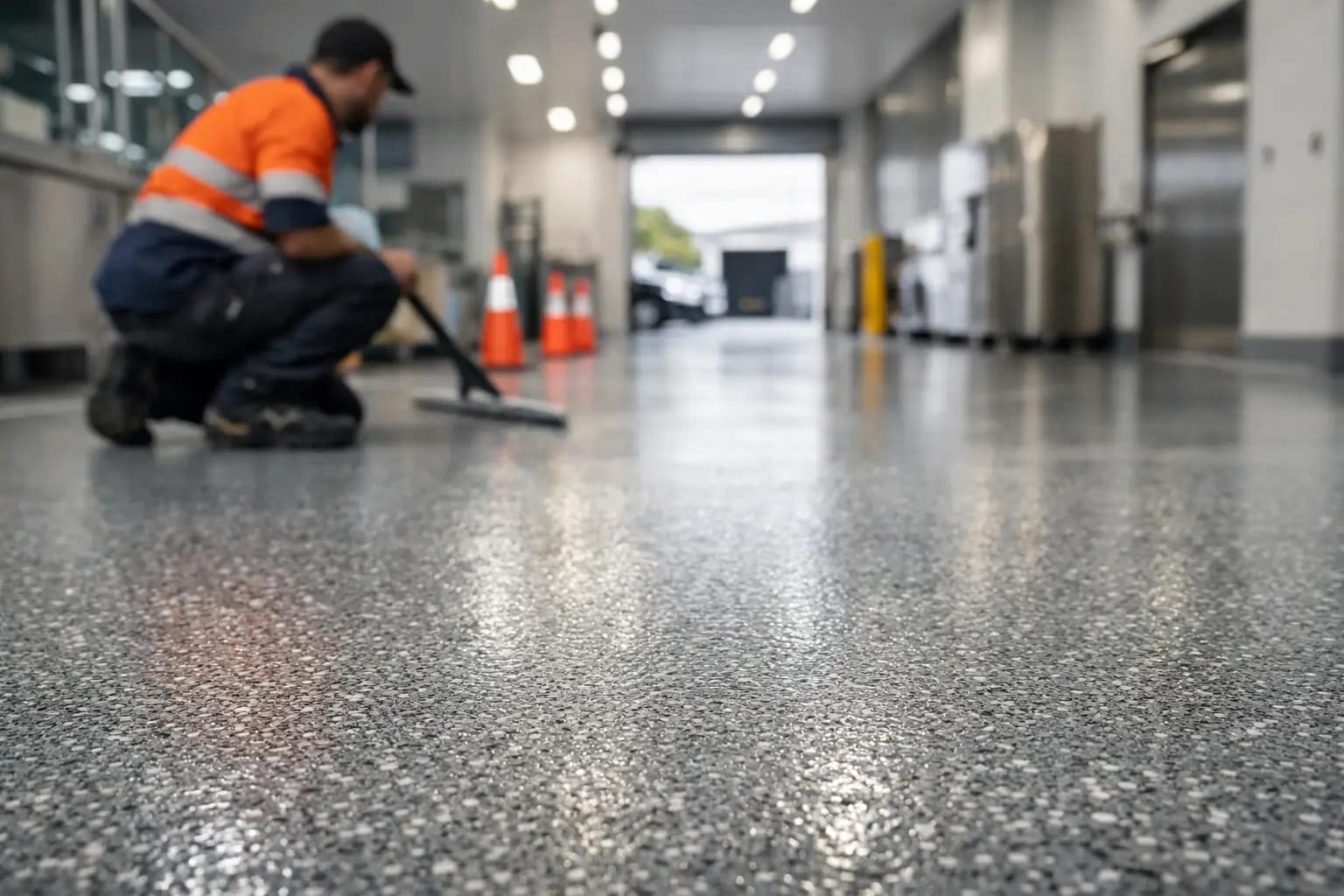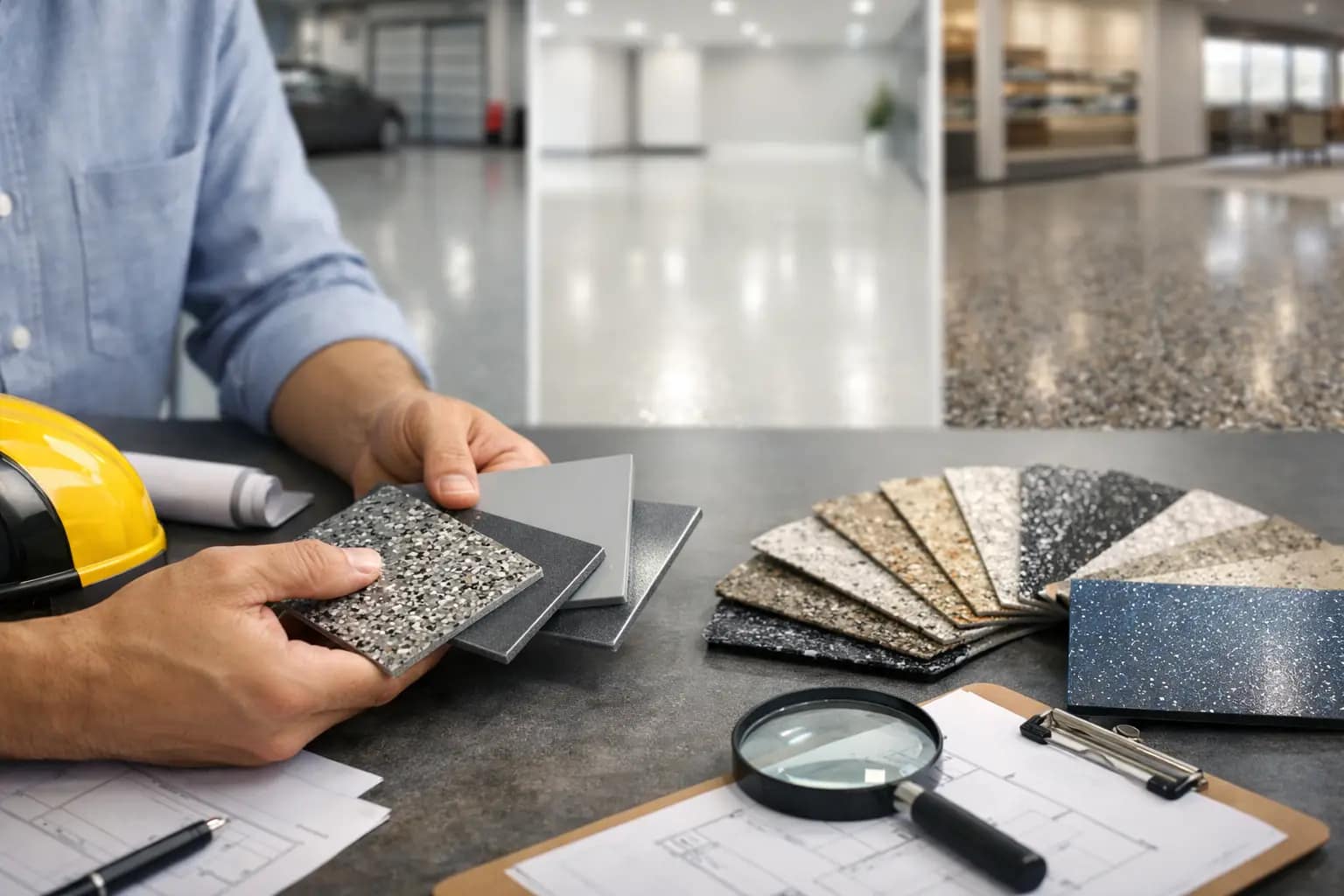

A car park floor tells you everything about a building’s maintenance standards within about five seconds. You see it in the tire marks that never quite come out, the polished concrete that turns slick after the first rain, and the corners where dust and grit grind the surface down into a constant gray haze. If you manage a residential complex, retail site, or warehouse in NSW, that floor is also a liability surface – not just an eyesore.
Epoxy flooring for car parks is one of the most practical upgrades you can make when you need a hard-wearing, easy-to-clean finish with real safety options. But it is not a one-size-fits-all coating. The right result depends on traffic volume, whether you have ramps, how moisture behaves in the slab, and how well the concrete is prepared before any coating goes down.
What epoxy flooring does well in car parks
Car parks are rough environments. You have constant abrasion from tires, grit tracked in from outside, leaking oils and brake fluid, and regular wetting from rainwater. Bare concrete absorbs stains, powders as it wears, and becomes harder to keep looking “clean” no matter how often it’s swept.
A properly specified epoxy system gives you a sealed surface that resists staining, reduces dusting, and stands up to daily traffic. It also gives you control over traction. That matters on turning bays, pedestrian walkways, and especially ramps where a glossy coating in the wrong finish can become a slip risk.
There is also the visibility factor. A brighter, uniform floor improves lighting efficiency and helps drivers and pedestrians read the space faster. In practical terms, line marking pops more clearly, directional arrows stay legible, and “dirty-looking” doesn’t become the default appearance a month after opening.
The trade-offs: where epoxy is the right call – and where it depends
Epoxy is a strong performer, but it has limits. In areas with high UV exposure, epoxy can amber over time. In fully open-air decks or top levels that get direct sun all day, you may need a UV-stable topcoat or consider alternative resin systems designed for exterior exposure.
Moisture is the other big variable. If your slab has rising moisture vapor or hydrostatic pressure, some coatings can blister or delaminate without the right primer or moisture-mitigating system. This is why “just roll it on” products fail so often in car parks. It is not that epoxy is weak – it is that the substrate conditions were never addressed.
Finally, downtime matters. Epoxy systems need cure time. If your site cannot close sections of the car park or stage the work, the best coating in the world won’t help if the project plan is unrealistic. The right contractor will help you sequence the work so access stays manageable.
Epoxy flooring for car parks: system options that actually make sense
Not every car park needs the same build. The goal is to match the system to the wear, the slip risk, and the budget – without cutting the preparation that makes it last.
Epoxy with a clear or pigmented finish (light-duty to medium-duty)
For smaller residential basements, low-speed traffic, and areas that are mostly flat, a high-build epoxy can be a clean, durable upgrade. You can choose a pigmented finish for brightness and easier inspection, or a clear finish where you want a more natural concrete look.
This is often paired with a non-slip additive where pedestrians walk or where wetting occurs. The key is choosing the right texture level. Too smooth can be risky; too aggressive can become harder to mop and can trap grime.
Broadcast systems (medium-duty to heavy-duty)
A broadcast system involves applying epoxy and then broadcasting aggregate into the wet coat to build texture and thickness. Once cured, the excess aggregate is removed and the surface is sealed with one or more coats.
This approach is popular in car parks because it balances traction, wear resistance, and appearance. It is also forgiving visually – scuffs and daily grit don’t show as quickly as they do on a flat gloss finish.
Epoxy base with a tougher topcoat (where heat and tire pickup matter)
Car parks see hot tires, turning forces, and frequent braking. In certain conditions, some coatings can soften slightly and show “tire pickup” or tracking. A system that uses epoxy for build and adhesion, then adds a harder-wearing topcoat can reduce those issues and extend the time between refresh coats.
This is where product selection and application control matters. Premium materials and correct film build are not nice-to-haves; they are how you avoid premature wear patterns at entries, ramps, and turning circles.
The make-or-break factor: surface preparation
If you only remember one thing, make it this: most coating failures are preparation failures.
Car park slabs are often contaminated. Oils soak into pores. Previous sealers can sit invisibly until the coating lifts. Some areas are polished smooth from traffic, while others are weak and dusty. An epoxy system needs a mechanically profiled surface to bond properly.
Professional concrete grinding (not acid etching) is the standard for reliable adhesion on commercial work. Dust-controlled grinding keeps the site cleaner and reduces disruption for occupants and neighboring tenancies. After grinding, cracks and spalls need to be repaired with compatible repair materials so movement and weak edges do not telegraph through the finished coating.
Moisture testing also matters. If moisture vapor emission is high, the coating system should be adjusted before installation begins. Skipping that step can look fine for months, then fail suddenly as the slab pushes moisture upward.
Safety and compliance: slip resistance is not an afterthought
Car parks have mixed-use zones. Vehicles, pedestrians, deliveries, and cleaning crews all share the same surface. The slip risk changes depending on slope, wetting, and contaminants.
A smart epoxy flooring plan separates zones by function. Flat parking bays can use a smoother finish for easier cleaning, while ramps, stairs landings, pedestrian walkways, and entry points get a higher-grip texture. Clear line marking and hazard striping can be integrated so traffic flow is obvious and walkways feel intentional.
There is always a balance. Higher texture improves grip but can increase cleaning effort. The goal is to hit the safest practical finish for the space, not to install a “sandpaper” floor everywhere and call it done.
Maintenance: what owners actually want to know
A coated car park is not maintenance-free, but it is lower maintenance in the ways that matter. Because the surface is sealed, you spend less time fighting dusting and deep staining, and more time doing straightforward cleaning.
Most sites do well with routine sweeping or vacuuming to remove grit, plus periodic scrubbing with a neutral cleaner. The biggest enemy is abrasive dirt left on the floor – it acts like sandpaper under tires. If you control grit at entries and keep up with regular cleaning, the coating holds its appearance longer.
When wear eventually shows in high-traffic lanes, you can often recoat the top layer rather than starting over – provided the original system was installed correctly and the substrate remains sound.
What affects cost and project timing
Car park epoxy pricing varies because the floor conditions vary. A new slab in good condition with clear access is a different project than an older basement with oil contamination, moisture issues, and multiple repairs.
The main cost drivers are surface preparation scope, system thickness and texture, moisture mitigation requirements, and staging complexity. If the car park must remain partially operational, the job may need to be completed in sections, which affects labor and scheduling.
Timing depends on prep, coating build, and cure. A contractor should give you a practical plan that accounts for access, safe walk-on times, and when vehicles can return without risking imprinting or premature wear.
When to bring in a specialist contractor
If your car park has ramps, persistent damp patches, existing coatings that are peeling, or safety concerns around slip incidents, it is worth getting a proper site assessment rather than guessing the system.
A specialist contractor will look at the concrete condition, test or discuss moisture behavior, specify a coating system that fits the exposure, and plan the work so disruption stays controlled. That is also how you avoid the common cycle of “cheap coat, quick failure, expensive removal.”
If you are in Sydney or across NSW and want a quote that covers surface prep, repairs, and the right non-slip finish for your traffic areas, Floor Masters can scope the space and price it transparently. More details are available at https://Floormasters.com.au.
Choosing the finish that fits your site
If you want the car park to look brighter and stay easier to clean, a pigmented system is usually the best value. If safety is the main concern, focus first on ramps and pedestrian zones and choose a texture that stays grippy when wet. If durability is the priority, invest in the preparation and the right topcoat strategy rather than chasing the cheapest square-meter rate.
A car park floor does not need to be fancy. It needs to be dependable – a surface that handles daily punishment, keeps people on their feet, and makes the whole property feel better managed every time someone drives in.