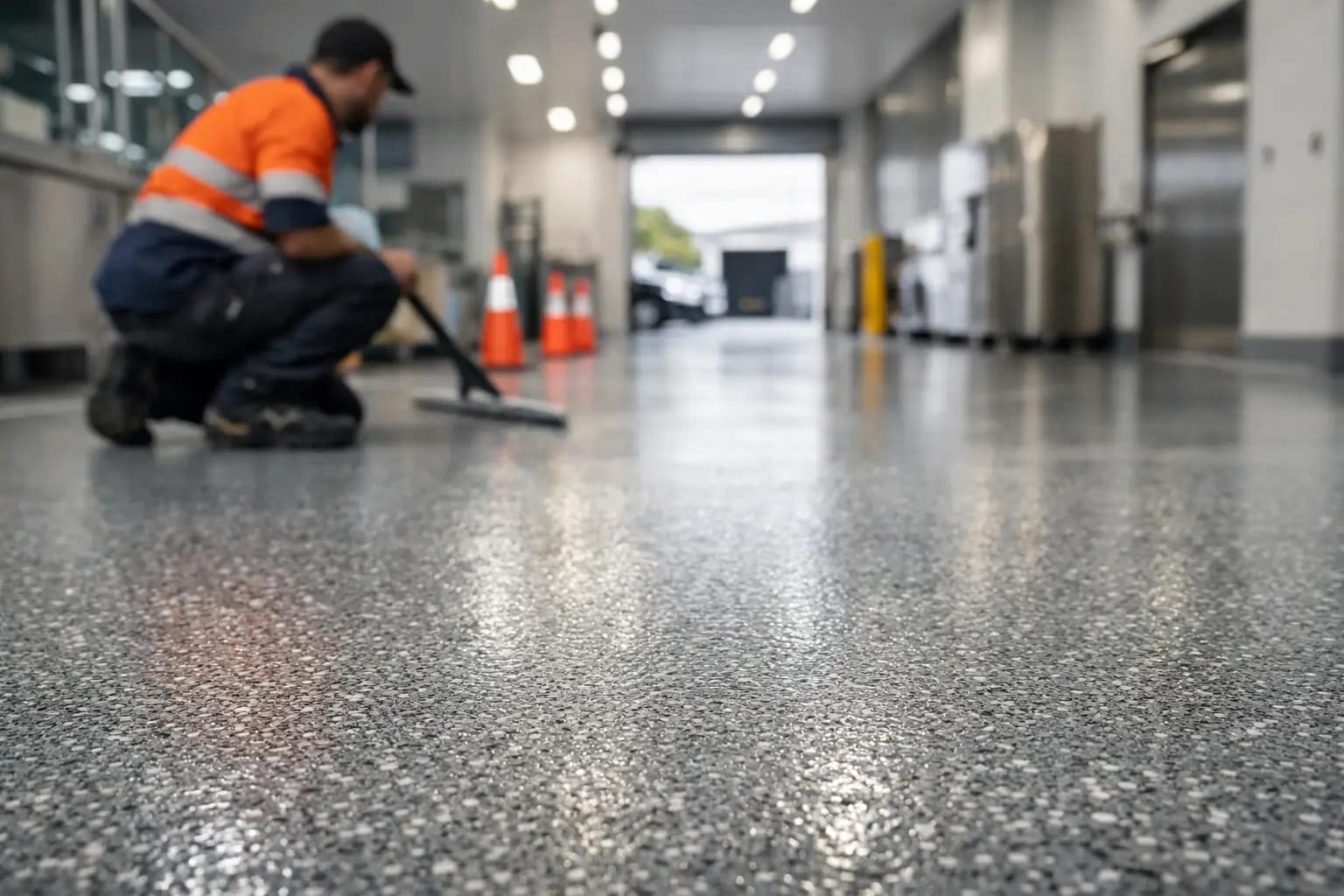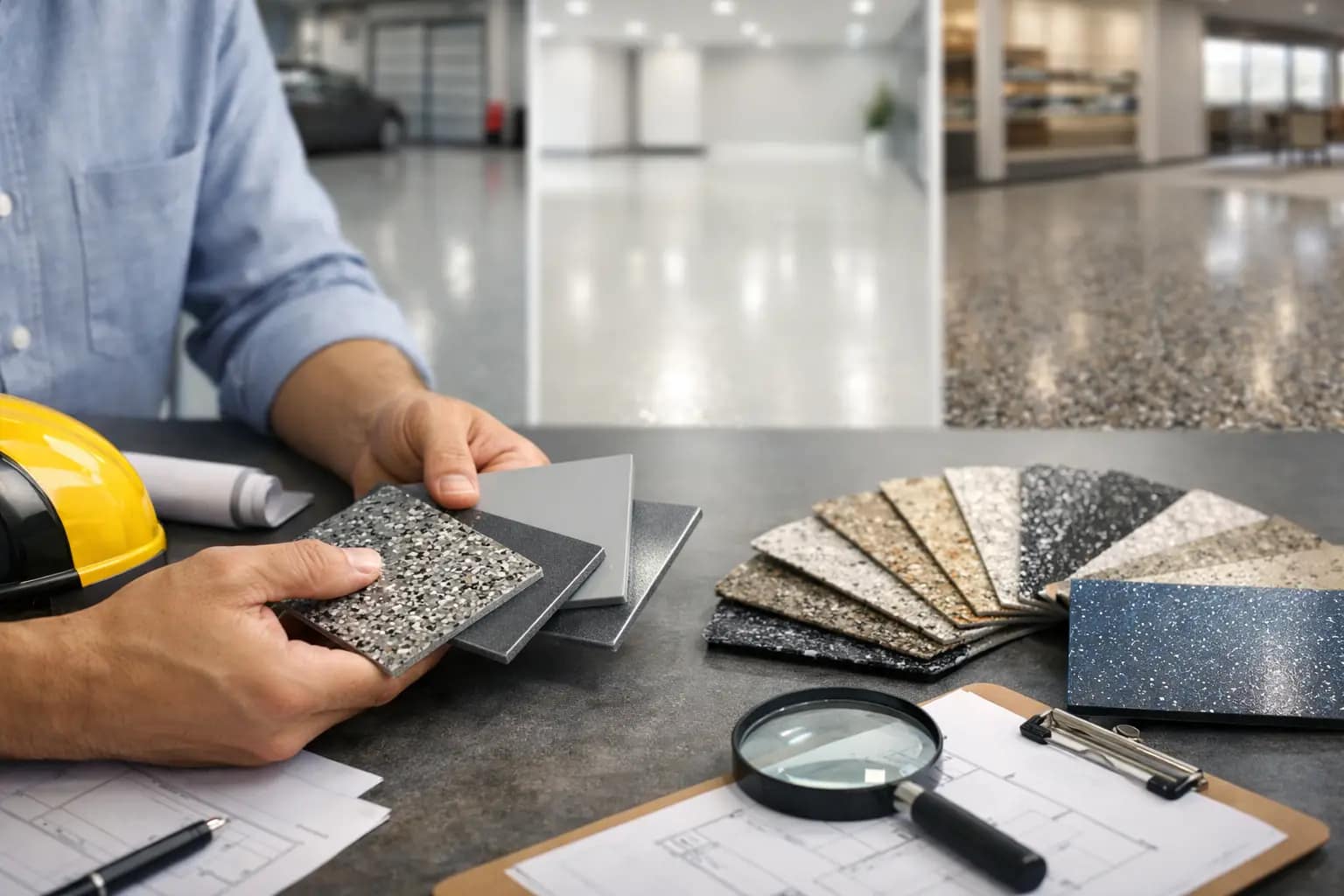

A garage floor that looks great but turns slick the first time it gets wet is not an upgrade – it is a liability. The same goes for shop back-of-house areas, commercial kitchens, wash bays, and warehouse walkways where one spill can turn routine foot traffic into an incident report. If you want the easy-clean and long-wearing benefits of epoxy without the skating-rink effect, the right answer is a properly specified non slip epoxy floor coating.
What “non slip” really means with epoxy
Epoxy itself can cure to a smooth finish. Smooth is easy to mop, but it is also more likely to lose traction when water, oils, or fine dust get involved. A non-slip epoxy system adds controlled surface texture so shoes and tires have something to bite into.
The key word is controlled. Too little texture and the floor is still slippery when contaminated. Too much texture and the floor becomes hard to clean, holds grime, and can feel rough underfoot. The goal is the safest surface that still suits how the space is used day to day.
Where non slip epoxy floor coating makes the most sense
Most people think “garage,” and that is a common fit – especially where cars bring in rainwater, where there is occasional oil drip, or where the garage doubles as a gym or workshop.
Commercially, traction matters even more. Loading areas, walk paths in warehouses, service corridors behind retail counters, and food prep environments all see wet tracking and fast movement. In these settings, non-slip is not a nice-to-have. It is part of basic risk control.
Outdoor or semi-exposed slabs can also benefit, but this is where system selection matters. UV exposure, temperature swings, and moisture vapor from the slab can change what products and topcoats are appropriate.
How a non-slip epoxy system is built (and why prep controls performance)
A non-slip epoxy floor is not just “epoxy with sand thrown in.” A reliable system is a stack of decisions: the slab condition, how it is prepared, what primer is used, the body coat build, the aggregate type and size, and the topcoat that locks everything in.
Surface prep is the part you cannot skip. Concrete must be mechanically profiled so the coating can bond into the surface, not just sit on top. Grinding also removes weak laitance, old sealers, contaminants, and high spots, giving you a consistent surface for adhesion.
Cracks, spalls, and divots need repair before coating. If you coat over defects, they stay visible and can become wear points. A skim coat or patching step is often what separates a floor that looks good for years from one that shows every imperfection after the first season.
For high-performance projects, dust control matters too. Grinding dust can contaminate the slab and the air in adjacent areas. Professional teams use commercial vac systems and clean work practices so the finished coating is not compromised.
Choosing the right traction level: it depends on the space
“Non-slip” is not one setting. It is a range.
For a residential garage, many owners want a floor that is grippy when wet but still easy to hose down. A light to medium texture is usually the sweet spot, especially if the garage is used for parking and normal storage.
For workshops, mechanics’ bays, or anywhere oils are common, you may want more aggressive traction. The trade-off is cleanability. The more texture you add, the more a mop has to work. If you want a safer floor without turning maintenance into a chore, the system should be tailored to the likely contaminants and cleaning routine.
For commercial kitchens and wash-down areas, traction is often prioritized over a perfectly smooth feel. In these environments, the floor is routinely wet, and a little more texture can be the right call. The topcoat selection also matters because chemical resistance and hot-water exposure can be part of the job.
Aggregate options: what creates the “grip”
Most non-slip epoxy floors get traction from aggregate broadcast into the coating and then sealed under a topcoat. The type and size of aggregate changes both the feel and performance.
A fine aggregate can increase traction while still feeling comfortable underfoot and staying relatively easy to clean. It is commonly used for garages, retail back rooms, and general-purpose commercial spaces.
A coarser aggregate increases grip, especially when wet, and is better for ramps, entry points, and industrial walkways. The trade-off is that it can hold dirt and take longer to mop, so it is best where safety is the top requirement and cleaning is done with appropriate equipment.
There are also specialty anti-slip additives blended into topcoats. These can be useful when you want only a modest traction bump or when you are refreshing an existing coated floor, but they are not a magic fix for poor preparation or the wrong system underneath.
Epoxy vs polyurethane or polyaspartic topcoats for non-slip
Epoxy is a strong base coat, but many premium non-slip systems use a different topcoat to improve wear, staining resistance, and UV stability.
A polyurethane topcoat can add scratch resistance and chemical resistance, helping the floor look cleaner for longer in high-traffic areas. A polyaspartic topcoat can offer fast return to service and strong wear properties, which can be valuable for businesses that cannot shut down for long.
This is where “it depends” matters. Fast-curing products can be less forgiving during install if conditions are not right. A contractor should match the system to your timeline, the environment, and the slab condition – not force every project into the same one-size setup.
Common mistakes that lead to slippery or short-lived floors
The most common failure is skipping mechanical prep and relying on acid etching or “clean and coat” methods. Those shortcuts often lead to peeling, hot-tire pickup in garages, and premature wear in commercial settings.
Another issue is uneven traction. If aggregate is broadcast inconsistently or topcoat is applied unevenly, you can end up with slick patches next to rough patches. It feels bad underfoot and looks unprofessional.
Finally, some projects use too much texture to compensate for a questionable base. That creates cleaning problems and still does not fix adhesion. Good floors are built from the concrete up.
What to expect during installation
Most non-slip epoxy installations follow a clear sequence: prepare the concrete, repair as needed, apply primer and base coats, broadcast aggregate to the specified traction level, then seal with one or more topcoats.
Noise and dust during grinding are normal, but a professional crew will manage dust and keep the site organized. The coating stages require controlled timing. That is why experienced installers focus on workflow and material handling, especially in occupied commercial environments.
Cure times vary by system. Some floors can return to light foot traffic quickly, while vehicle traffic may require more time. If you are running a business, the schedule should be planned around your operations so you know exactly when areas can reopen.
Maintenance: keeping traction without grinding the surface down
A textured floor stays safer when it is kept clean. Fine dust acts like tiny ball bearings under shoes and tires, and oils can reduce friction even on a textured surface.
Routine sweeping or vacuuming followed by damp mopping is usually enough for residential garages. For commercial spaces, periodic scrubber cleaning can keep the texture clear of embedded grime.
The other part of maintenance is using the right cleaner. Harsh solvents or overly aggressive acids can dull topcoats over time. A neutral cleaner and consistent cleaning schedule usually protect both appearance and traction.
When to hire a contractor (and what to ask)
If you want predictable results, the installer matters as much as the products. Ask how the concrete will be mechanically prepared, what repairs are included, and what traction options they recommend for your specific risks. You should also ask how the system will be topcoated and what cure times are realistic for foot and vehicle traffic.
If you are in Sydney or across NSW and want a floor that is built for safety and long-term wear, [Floor Masters](https://Floormasters.com.au) provides end-to-end prep and epoxy installation with non-slip options tailored to garages, shops, and high-traffic commercial spaces.
A safer floor does not have to look industrial or feel like sandpaper. When the texture is specified correctly and the slab is prepared properly, you get traction you can trust and a finish that still cleans up easily – which is exactly how a working floor should behave.