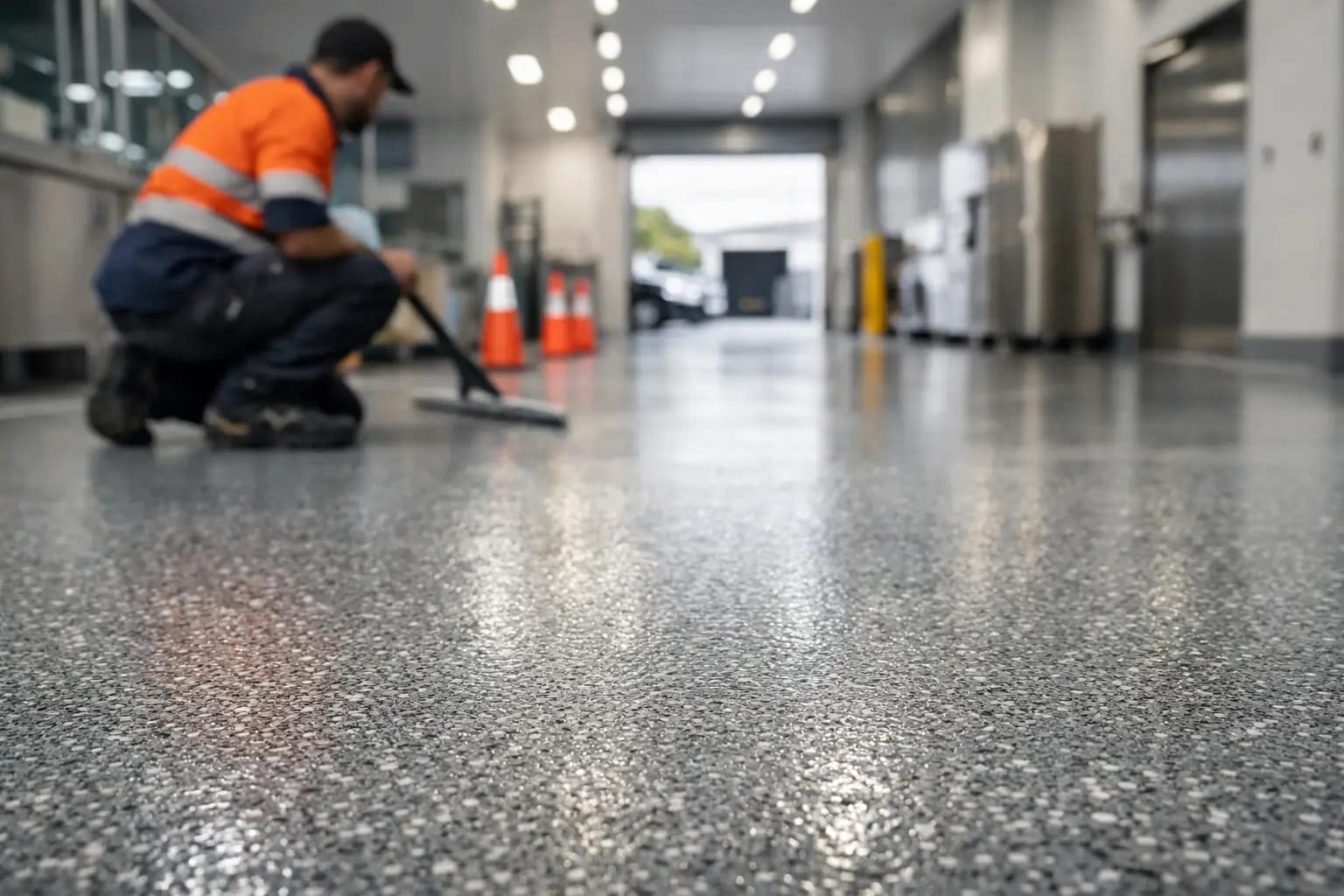

A wet garage floor that turns into a skating rink is a fast way to regret a “nice and glossy” finish. The tricky part is that epoxy can look grippy when it’s dry, then surprise you the first time rainwater drips off a car, a mop leaves a film behind, or a fridge line leaks.
Is epoxy flooring slippery when wet?
Epoxy flooring can be slippery when wet, but it doesn’t have to be. Slip risk is mainly about the surface texture, the type of liquid on top, and how the floor is used (foot traffic, shoes, tires, and cleaning routines). A high-gloss, smooth epoxy in a space that regularly gets water, oils, or soap residue is more likely to be slippery than an epoxy system built with a non-slip aggregate and a finish chosen for the environment.
In other words, epoxy itself isn’t automatically “slippery.” A slick epoxy finish in the wrong area is the problem – and it’s avoidable.
What actually makes an epoxy floor slick?
When people ask about slipperiness, they’re usually reacting to one of three scenarios: the floor was installed too smooth, the wrong topcoat was chosen, or the floor is contaminated (even if it looks clean).
Smooth + glossy means less traction
A perfectly smooth coating gives your shoe tread fewer edges to bite into. Add a thin layer of water and you’ve basically reduced friction across the whole contact patch. That’s why showrooms can get away with glossy floors (controlled conditions), while working garages, commercial kitchens, and entryways often can’t.
Water isn’t the worst offender – oils and soaps are
Plain water can reduce traction, but oil, coolant, cooking grease, and cleaning chemicals are the real slip multipliers. They create a lubricating film that can make even a lightly textured floor feel unpredictable. This matters in workshops, cafés, prep areas, warehouses with forklifts, and anywhere you’re regularly cleaning with detergents.
The “clean” floor that still slips
If a floor is regularly mopped with the wrong cleaner, it can build up residue that holds moisture and acts like a slip layer. It’s one reason slip complaints sometimes show up months after installation, not day one.
Footwear and traffic patterns change the outcome
A non-slip finish that feels great in sneakers can feel different in smooth-soled work shoes. And a garage that’s mostly foot traffic behaves differently than one where hot tires, turning wheels, and frequent washing are part of the routine. Designing traction is about the real use case, not the brochure.
Where epoxy is most likely to be slippery when wet
Most slip issues show up in predictable areas:
Garages and drive-in bays
Rainwater and condensation off vehicles are constant. Add car-wash habits and occasional oil drips and you’ve got a high-risk surface if the epoxy is too smooth. If you’re in Sydney and across NSW, humidity swings and sudden downpours make this even more relevant – garages often get wet even when you’re not “using water.”
Commercial kitchens and food prep areas
Grease mist, spills, frequent mopping, and detergents are the perfect recipe for a slippery floor if the coating isn’t specified correctly. Kitchens need traction that still cleans easily.
Warehouses, workshops, and light industrial sites
Forklift lanes, coolant/oil exposure, and routine cleaning put heavy demands on the surface. Some sites also want high-gloss for light reflectivity, which can conflict with slip resistance if not handled properly.
Entries, corridors, and retail back-of-house
Customers track water in, staff move quickly, and wet umbrellas or mop buckets create localized slip zones. These spaces need slip control without looking “industrial.”
How to make epoxy flooring safer when wet (without making it ugly)
Slip resistance is not a single product – it’s a system decision. The goal is to increase traction while keeping the floor durable and practical to clean.
Choose the right texture level for the job
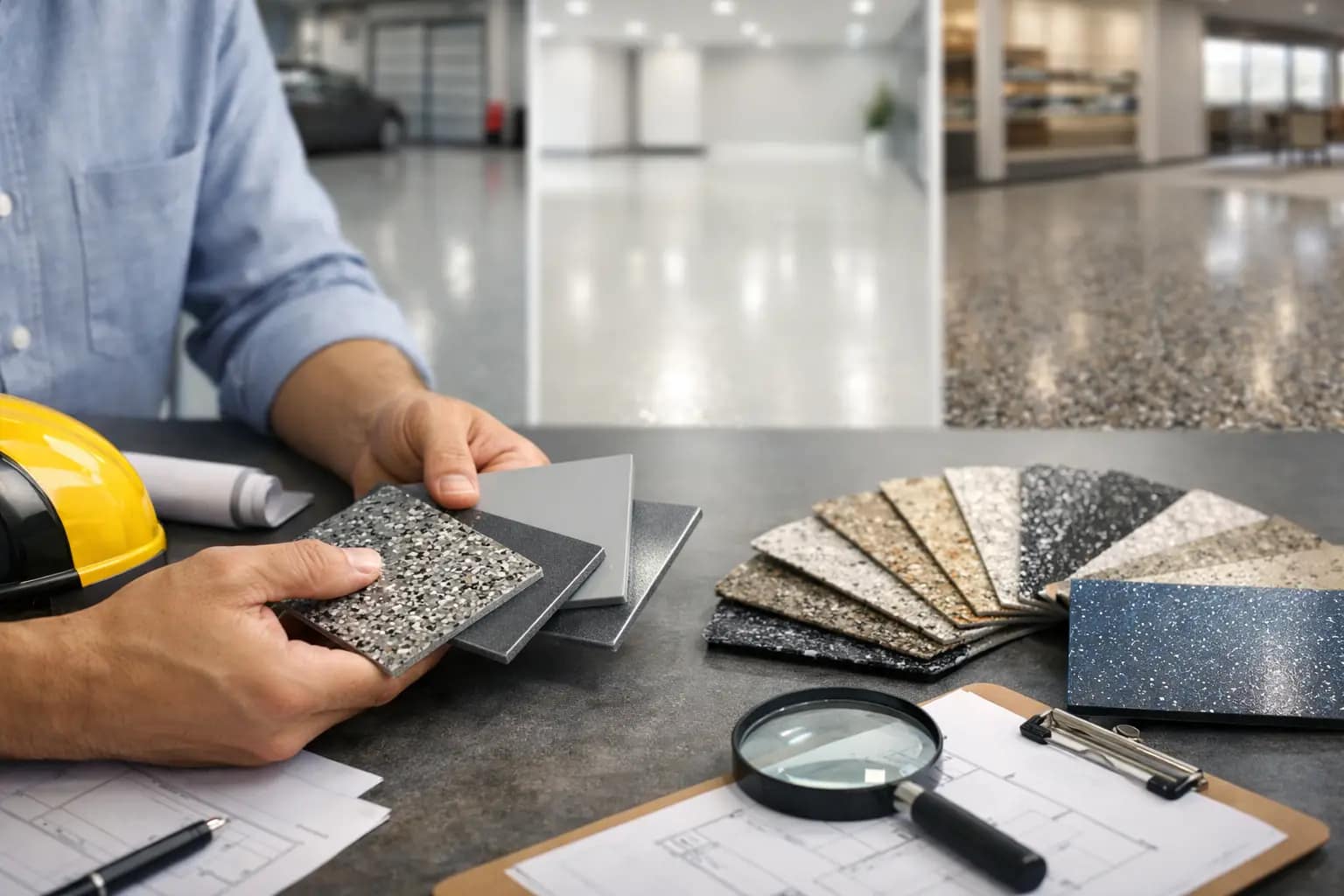
Non-slip epoxy typically uses a broadcast aggregate (grit) into the coating, then seals it with a topcoat. The amount and size of aggregate changes the feel.
A light texture can be enough for a home garage that occasionally gets wet. A more aggressive profile may be needed for commercial kitchens, wash bays, or workshops with oils. There’s always a trade-off: more texture usually means more grip, but it can also trap dirt if the wrong texture is chosen for how the space is cleaned. The best result is the texture that matches your cleaning method and your risk level.
Use the right topcoat – not every clear coat behaves the same
Many people focus on the color coat and forget the topcoat. But the topcoat impacts:
- How “grabby” the surface feels
- How well it resists chemicals
- How it holds up under hot tires and abrasion
- How easily it cleans
In wet-prone areas, the topcoat choice should support the slip strategy, not fight it. A super glossy topcoat over a minimally textured surface can still feel slick with soaps or oils. The system needs to be planned as a whole.
Don’t skip concrete preparation (it affects safety, too)
Surface prep is usually talked about in terms of adhesion, but it also affects safety. If epoxy peels or blisters because the slab wasn’t properly ground and repaired, you can end up with sharp edges, uneven patches, and a maintenance headache that makes slip risks worse.
Professional prep typically includes concrete grinding, dust-controlled practices, crack and spall repair, and moisture assessment when needed. It’s the difference between a coating that behaves predictably and one that turns into a patchwork of problem spots.
Consider where you need traction – and where you don’t
Not every square foot needs the same grip. Some spaces benefit from targeted traction zones: entry paths, sink areas, around workbenches, or transition points where wet shoes first hit the floor. That approach can keep the floor easy to clean while still managing the real slip risks.
Epoxy vs other flooring – is epoxy worse when wet?
Epoxy gets called out because it can be installed very smooth and shiny. But many other surfaces are also slippery when wet.
Bare concrete can be slick, especially if it’s steel-troweled smooth or sealed. Polished concrete can be slippery with water or oils. Tiles vary wildly – some are safe, some are hazardous, and grout lines can complicate cleaning. Vinyl and sheet goods can be slip-rated, but they can also cut, tear, or peel in hard-use environments.
The advantage of epoxy is control: you can build traction into the system and still get a hard-wearing surface that’s easy to keep visually clean.
What to ask your installer if you’re worried about slipping
If you’re choosing epoxy for a garage, shop, warehouse, or kitchen, a good installer should be able to answer these questions clearly.
First, ask how they’ll make the floor non-slip and what that texture will feel like underfoot. “We can add grit” is not enough – you want to know how much, where, and how it will be sealed.
Second, explain what actually gets on your floor: rainwater, mop water, oils, grease, detergents, forklift traffic, or hot tires. The slip strategy changes depending on the contamination.
Third, ask how the floor will be prepared. Grinding, repairs, and dust control aren’t just “nice to have.” They’re what make the system reliable long-term.
If you’re in Sydney or across NSW and you want a floor built around safety and performance, Floor Masters designs epoxy systems with non-slip options and proper concrete prep – the goal is a durable finish that doesn’t surprise you when it gets wet. You can start with a fast quote at https://Floormasters.com.au.
Cleaning and maintenance tips that help keep traction
Even the right coating can feel slick if it’s maintained the wrong way.
Use a cleaner appropriate for coated floors and avoid leaving detergent behind. If you notice the floor feels more slippery over time, it’s often residue build-up rather than the epoxy “wearing smooth.” Rinse when needed and keep an eye on degreasing routines in workshops and kitchens – strong chemicals are sometimes necessary, but they should be used in a way that doesn’t leave a film.
Also, fix small problems early. A leaking appliance line, a regularly overflowing mop bucket area, or a doorway that funnels water onto the floor can make any surface feel unsafe. Traction is part floor system, part site habits.
A wet epoxy floor doesn’t have to be a liability. When the coating is specified for your space, prepped properly, and finished with the right level of texture, epoxy becomes what it’s supposed to be: a clean-looking, hard-wearing surface that behaves the same on Monday morning as it does on a rainy Friday afternoon.