
A garage floor can look “fine” until you try to coat it. Then the truth shows up fast – paint peeling in sheets, darker damp patches that never quite dry, tire marks that won’t scrub out, and little high spots that catch the light (and your mop) every time you pass.
Concrete floor grinding is the step that turns a problem slab into a surface you can actually trust. It’s not about making concrete shiny for the sake of it. It’s about creating a clean, sound, properly profiled base so repairs bond, coatings stick, and the finished floor lasts under real traffic.
What concrete floor grinding actually does
Grinding is controlled abrasion. A machine with diamond tooling removes a thin layer of the surface to cut off contaminants and weak concrete, flatten minor highs and ridges, and open the pores of the slab.
That “open” surface is the difference between a coating that bites in and one that sits on top like a skin. If you’re planning epoxy, a skim coat, or a spray-on coating, grinding is how you give the system a fighting chance.
Grinding is also used when you’re not coating at all. You might grind simply to knock down trip hazards, clean up a rough finish, remove old glue, or improve the look and cleanability of plain concrete. The goal changes, but the principle stays the same: remove what shouldn’t be there and expose solid material.
When grinding is the right call (and when it isn’t)
Grinding is the right move when the surface is uneven, contaminated, or too smooth and dense for a coating to bond. It’s also common when there’s old paint, curing compounds, adhesives, or overspray that needs to come off before anything else can happen.
It’s not always the right tool for the job, though. If the slab has significant heaving, major structural cracking, or widespread moisture pressure coming from below, grinding won’t “fix” that. It can prepare the surface and help a coating system perform, but it won’t stop water migration or correct underlying movement.
The practical way to think about it is this: grinding solves surface problems. If the issue is in the structure or the moisture conditions of the slab, you need an assessment and the right system selection – sometimes including moisture-mitigating primers or different flooring choices.
The real reasons coatings fail without proper grinding
Most coating failures look like a product problem, but they’re usually a preparation problem. Concrete is porous, but it can be sealed by time, traffic, oil, previous coatings, or even a hard trowel finish. If a coating can’t mechanically bond into the surface, it’s relying on chemistry alone, and that’s not enough in garages, warehouses, and commercial spaces.
Grinding helps in three critical ways.
First, it removes contamination that blocks adhesion. Oil and grime often sit deep in the pores, especially where cars park or machinery leaks. Cleaning helps, but grinding is what physically removes the affected surface layer.
Second, it creates the right profile. Coatings need a texture that matches the system – too smooth and it won’t grip; too rough and you’ll burn through extra material trying to fill it.
Third, it exposes weak concrete. If the top layer is dusty, chalky, or poorly cured, a coating will lift with it. Grinding takes the weak layer away so you’re bonding to concrete that can actually hold.
What results you can expect after grinding
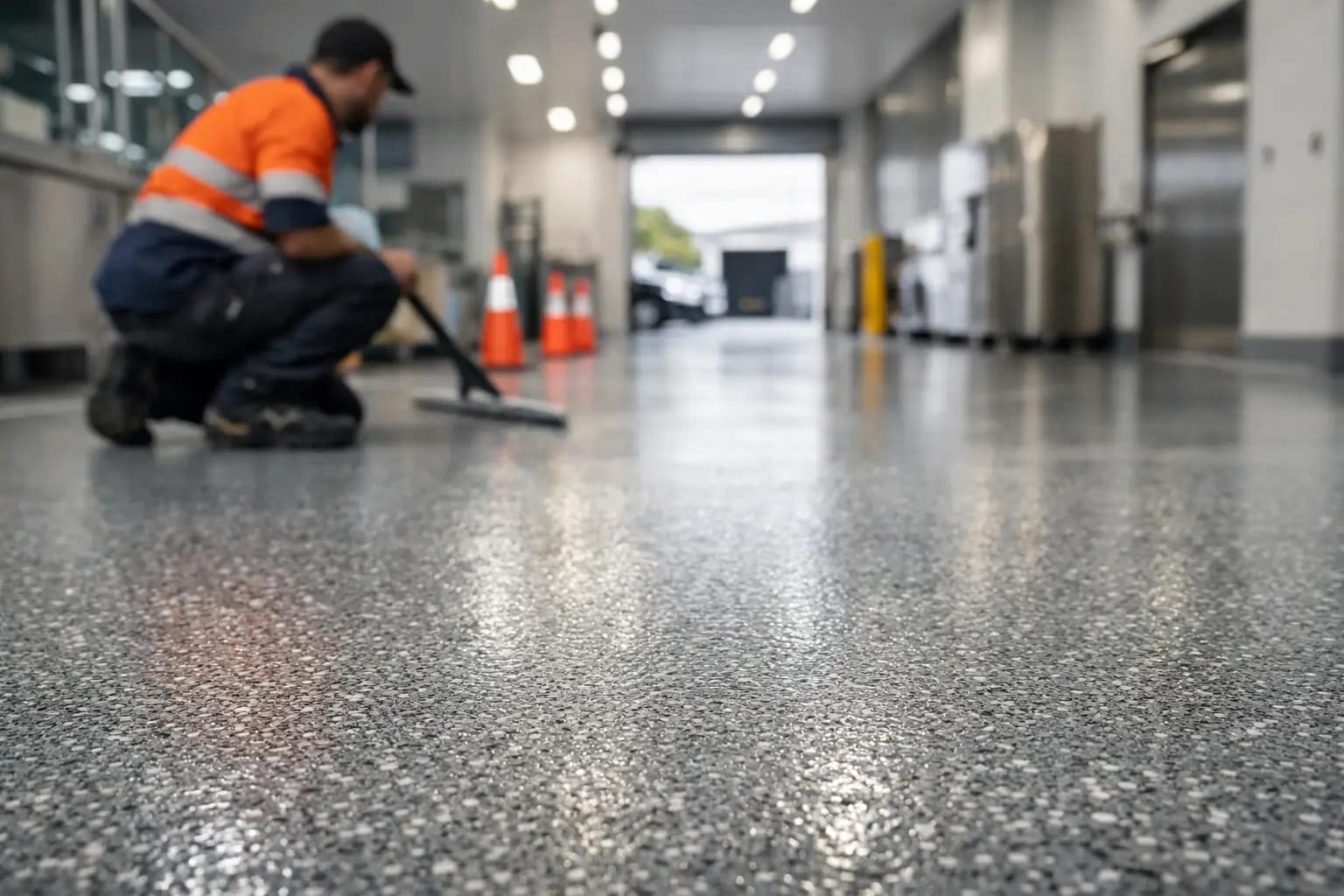
A properly ground slab should look uniform and feel consistent underfoot. You’ll typically see a clean, matte finish with the pores opened up and the surface free of shiny patches.
If the objective is surface preparation for epoxy or another coating, the “result” isn’t cosmetic – it’s performance. You’re aiming for a floor that will accept primers and coatings evenly, without fish-eyes, peeling, or random glossy spots where the coating sat on top instead of soaking in.
If the objective is improving bare concrete, grinding can reduce the roughness that traps dirt and makes cleaning a chore. It can also remove minor lipping and edges that create trip points. Just keep expectations realistic: grinding can flatten and refine, but it’s not the same as pouring a new slab or doing major leveling work.
Dust control: what clean workmanship looks like
Grinding concrete without dust control turns a jobsite into a mess and creates a real health risk. Fine concrete dust can spread through a home or facility quickly, and it doesn’t belong in living areas, stock rooms, or active workspaces.
Dust-controlled grinding uses commercial vacuums connected directly to the grinder. The goal is to capture dust at the source and keep the air cleaner during the process. It also keeps the surface cleaner for whatever comes next – repairs, primers, and topcoats all perform better when you’re not grinding dust back into the slab.
If you’re comparing contractors, ask how dust is managed and what equipment is used. “We’ll sweep after” is not dust control.
Grinding vs shot blasting vs scarifying
Surface prep isn’t one-size-fits-all. Grinding is common because it’s precise and versatile, but other methods can be better depending on the slab condition and the system being installed.
Grinding is ideal when you need controlled removal, edge work, and a consistent finish, especially in garages, kitchens, and commercial interiors where detail matters.
Shot blasting uses steel shot to texture the slab. It can be very effective for large open areas that need a consistent profile quickly, especially in industrial settings. It doesn’t always suit tight residential spaces or areas with lots of edges and transitions.
Scarifying is more aggressive. It’s used to remove thick coatings, heavy build-ups, or to create deeper texture. It can leave a more rugged surface that typically requires additional refinement depending on the final finish.
A good contractor chooses the method based on the slab, the coating system, and the performance target – not just what machine is on the truck.
Common concrete problems grinding can address
Grinding is often the first step before a repair and coating system, because it reveals what’s really going on.
High spots, ridges, and uneven transitions
Garage slabs and commercial floors often have small height differences at door thresholds, control joints, or old patches. Grinding can reduce these, improving safety and making the finished coating look cleaner.
Old paint, epoxy, glue, and surface sealers
If there’s an old coating failing, it usually needs to be removed back to sound material. Grinding can strip those layers so the new system bonds to concrete, not to a weak film.
Efflorescence and surface laitance
That white, powdery residue (efflorescence) and weak, dusty surface layers (laitance) are red flags for adhesion. Grinding removes them and prepares the slab for primers designed to lock in.
Minor spalling and surface damage
Grinding can clean up the edges of spalled areas and prep them for patching or skim coating. It won’t rebuild missing concrete by itself, but it sets repairs up to bond properly.
How grinding fits into an epoxy flooring project
If you’re installing epoxy, grinding is the foundation. The basic sequence is straightforward: grind, repair, prime, build coats, then finish with a topcoat selected for wear and slip resistance.
The trade-off is time and cost upfront versus long-term reliability. Skipping grinding can look like savings on day one, but it’s usually the most expensive shortcut you can take. When epoxy fails, it rarely fails politely. It peels, it lifts under hot tires, it flakes at the edges, and it becomes harder to remove because it comes off in patches.
A properly ground surface supports predictable thickness and adhesion, which is what gives epoxy its “built to last” reputation when it’s done right.
Safety and slip resistance: plan it at the surface-prep stage
People often think slip resistance is a topcoat decision only. It isn’t.
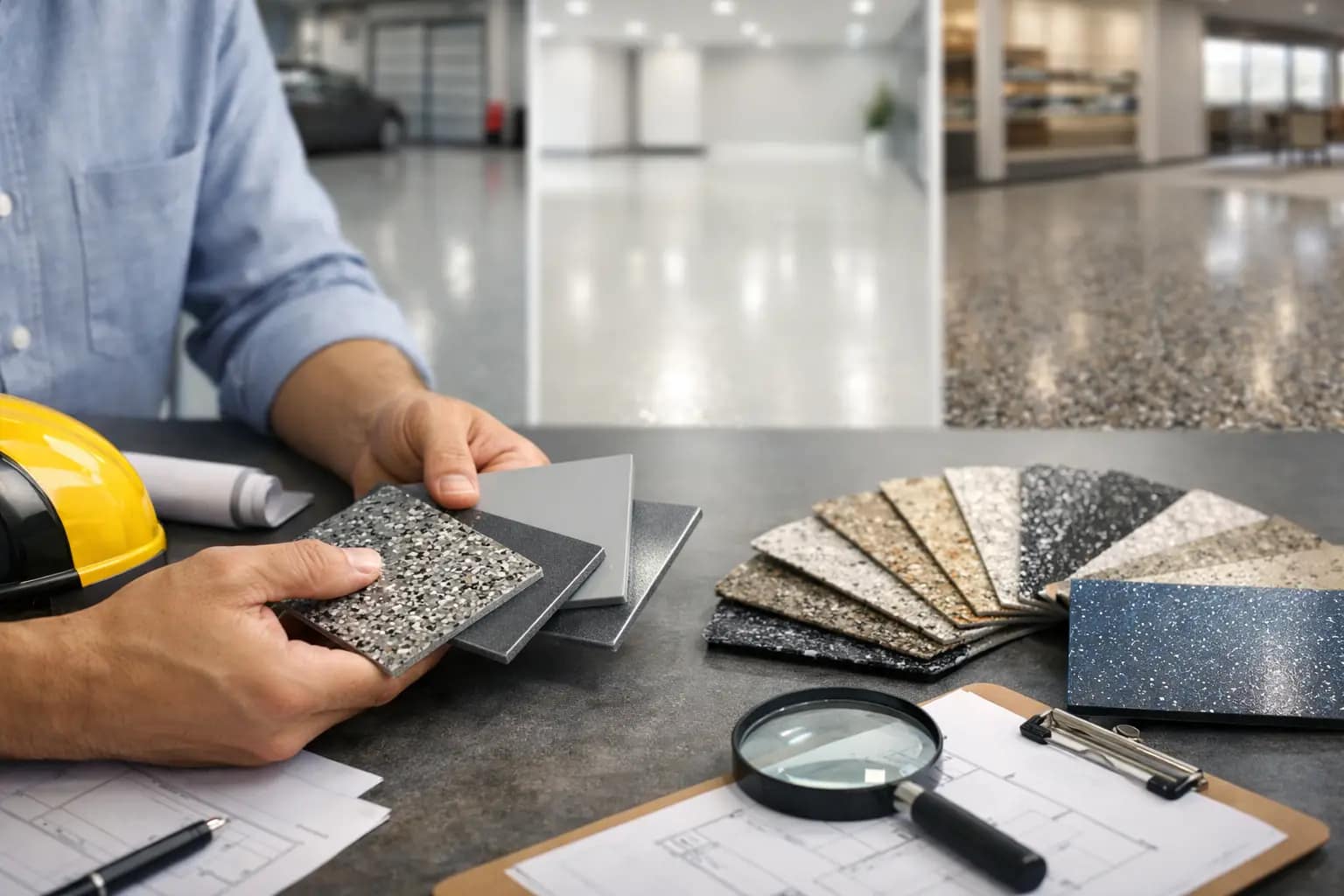
Grinding influences how evenly coatings wet out and how aggregates sit in the system. If the floor has shiny, dense patches and open porous patches, your coating can vary in texture and cure, which affects traction.
For garages, workshops, and commercial spaces where water, oils, or dust show up, it’s worth discussing non-slip options early. You’re balancing three things: traction, cleanability, and comfort underfoot. More grip typically means a slightly more textured finish, and that can change how easily the floor mops.
What to ask before you approve a grinding quote
Price matters, but the cheapest grind is often the one that doesn’t remove enough material, doesn’t control dust, or doesn’t include the edge work that makes the floor look finished.
Ask what level of grinding is being done and what the goal is: coating preparation, adhesive removal, leveling highs, or improving bare concrete. Ask how cracks and joints will be treated after grinding, because they usually need attention before coatings go down. And ask how the area will be protected if you’re in an occupied home or an operating facility.
If you want a single contractor to handle the full scope – concrete floor grinding, repairs, and epoxy installation – Floor Masters provides end-to-end prep and coating services with dust-controlled equipment and straightforward quoting. You can start with a fast quote at https://Floormasters.com.au.
The part most people overlook: timing and conditions
Concrete prep and coating work is sensitive to conditions. Humidity, temperature, and moisture in the slab can all influence timelines and product choice. That’s especially true in coastal areas and during wet stretches when slabs can hold moisture longer than expected.
Grinding doesn’t remove moisture from the slab, but it does expose the surface. That can be an advantage if you’re testing and selecting the right primer, because you’re no longer guessing what’s under a sealed or contaminated top layer.
If your space has to stay operational, sequencing matters too. Grinding is noisy, and even with dust control it’s best planned around access, ventilation, and cure times if coatings follow.
A better floor starts with a clean, honest slab
A concrete floor doesn’t need to be perfect to perform, but it does need to be properly prepared. Grinding is where you stop hoping a coating will “cover it up” and start building a surface that’s clean, level enough, and ready to bond. If you’re investing in a floor that’s meant to take traffic, resist staining, and stay safe underfoot, the smartest move is to treat preparation as the job – not the warm-up.