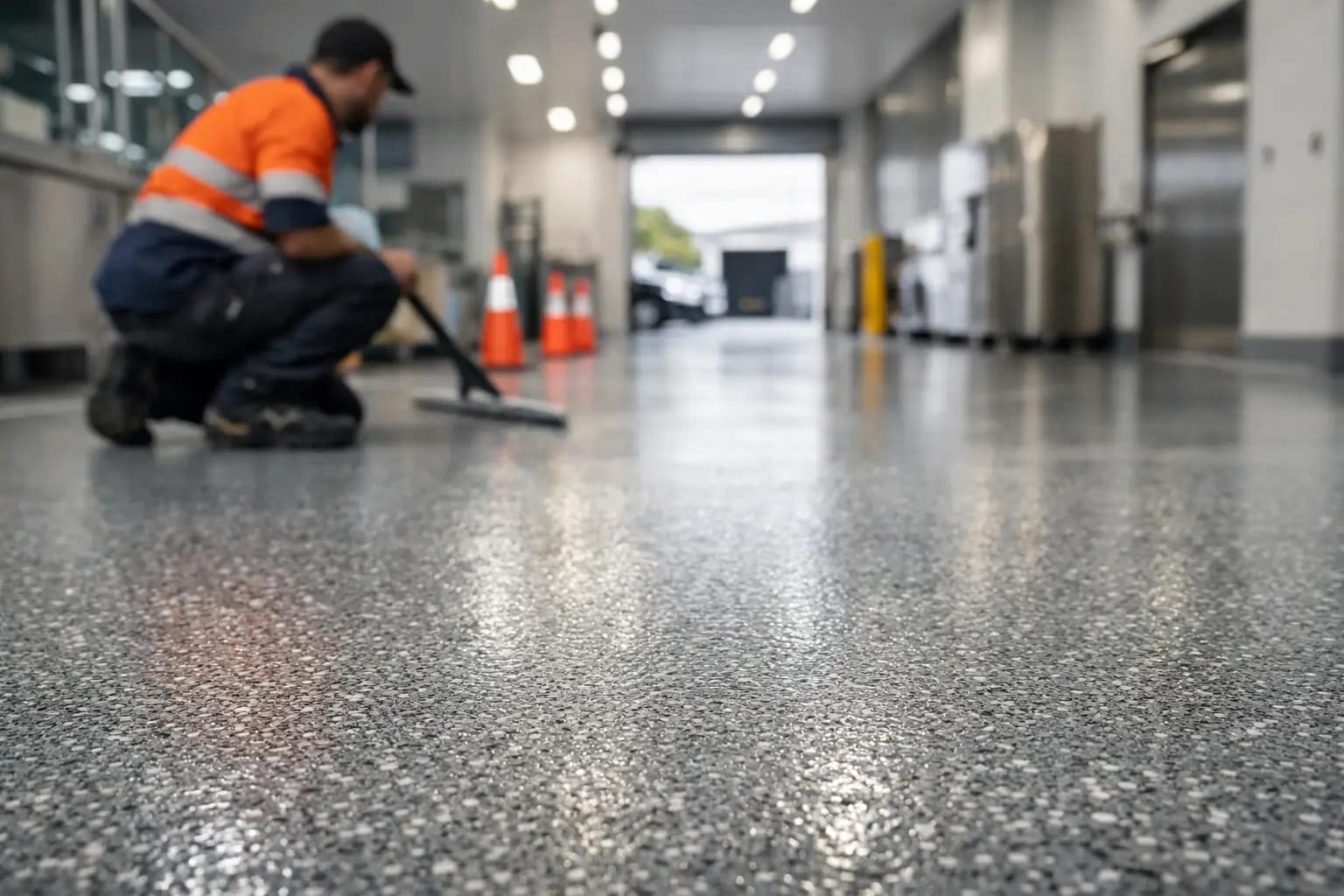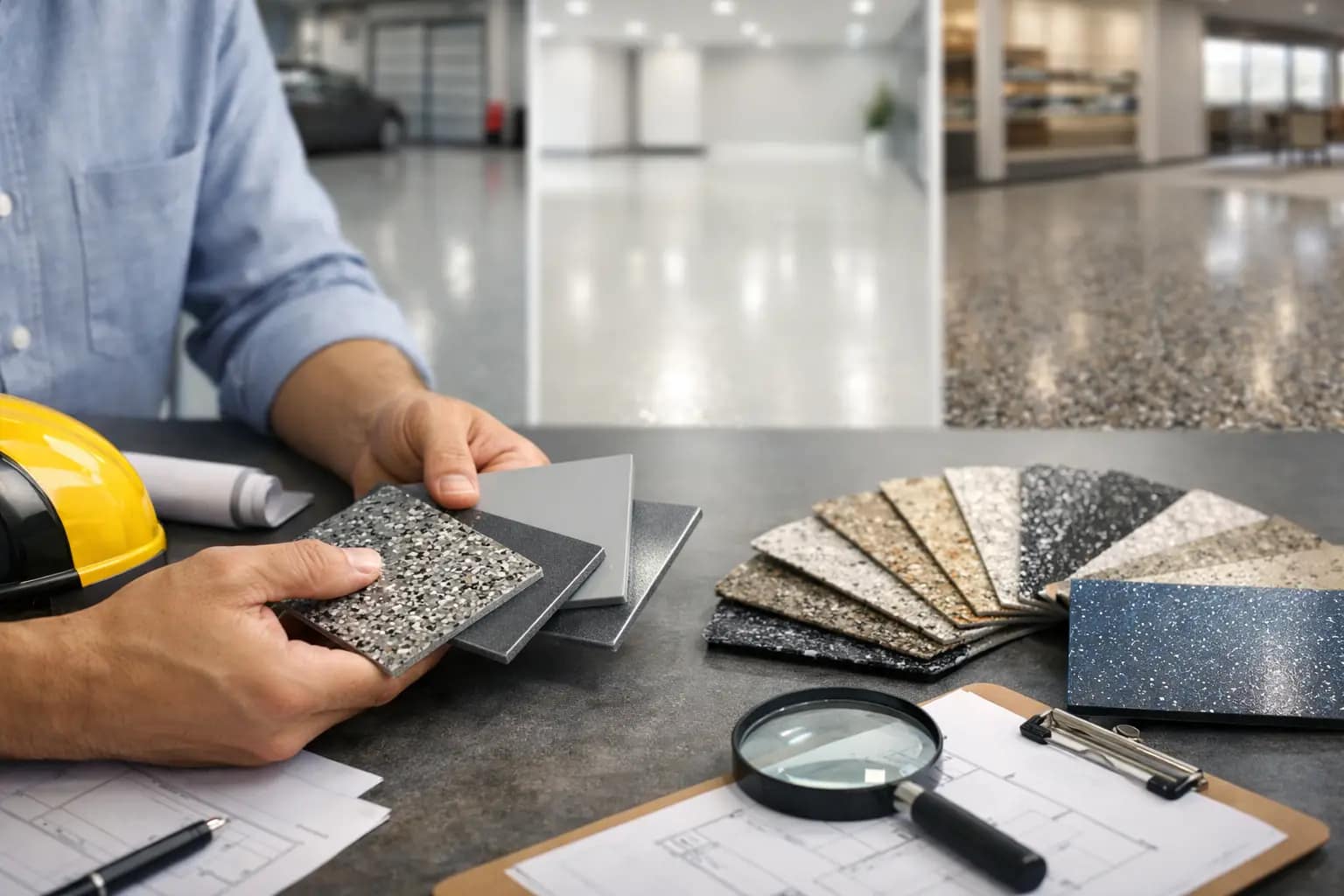

A floor coating failure usually doesn’t start with the coating. It starts with a shortcut: paint rolled over dusty concrete, moisture ignored, or a “quick patch” that crumbles under a pallet jack. Then the surface gets blamed when it was never given a fair shot.
If you’re choosing between the best industrial floor coating systems, the real question is this: what system will still be doing its job after forklifts, hot tires, chemical drips, and daily cleaning hit it week after week? The answer depends on your traffic, your contamination risk, and how serious you are about surface preparation.
What “best” means for industrial floor coatings
In industrial and high-traffic commercial spaces, “best” isn’t the glossiest finish or the cheapest square-meter price. It’s the system that matches your environment and holds up with predictable maintenance.
A good system should deliver three outcomes at once: wear resistance (so it doesn’t powder or peel), safety (so slip risk is managed in wet or dusty areas), and cleanability (so grime doesn’t become permanent). You also want downtime that fits your operation. Some systems are designed for fast return to service, while others trade speed for maximum build and longevity.
The foundation: why surface prep decides the result
Concrete isn’t a smooth countertop. It’s porous, it moves slightly, and it often carries contaminants you can’t see. Oils, curing compounds, old adhesives, or even hardeners can block adhesion. Moisture vapor can push from below and lift a coating that looked perfect on day one.
That’s why industrial coating systems are really two systems: preparation and topping. The prep typically includes mechanical grinding (not acid washing), crack and joint treatment, and leveling or skim-coat repairs where needed. If the floor is weak, dusty, or uneven, the best resin in the world won’t save it.
Dust-controlled grinding matters here, not just for cleanliness but for consistency. The cleaner the profile, the better the bond. This is also where an experienced contractor earns their keep – diagnosing what’s in the slab and building the right primer and repair approach so the coating performs as specified.
Best industrial floor coating systems (and where each wins)
Below are the systems we see perform best in real facilities. Each has a “sweet spot,” and each has trade-offs.
1) High-build epoxy systems (workhorse for warehouses and workshops)
If you need a hard-wearing, easy-to-clean industrial finish, a high-build epoxy system is often the first place to look. Epoxy bonds well to properly prepared concrete and creates a dense surface that resists abrasion and common spills.
This is the system that makes sense for many warehouses, light-industrial spaces, back-of-house retail areas, and garages that see constant tire traffic. It’s also one of the most cost-effective ways to upgrade worn concrete into a surface that’s easier to sweep, mop, and keep presentable.
Trade-offs: epoxies can amber under UV exposure, so areas with heavy sunlight at doorways or near windows may need a UV-stable topcoat or a different resin. Epoxy is also less forgiving on slabs with moisture issues unless the system is designed to manage vapor.
2) Epoxy flake systems (durability plus slip resistance)
Flake systems are epoxy-based floors broadcast with decorative vinyl flakes, then sealed. In industrial terms, the big advantage isn’t just appearance – it’s texture control and serviceability.
In workshops, commercial kitchens, corridors, and busy entry zones, flake can help you dial in slip resistance while still staying cleanable. It also hides scuffs, dust, and minor marks better than a smooth solid-color coating, which is practical in spaces that must look “clean” even when they’re working hard.
Trade-offs: aggressive texture increases grip but can make scrubbing more labor-intensive. The right balance depends on your cleaning method and whether the area regularly gets wet or greasy.
3) Quartz or sand broadcast epoxy (for high-grip, wet-area safety)
When safety is the priority, broadcast systems that incorporate quartz or silica sand create a highly slip-resistant surface. These are a strong choice for wet process areas, wash bays, food handling zones, and any space where water, oils, or powders can turn a smooth floor into a hazard.
A properly built broadcast system also provides thickness, which helps with impact and wear. For facilities teams trying to reduce incidents and improve compliance, this is often the most defensible option.
Trade-offs: more texture typically means more effort to clean. If you need the floor to look pristine with minimal labor, you may choose a smoother system with targeted non-slip zones instead.
4) Polyurethane and polyaspartic topcoats (chemical and UV performance)
Epoxy handles adhesion and build. Polyurethane or polyaspartic layers often handle the “real life” exposure: sunlight, chemicals, scratches, and hot tires.
In spaces with frequent cleaning chemicals, temperature swings, or sunlight exposure near roller doors, a UV-stable topcoat can be the difference between a floor that holds its color and one that yellows or chalks. Polyaspartics also offer fast cure times, which can reduce downtime for commercial operators who can’t shut down for long.
Trade-offs: fast-cure systems require tight installation control. The window for application can be shorter, and conditions matter. This is not a DIY-friendly category if you want consistent results.
5) Moisture-tolerant primer systems (for slabs that won’t cooperate)
If your slab has moisture vapor transmission, a standard coating may blister or delaminate. The “best” system in that case isn’t a different topcoat – it’s a primer designed to manage moisture.
Moisture-mitigating primers and vapor barrier epoxy systems are built specifically for questionable slabs, ground floors, and older concrete where conditions can vary. They’re common in facilities where you can’t realistically replace the slab but you still need a coating that stays down.
Trade-offs: moisture-control systems add cost up front, but they often prevent the most expensive outcome of all: ripping up a failed floor, re-prepping, and losing production time twice.
6) Fast-turnaround resin systems (when downtime costs more than flooring)
Some sites simply can’t afford long closures. Retail back rooms, service centers, and certain industrial operations may need a return-to-service window measured in hours, not days.
Fast-curing systems are designed around that reality. When specified correctly, they can deliver excellent durability with minimal disruption.
Trade-offs: speed doesn’t remove the need for preparation. If anything, fast systems demand more discipline because mistakes set quickly and are harder to correct.
Choosing the right system: what to match to your site
A coating specification should start with how your floor actually gets used.
Traffic is the obvious factor. Forklifts and pallet jacks create point loads and repetitive wear patterns that demand build and abrasion resistance. Hot tires in garages demand a system that won’t soften or peel under heat and plasticizer migration.
Next is contamination. If oils, coolants, cleaning agents, or food acids are present, chemical resistance becomes central. That often pushes projects toward epoxy build with chemical-resistant topcoats.
Then there’s slip risk. A smooth, glossy floor can look great and still be a problem the first time water gets tracked in. Non-slip options aren’t one-size-fits-all. You can add grip additives to topcoats, choose broadcast textures, or create safety walkways with higher traction where it’s needed most.
Finally, look at the concrete itself. Cracks, spalling, soft surface laitance, and moisture all change the system. Repairs and skim coats aren’t “extra.” They’re what makes the coating uniform, safe, and durable.
The failure points we see most often
Most industrial floor coatings fail in predictable ways. Poor grinding leaves the surface too smooth for a mechanical bond. Coatings applied over contamination peel in sheets. Cracks telegraph through because joints were ignored. Moisture creates bubbles that look like the floor is blistering from nowhere.
The fix is rarely exotic. It’s correct profiling, correct primers, and correct repair sequencing. That’s also why transparent pricing matters. If a quote is dramatically cheaper, it’s often because prep has been reduced to the bare minimum, and prep is the one part you can’t “make up for” later.
What to expect from a professional install
A professional project should start with questions, not product names. What traffic do you have? What chemicals hit the floor? Does the slab get wet? How quickly do you need it back in service? Has anything been on the concrete before?
From there, the scope should clearly state the preparation method, repairs included, the coating build (primer, body coats, topcoat), and the safety options such as non-slip finishes. You should also be told what curing time looks like in your conditions and what cleaning practices will keep the floor performing.
If you’re in Sydney or across NSW and you want a coating system built around proper preparation and safety-focused finishes, Floor Masters can quote the right system for your site – from dust-controlled grinding and repairs through to the final topcoat. More info is at https://Floormasters.com.au.
A closing thought that helps you choose confidently
If you’re comparing proposals, don’t get stuck on the brand name of the resin or a single headline like “epoxy floor.” Ask one practical question: “What are you doing to the concrete before you coat it?” The best industrial floor coating systems are the ones that start with disciplined prep and finish with a surface that’s safer to walk on and easier to run your operation on – month after month.