Which Flooring Options Are Best for Durability and Price?
A floor can look fine on day one and still be the wrong choice six months later. That usually shows up as tire marks in a garage, chipped edges in a shop, stains in a kitchen, or a surface that gets slippery the moment it gets wet. If you are weighing cost against long-term performance, the better question is not just what is cheapest to install. It is which flooring option keeps doing its job without constant repairs, deep cleaning, or early replacement.
For most high-traffic residential and commercial spaces, the best-value flooring is the one that matches the slab, the traffic, and the safety demands of the site. That is why property owners asking which flooring options are best for durability and price from floor masters in my area are usually comparing epoxy, polished or coated concrete, tile, and vinyl-based systems. Each has a place. The wrong one can become expensive fast.
Start With Wear, Moisture, and Safety
The floor itself is only half the decision. The other half is what the surface has to handle every day.
A home garage has different demands than a warehouse, retail tenancy, commercial kitchen, or strata common area. Garages deal with hot tires, oil drips, dust, and impact from tools. Warehouses and light-industrial spaces need resistance to forklifts, pallet traffic, abrasion, and routine cleaning. Shops often need a clean, professional look with minimal downtime. Wet areas need slip resistance, not just a smooth finish that looks good in photos.
That is why durability and price should always be considered together. A lower upfront cost can still be poor value if the floor needs patching, recoating, or replacing well before it should. Proper surface preparation matters just as much as the final product. If the concrete is weak, cracked, or contaminated and no one addresses that first, even a premium coating system will not perform as it should.
Epoxy Flooring: Strong Value for High-Use Spaces
If your priority is a hard-wearing surface at a competitive installed cost, epoxy is usually near the top of the list. It is especially strong in garages, workshops, warehouses, back-of-house retail spaces, and some kitchens because it creates a sealed, easy-to-clean finish that handles traffic better than many budget flooring products.
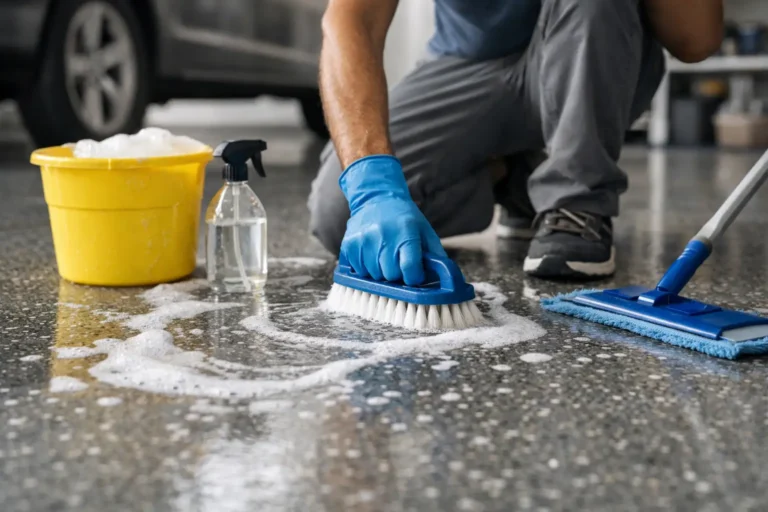
The real value of epoxy is not only surface strength. It is that a professionally prepared and installed system can improve dust control, stain resistance, and overall cleanability at the same time. That matters for busy properties where maintenance time costs money.
Epoxy also gives you options. A plain solid-color finish can keep pricing controlled. A decorative flake system can lift the look of a garage or showroom while still delivering durability. Non-slip additives can be worked into the system where safety is a priority. That flexibility makes epoxy a practical middle ground between bare concrete and more expensive specialty finishes.
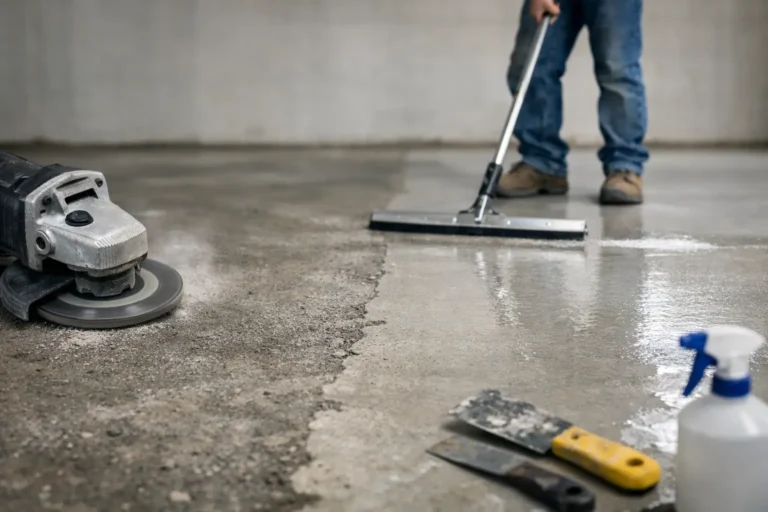
The trade-off is that epoxy is only as good as the preparation underneath it. Concrete grinding, floor repairs, moisture assessment, and proper adhesion work are not extras. They are what make the system last. If you are comparing quotes, make sure you are not comparing a full prep-and-coat system against a cheaper shortcut.
Plain Concrete: Low Upfront Cost, Limited Protection
Bare concrete often looks like the cheapest option because it is already there. For some utility areas, that may be enough. But bare concrete is porous, dusty, and vulnerable to staining and wear. It can also become difficult to keep clean once oil, grease, or general grime start working into the surface.
For owners who want to spend as little as possible immediately, concrete may win on day-one cost. Over time, though, it rarely wins on finish quality, maintenance, or appearance. In active garages and commercial settings, unprotected concrete tends to show its age quickly.
A better-value approach is often to prepare the slab properly and add a coating system suited to the environment. That gives the concrete a longer service life and a cleaner, more usable finish.
Tiles: Durable but Often More Expensive to Install and Repair
Tiles can be durable, especially in internal residential spaces, and they are familiar to most buyers. In kitchens, some indoor living zones, and certain commercial fit-outs, they can perform well. They also come in a wide range of looks.
The issue is that tile durability depends on both the tile and what happens at the joints. Grout lines can trap dirt, need ongoing cleaning, and become a maintenance point over time. In working environments, tiles can crack under impact or fail if the substrate moves. Repairs can also be more noticeable and more disruptive than people expect.
Price is another factor. Once you account for supply, leveling, adhesive, labor, and potential substrate corrections, tile installation can move well beyond the cost of a quality coating system. For wet areas, slip resistance must be considered carefully too, because not every tile that looks right is safe under real operating conditions.
Vinyl and Hybrid Floors: Budget-Friendly in the Right Setting
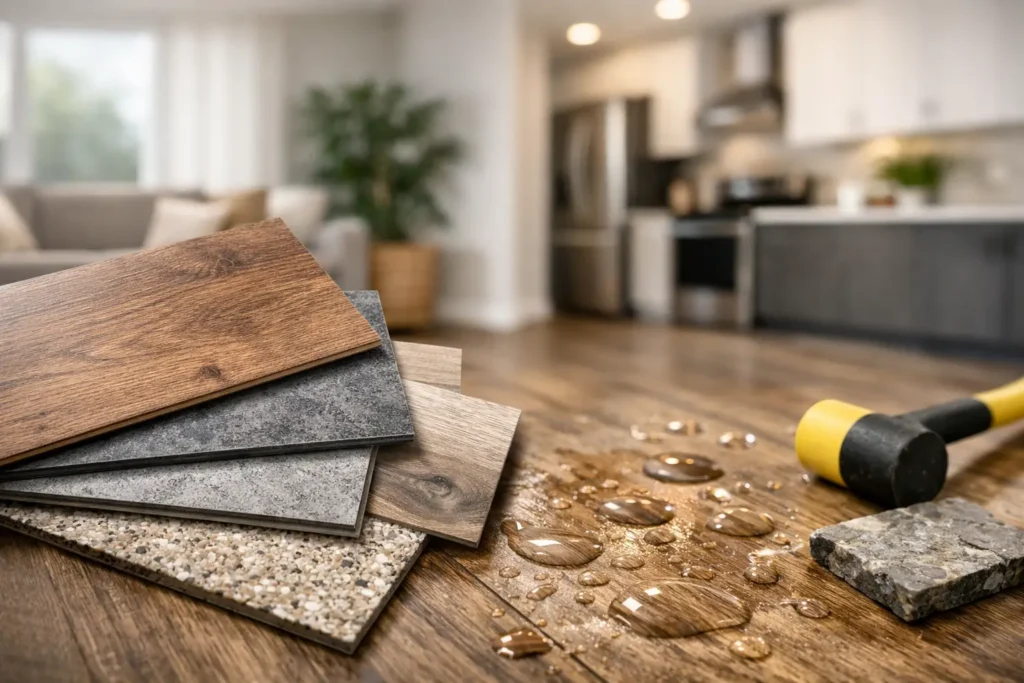
Vinyl plank, sheet vinyl, and hybrid systems are popular because they can deliver a clean modern look at a manageable price. In residential interiors and low-impact commercial spaces, they can be a smart choice. They are generally comfortable underfoot, relatively quick to install, and available in finishes that imitate timber or stone.
Where they fall behind is in heavy-duty use. Sharp loads, dragged equipment, moisture issues, and constant abrasion can shorten their life. In some commercial or industrial settings, they simply are not built for the abuse. If water gets underneath due to poor preparation or slab moisture, problems can follow.
So vinyl can be cost-effective, but mainly in spaces where appearance and budget matter more than industrial-grade wear resistance. It is not the best answer for every high-traffic concrete floor.
What About Spray-On Concrete and Surface Repairs?
Some areas need more than a simple finish choice. Outdoor concrete, older slabs, or surfaces with cosmetic damage may benefit from repair and resurfacing work before any final coating goes down.
Spray-on concrete coatings are often chosen for exterior surfaces where slip resistance, appearance, and surface renewal matter. Skim-coat repairs can help restore worn concrete and create a more suitable base for a long-lasting top system. These services do not replace the need to choose the right flooring, but they can make an existing slab usable again and protect the value of the final result.
This is often where a workmanship-driven contractor adds the most value. Diagnosing the slab properly, grinding with dust-controlled equipment, and repairing defects before coating can prevent premature failure and help the floor perform the way it should.
Which Flooring Option Is Usually Best for Price and Durability?
If you want the short answer, epoxy flooring is often the strongest balance of durability and price for garages, commercial back areas, warehouses, and many other hard-use environments. It gives better protection and easier cleaning than bare concrete, usually costs less than many tile installs, and holds up better than vinyl in tougher conditions.
That does not mean epoxy is always the answer. For some indoor living areas, vinyl or tile may suit the look and feel you want. For some exterior spaces, a spray-on concrete system may be more appropriate. For heavy-use sites with damaged slabs, the best investment may start with grinding and repairs before any finish is selected.
The key is not choosing by product name alone. It is choosing based on the job the floor needs to do.
How to Compare Quotes Without Missing the Real Cost
When owners search which flooring options are best for durability and price from floor masters in my area, they are often really asking how to avoid paying twice. That is a fair concern.
A cheaper quote can leave out moisture testing, crack repairs, proper grinding, premium materials, or non-slip options. Those items affect longevity, safety, and the finished look. If one contractor is quoting a basic coat over poorly prepared concrete and another is quoting full surface prep with a complete system, those numbers are not equivalent.
Ask what preparation is included. Ask whether repairs are allowed for. Ask what finish is recommended for your traffic levels. Ask whether the floor will be easier and safer to maintain once complete. Honest pricing should explain the scope clearly, not hide the work that makes the system last.
For property owners across Sydney and NSW who want a durable finish without guesswork, that is where an experienced team like Floor Masters can make the decision much simpler. The right floor is not always the cheapest line item. It is the one built to last on your slab, under your traffic, with the right preparation behind it.
A good floor should stop being a problem the moment it is installed. If you are comparing options, start with the conditions on site, not the brochure. The best-value result usually comes from matching the system to the surface and getting the preparation right the first time.