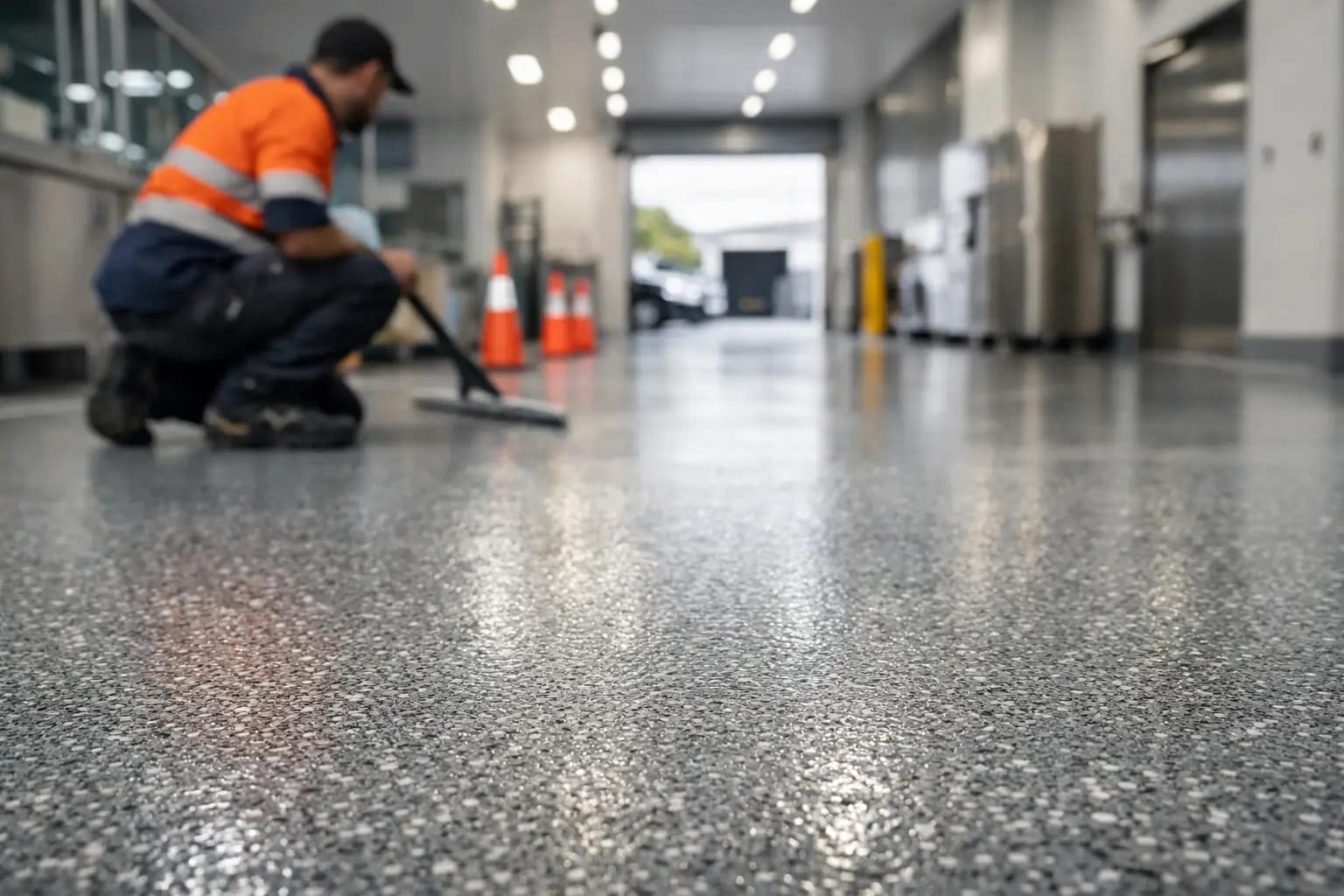

Forklifts leave marks fast. Pallets get dragged, spills happen, dust builds up, and before long a warehouse floor starts working against the site instead of supporting it. That is why choosing the best flooring for warehouses is less about appearance and more about safety, durability, maintenance and how the space runs day to day.
A warehouse floor needs to do a hard job without creating extra problems. If the surface powders, becomes slippery, stains easily or breaks down under traffic, it can slow operations and increase maintenance costs. The right system should hold up under load, be easy to clean, and suit the way the site actually operates.
What makes the best flooring for warehouses?
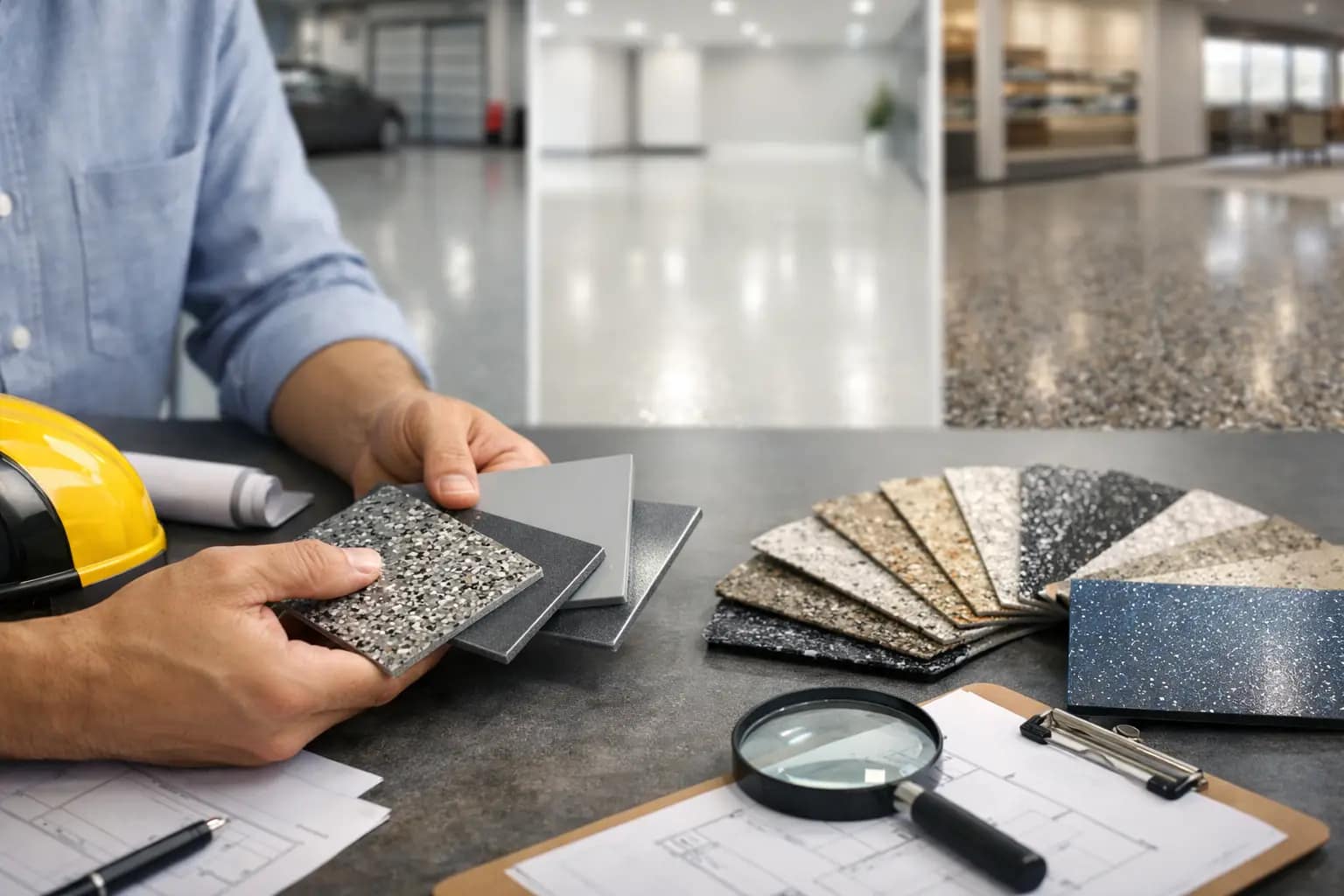
There is no single flooring option that suits every warehouse. A light-storage facility has very different demands from a workshop, distribution centre or food handling site. The best result usually comes from matching the floor to the traffic, the type of stock, the cleaning routine and the condition of the existing concrete.
Load capacity is one of the first things to consider. Frequent forklift traffic, pallet jacks and rolling equipment place constant pressure on the slab and the surface coating. Impact resistance also matters in loading areas where stock can be dropped or dragged. If the floor sees chemical spills, oil, water or regular washdowns, the finish needs to resist more than just wear.
Safety is just as important. Warehouses often need a balance between slip resistance and cleanability. A floor that is too smooth can become risky when wet. A floor that is too textured can be harder to keep clean. That balance matters, especially in busy commercial spaces where downtime is expensive.
The main warehouse flooring options
In most warehouse settings, the conversation usually comes down to concrete-based systems. That is because they offer the strength and practicality needed for industrial and commercial use.
Epoxy flooring
Epoxy is one of the strongest options for warehouse environments when it is installed properly over well-prepared concrete. It creates a hard-wearing coated surface that improves resistance to abrasion, tyre traffic, spills and general wear. It also gives the floor a cleaner, more finished appearance, which can make a big difference in spaces that are client-facing or need a more professional presentation.
A quality epoxy system works well in warehouses because it reduces dust, makes cleaning easier and can be finished with non-slip additives where needed. It also allows for line marking and zoning to be integrated clearly into the floor layout. For sites that need defined walkways, loading areas or hazard markings, that can be a practical advantage.
The trade-off is that epoxy is only as good as the preparation underneath it. If the concrete is poorly prepared, contaminated or already failing, the coating will not perform as it should. Moisture issues in the slab can also affect suitability. This is why proper assessment, concrete grinding and surface repair matter before installation begins.
Polished concrete
Polished concrete is another strong option, particularly in warehouses that want a low-maintenance finish without a full coating build-up on top of the slab. The polishing process densifies and refines the concrete surface, helping to reduce dusting and improve cleanability.
This can suit storage and logistics spaces with steady foot traffic and lighter machine use. It also gives a clean, professional look and can perform well over time when the underlying slab is in reasonable condition. In some settings, polished concrete is preferred because there is no coating layer to peel or wear in the same way.
That said, polished concrete is not the best fit for every warehouse. If the floor is exposed to chemicals, oils or harsh industrial use, epoxy often offers stronger protection. Polished concrete can also become slippery if contaminants are left on the surface, so the cleaning regime and site conditions need to be considered carefully.
Concrete sealing and surface coating systems
Some warehouses benefit from concrete sealing or protective coating systems designed to strengthen the surface, reduce dust and improve stain resistance. These are not always a substitute for a heavy-duty epoxy system, but they can be a suitable choice in lower-impact spaces or where the goal is to improve an aging slab without a full decorative finish.
This approach can be effective for warehouses that mainly need dust control, easier cleaning and a neater presentation. It may also be a practical step where the slab needs remediation and protection but the traffic levels do not justify a thicker resin system.
How to choose the right warehouse floor
The best flooring decision starts with the conditions on site, not just the product name. Two warehouses can look similar at a glance and need completely different flooring systems once you consider how they are used.
If your warehouse has constant forklift traffic, epoxy is often the stronger option because it provides a protective layer over the concrete and stands up well to repeated wear. If the site is mostly dry storage with moderate traffic, polished concrete may offer the right mix of durability and low upkeep. If dusting is the main issue and the slab is otherwise sound, a surface treatment or sealing system might be enough.
The current state of the concrete matters as well. Cracks, spalling, old coatings, uneven areas and contamination all affect what can be installed and how well it will last. In many cases, the floor needs repairs and grinding before any new system goes down. Skipping that stage usually leads to disappointing results later.
Downtime is another major factor for warehouse operators. Some flooring systems can be installed and returned to service faster than others, but timing depends on the floor area, condition, preparation requirements and curing time. A professional assessment helps map out what is realistic without disrupting operations more than necessary.
Why surface preparation matters so much
Warehouse flooring often fails for predictable reasons, and poor preparation is near the top of the list. A strong finish depends on a clean, stable, correctly profiled concrete surface. Dust, grease, laitance, moisture issues or weak top layers can all stop a coating from bonding properly.
That is why concrete grinding, repairs and proper preparation should never be treated as optional extras. They are a core part of the flooring system. In busy industrial spaces, this stage is what helps the final result handle traffic, cleaning and daily wear over the long term.
For warehouse clients, that matters because the real cost of flooring is not just the install. It is the disruption of having to repair or replace a failed floor earlier than expected.
Safety, maintenance and long-term value
The best warehouse floor is not always the cheapest to install. It is the one that performs reliably and reduces problems over time. A surface that is easier to clean, less likely to dust and better suited to traffic conditions can save time and money across the life of the floor.
Safety also plays a direct role in value. Non-slip finishes can be built into suitable systems without making the floor unnecessarily difficult to maintain. Clear zoning and a cleaner overall surface can improve visibility and site presentation as well. These are practical gains, not cosmetic extras.
In warehouses across Sydney and wider NSW, conditions vary from dry storage facilities to workshop-style environments with oil, moisture and heavy traffic. That is why a one-size-fits-all answer rarely works. The best outcome comes from choosing a floor that suits the slab, the workload and the day-to-day reality of the site.
When epoxy is the strongest all-round choice
For many commercial and industrial warehouses, epoxy remains one of the best all-round flooring options. It offers a strong mix of durability, stain resistance, easier maintenance and a cleaner finish. It is especially useful where operators want to protect concrete, reduce dust and improve safety without compromising on appearance.
It is not the right answer in every case, but when the slab is prepared properly and the system is matched to the environment, epoxy performs well in demanding spaces. That is why it is commonly specified for warehouses, workshops and other high-traffic concrete floors.
If you are weighing up the best flooring for warehouses, start by looking at the actual demands of the site rather than the broadest claim on a product sheet. A warehouse floor should make operations easier, safer and more reliable. When the flooring is chosen well and installed properly, that is exactly what it does.
If your floor is already showing wear, dusting or surface damage, it is usually worth getting it assessed before those issues start affecting safety and productivity. A clear recommendation based on the slab and the way the warehouse runs will always be more useful than a generic answer.