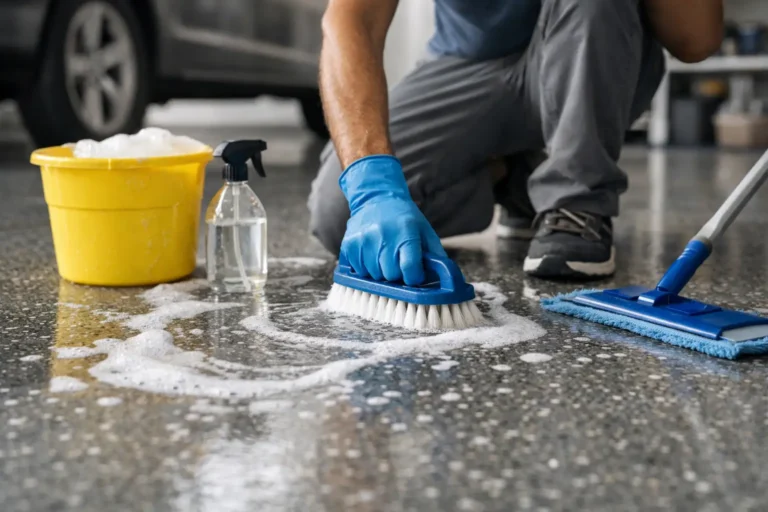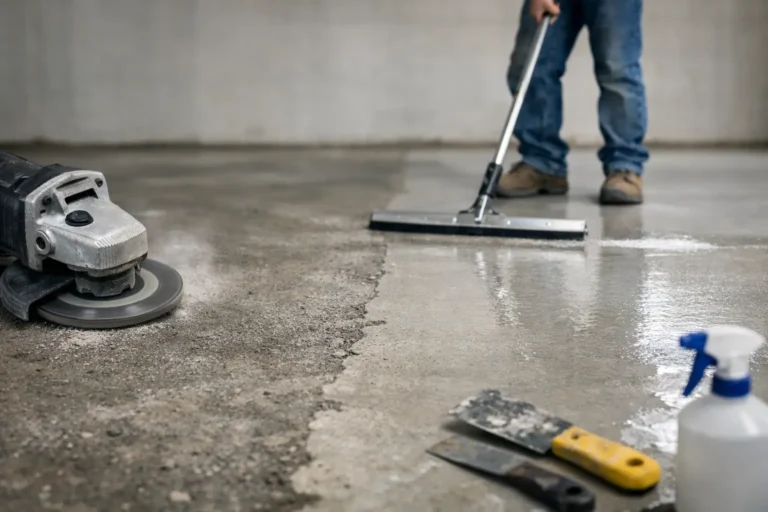

You can usually tell when a contractor cuts corners before the grinder even touches the slab: a haze of dust drifting through the property, fine powder settling on shelves, and a crew that treats cleanup like an afterthought. If you are preparing a garage for epoxy, refreshing a shop floor, or fixing high spots and trip edges in a warehouse, that mess is not just annoying – it is a safety issue, a disruption issue, and often a quality issue.
That is why searches for dustless concrete grinding near me are so common. People are not just looking for “someone with a grinder.” They are looking for clean workmanship, controlled risk, and a floor that is properly prepared for whatever comes next.
What “dustless” concrete grinding actually means
Let’s be direct: truly dust-free grinding does not exist. Concrete contains silica, and grinding it creates ultra-fine particles that want to travel. What you are looking for is professional dust control that keeps airborne dust to a minimum and captures it at the source.
A legitimate dust-controlled setup typically pairs a commercial concrete grinder with a properly sized industrial vacuum (often HEPA-filtered) and tight shrouding around the grinding head. The grinder creates the profile and removes weak surface paste, while the vacuum maintains suction so dust is collected immediately instead of filling the room.
If a contractor shows up with a handheld grinder and a shop vac, that is not “dustless.” It might be better than nothing, but it is not the level of control most homes and operating businesses need.
Why dust control matters for your project, not just your lungs
Most people start with dust because they do not want it drifting into living areas or inventory. Fair. But dust control also affects outcomes.
When dust is captured properly, the crew can see the slab clearly. That matters because grinding is not just “making it smooth.” It is identifying coatings, contaminants, cracks, spalling, soft spots, and moisture-related issues. Visibility improves decision-making, and better decision-making improves the finished floor.
Dust control also reduces the chance of debris settling back into the surface right before coating. If you are installing epoxy or a spray-on coating, residual dust can interfere with bonding and lead to delamination, flaking, or premature wear. In other words, controlling dust is part of controlling performance.
When you need dustless grinding (and when you might not)
If your goal is a long-wearing coating, dust-controlled grinding is usually the standard. Epoxy systems, polyurethanes, and many concrete coatings rely on a properly profiled substrate. Grinding removes laitance and opens the surface so primers and base coats can mechanically bond.
It is also a strong fit when you are working in or near occupied spaces: garages connected to the house, kitchens, retail shops that cannot close for long, and facilities where other trades are operating.
There are cases where grinding is not the only option. Shot blasting can be faster on large open areas and gives an aggressive profile that some systems require. In very small touch-ups, handheld tools might be appropriate with careful containment. The right method depends on the slab condition, the coating system, access, and how sensitive the environment is to dust and noise.
What to look for when searching “dustless concrete grinding near me”
Local results can look identical – similar photos, similar claims, similar pricing language. The difference is usually equipment, process, and standards.
Start with how they describe dust control. A contractor that takes it seriously will talk about vacuum-assisted grinders, HEPA filtration, and how they protect adjacent areas. If the only promise is “we clean up after,” that is not dustless grinding. That is sweeping.
Next, pay attention to whether they ask questions about your end goal. If you are grinding for epoxy, the contractor should care about the coating manufacturer’s profile requirements, existing sealers, oil contamination, and cracks that need repair before coating. If they do not ask what system is going on top, they may be treating grinding as a standalone task – and that is where projects fail.
Finally, look for a team that is comfortable discussing trade-offs. Grinding can create a smoother surface than you want if the goal is slip resistance. Some spaces need non-slip options, additional texture, or a broadcast aggregate system. A good contractor will explain how prep choices affect safety and maintenance.
Key questions to ask before you book
You do not need to speak like a builder to vet a contractor. You just need a few practical questions that force real answers.
Ask what equipment they will use and how dust is captured. You are listening for “vacuum-integrated grinder” and “industrial HEPA vacuum,” not vague statements.
Ask how they handle edges and corners. Many issues show up where big machines cannot reach. A professional crew plans edge work so the floor looks consistent and the coating does not fail around the perimeter.
Ask what repairs are included or excluded. Grinding exposes defects. Some contractors price grinding only, then hit you with change orders when cracks or spalls appear. Others will flag likely repairs upfront, explain allowances, and keep pricing transparent.
Ask what the finished surface will look like. Grinding can reveal aggregate, swirl marks, or variations in the slab. If you are coating, most of that becomes irrelevant because the coating hides it. If you are leaving the concrete exposed, appearance matters and should be discussed.
What dustless grinding costs in Sydney and NSW
Pricing depends heavily on the condition of the slab and the scope of prep. A clean, open garage is not the same as a warehouse with hardened glue, paint overspray, or years of oil contamination.
The biggest cost drivers are square footage, accessibility, and how many passes are required to remove coatings or level high spots. Edges, tight rooms, and heavy furniture or shelving slow the job down. Repair work also changes pricing because patching, crack chasing, and resurfacing take time and materials.
If you are comparing quotes, be careful with the cheapest number. Low pricing often assumes minimal prep, light grinding, and limited dust control. That can look fine on paper and then fall apart when it is time to coat, especially if the slab needs more attention than expected.
A straightforward quote should spell out what is included: grinding method, dust control approach, surface prep level, repairs, and whether disposal and cleanup are part of the price.
How dust-controlled grinding supports epoxy performance
Epoxy is only as good as the surface underneath it. That is not marketing – it is reality. A durable epoxy floor needs strong adhesion, and adhesion comes from proper preparation.
Dust-controlled grinding removes weak top layers and creates a consistent profile so primers can soak in and lock on. It also helps identify moisture-related risk early. If a slab has moisture vapor issues, the system may need a moisture-tolerant primer or a different approach. Skipping that step can lead to bubbling, pinholing, or peeling, no matter how premium the epoxy is.
If you want a non-slip finish, prep and system choice work together. Many high-traffic or wet-prone spaces benefit from texture in the topcoat or a broadcast media. Grinding sets the stage so those layers bond and wear evenly instead of shedding.
Residential vs commercial: what changes
In residential garages and driveways, the priorities are usually cleanliness, speed, and a finish that stays easy to maintain. Dust control matters because garages often connect to living spaces, and homeowners do not want powder in the house or yard. Noise and timing also matter, especially in busy neighborhoods.
In commercial spaces, the priorities shift toward minimizing downtime, coordinating with operating hours, and meeting safety expectations. Dust control is still important, but so is planning: staging areas, clear walk paths, and sequencing the work so the business can keep moving. If the floor is part of a compliance plan – slip resistance, line marking, chemical resistance – the contractor should talk through performance requirements before they grind.
Common red flags (and what they lead to)
If a contractor cannot explain dust control beyond “we use a vacuum,” expect more cleanup and more risk. If they avoid talking about repairs or moisture, expect surprises. If they promise a perfectly uniform look on every slab, be cautious – concrete is variable, and honest contractors set realistic expectations.
Another red flag is treating grinding as the finish when your real need is a system. Grinding alone can improve flatness and remove coatings, but it does not provide the chemical resistance, stain resistance, or easy-clean surface that many owners want. For garages, warehouses, and shops, the best outcome is often end-to-end service: prep, repairs, then a coating designed for the traffic and environment.
For property owners across Sydney and NSW who want dust-controlled preparation and coatings built for performance, Floor Masters provides epoxy flooring and concrete surface prep as a complete package – from grinding and repairs through to a durable finish – with fast, transparent quoting at https://Floormasters.com.au.
How to get the best result from your quote visit
Before the contractor arrives, be clear about how the space is used and what problems you are trying to solve. Is it tire pickup in a garage? Dusting concrete in a warehouse? A slippery shop entry when it rains? The right prep and coating system starts with the right target.
Also be upfront about timing constraints. If you need the space back quickly, say so. Cure times, recoat windows, and drying conditions matter. A professional team can often stage the work or specify a system that matches your schedule, but only if that conversation happens early.
If you are unsure whether you need grinding, repairs, or a full coating system, that is normal. The point of working with a specialty contractor is not to guess – it is to get clear recommendations based on the slab in front of them and the performance you need from the floor.
A clean site at the end of the day is good. A floor that bonds properly, stays non-slip where it should, and holds up under real traffic is better – and that starts with the kind of dust-controlled grinding that respects your property and your project.