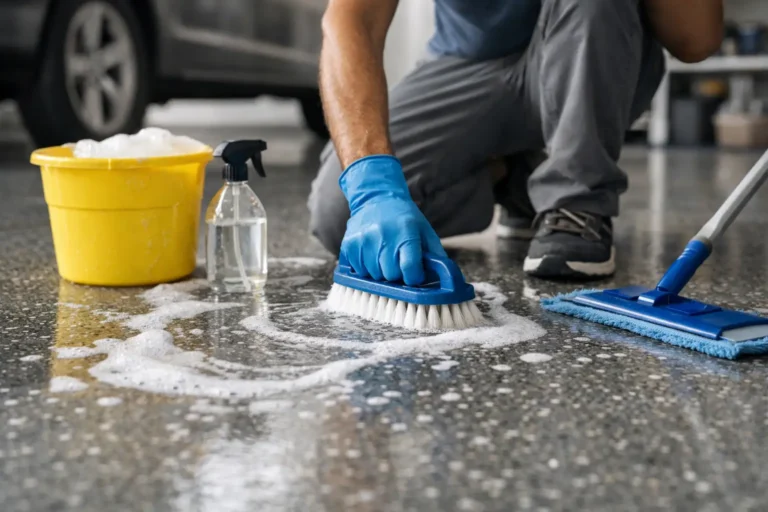
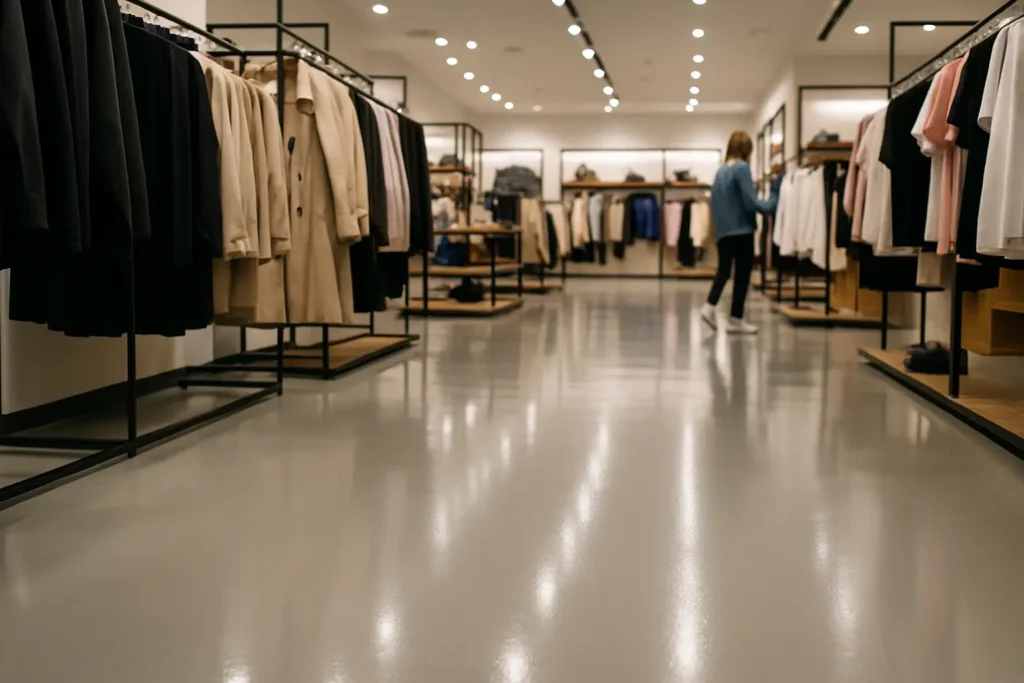
A retail floor gets judged fast. It sees heel traffic all day, carts scraping corners, spills at the counter, and grit tracked in from the street – and it still has to look clean under bright lights. If your current concrete is dusty, stained, or patchy, customers notice. If it’s slippery when wet, staff notice even more.
That’s why epoxy flooring for retail shops is a practical upgrade. Done properly, it gives you a hard-wearing surface that’s easy to mop, safer underfoot, and visually consistent from the shopfront to the storeroom. The key is “done properly” – because in retail, shortcuts show up as peeling edges, bubbles, and shiny-but-slippery finishes.
Why epoxy makes sense for retail (and when it doesn’t)
Epoxy is a resin-based coating system installed over prepared concrete. In a shop, the wins are straightforward: it’s built to handle daily traffic, it doesn’t shed concrete dust, and it cleans up quickly. Many systems also offer non-slip options so you can reduce risk in entryways, behind the counter, and anywhere spills happen.
But epoxy isn’t magic. If the slab is damp, contaminated with old adhesives, or already failing underneath, coating over the top won’t “lock it in.” You’ll get a nicer look for a while, then delamination when moisture or weak concrete pushes back. Epoxy also needs curing time. If you need a same-day return to full trade, you’ll want to discuss faster-curing systems or staged work rather than assuming any epoxy can be opened immediately.
What retail shops put epoxy through
Most shop owners think about foot traffic first, but retail damage is usually a mix of small, repeated impacts.
Entry zones get grit and water. That acts like sandpaper under shoes and can dull lower-grade finishes quickly. Back-of-house areas see pallet jacks, trolleys, and stock cages. Even in small stores, those hard wheels create tight point loads that punish weak coatings. Then there are the chemicals: cleaning agents, beauty products, food oils, or accidental solvent contact depending on what you sell.
A retail floor system needs to be selected for your traffic type, not just your color preference.
Epoxy flooring options for retail shops
There isn’t one “standard epoxy” that fits every shop. The right system depends on your budget, downtime tolerance, and where the floor sits in the customer experience.
Solid color epoxy
A solid color epoxy is a clean, consistent finish that works well in storerooms, staff areas, and minimalist retail fit-outs. It’s easy to keep looking sharp because you’re not fighting raw concrete stains and dust. If your brand aesthetic is bright and modern, a light gray or off-white can lift the space, but it also shows grime more quickly in entry zones.
Flake epoxy systems
Flake systems blend decorative vinyl flakes into the coating to add texture, hide minor scuffs, and create a more forgiving day-to-day appearance. For many retail shops, flakes are the sweet spot – they look finished, they reduce the “every mark shows” problem, and they can be paired with a non-slip topcoat.
Quartz or heavy-duty textured systems
If your shop has wet areas or a higher slip risk – think food prep zones, drink service, florists, or beauty spaces – a more aggressive texture can be the right call. The trade-off is cleanability: more texture can mean more scrubbing effort. The goal is to hit the right slip rating without making maintenance a chore.
Clear topcoats and UV stability
Not all resins handle sunlight the same way. If you have a shopfront with strong natural light, the topcoat choice matters to reduce yellowing and keep the finish looking consistent over time. This is where system selection beats guesswork – it’s not just “epoxy or not,” it’s which resin stack is right for your exposure.
Surface prep is the difference between “good” and “peeling”
Retail shop owners often see epoxy as a paint-like product. In reality, the installation is closer to a surface engineering job. The coating can only bond as well as the concrete underneath and the preparation done before it.
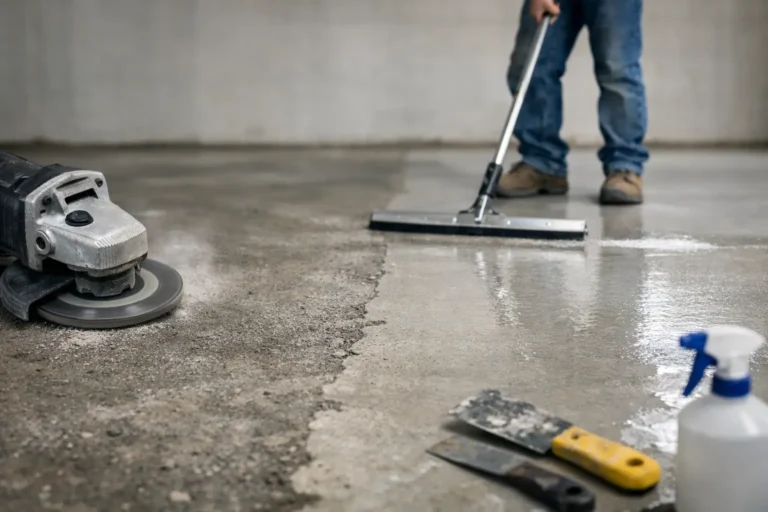
Professional prep typically starts with concrete grinding to remove laitance (the weak top layer), open the pores, and create a proper profile for adhesion. If there are old sealers, paint, glue, or oily patches, they have to come off fully – spot-prepping rarely holds up in high-traffic areas.
Cracks, pitting, and spalled sections should be repaired before coating. A skim-coat or patch repair isn’t about cosmetics only; it prevents weak edges that can chip under trolley wheels. And if moisture is present, you need to address it with the right testing and system choice. Coating over moisture pressure is one of the fastest ways to turn a new floor into a call-back.
If you care about keeping the premises clean during works, ask how dust is controlled during grinding. Dust-managed equipment and disciplined site practices make a real difference in a retail setting, especially if you’re working around fixtures or staging the job to keep trading.
Safety and slip resistance in the real world
A shiny floor can look great under retail lighting, but gloss and safety need to be balanced. Slip risk isn’t theoretical – it’s spills at the POS, wet footprints on rainy days, and staff moving quickly while carrying stock.
Non-slip options are usually created by incorporating an aggregate or texture into the system, then locking it in with a topcoat. The right level depends on your environment. Too smooth can be risky when wet. Too aggressive can trap dirt and make daily mopping less effective. A good installer will talk through where you need grip (entry, behind counter, wet zones) and where you may want a smoother, easier-clean finish (general retail floor area).
Downtime planning: how to keep disruption under control
Retail downtime has a direct cost, so it’s worth planning the project around your trade.
Some shops schedule works after hours, then reopen in stages. Others time the job with a planned refurbishment or a slower trading period. What matters is aligning expectations about cure time. “Dry to touch” is not the same as “ready for full traffic.” Rolling racks, dragging fixtures, and moving heavy displays too early is a common way to damage a new coating before it’s fully hardened.
If you need to reopen quickly, raise it early in the quoting process so the system can be specified accordingly. Faster-curing options exist, but they still rely on correct preparation and controlled application.
What epoxy floors cost in retail settings
Pricing varies because the floor is rarely “just a floor.” The biggest cost drivers are condition and access.
A clean, sound slab in an empty tenancy is faster to prepare and coat than a floor full of fixtures, old adhesive, and patchwork repairs. Edge work around counters and shelving lines adds time. Moisture issues can require additional steps. And the finish level matters: a basic solid color system is typically more cost-effective than a multi-layer decorative system with enhanced topcoats.
The most useful way to think about value is lifespan and risk reduction. A well-prepped, correctly specified epoxy system isn’t just a cosmetic upgrade – it’s a way to reduce ongoing cleaning time, improve slip safety, and avoid constant patch repairs or resurfacing.
How to decide if epoxy is right for your shop
If your priorities are a clean look, easy maintenance, and a floor that doesn’t crumble or dust, epoxy is usually a strong fit. It’s especially practical for back-of-house areas where concrete takes a beating and customers don’t tolerate mess.
If your slab has ongoing moisture problems, or you need a floor that can be opened immediately with zero curing window, you’ll need a more tailored recommendation. The answer might still be epoxy, but with the right moisture-tolerant system, staged installation, or additional preparation to make it perform.
If you’re fitting out a shop in Sydney or across NSW and want epoxy flooring for retail shops specified and installed with the prep done properly, Floor Masters can quote the full scope from concrete grinding and repairs through to the final non-slip topcoat. Details and fast quoting are available at https://Floormasters.com.au.
A retail floor should never be the thing you worry about during a busy week – it should be the surface that quietly takes the hits, cleans up fast, and keeps staff and customers on their feet with confidence.