A warehouse floor usually fails in predictable places: the turning lanes where forklifts scrub tires, the dock edges that take impact all day, and the “wet corner” that never quite dries out. When bare concrete starts dusting, spalling, or staining, it is not just ugly – it becomes a safety issue, a housekeeping problem, and a maintenance cost that keeps coming back.
Commercial epoxy flooring for warehouses is one of the most practical ways to stabilize that concrete and make the space easier to operate. But epoxy is not a single product you “roll on.” The result depends on surface preparation, the system build, and whether the finish is specified for your actual traffic, cleaning routine, and slip risk.
What epoxy really does on a warehouse slab
Epoxy forms a bonded, resin-based wearing surface that seals the concrete. That seal is what changes day-to-day operations: less concrete dust, less absorption of oils and grime, and a floor that can be cleaned consistently without chasing stains into porous slab.
Performance comes from two things working together: mechanical adhesion (created by grinding or shot blasting) and a properly built coating thickness. If either piece is missing, epoxy can chip, peel, or wear through early. That is why pricing and timelines that ignore prep are rarely a good deal.
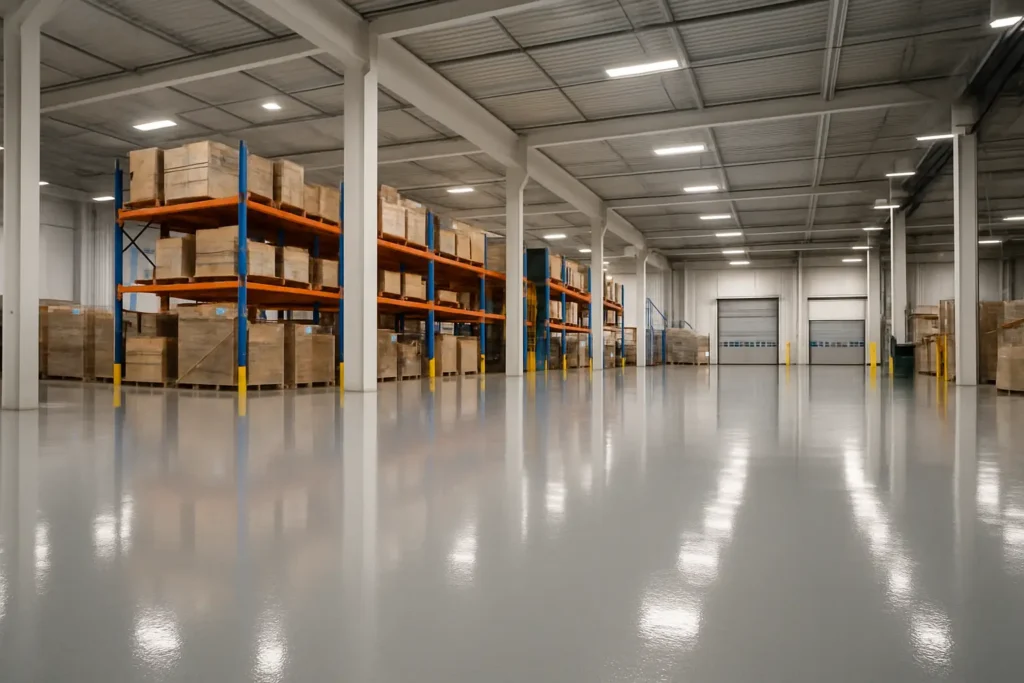
Epoxy also gives you control over safety and visibility. You can add traction media for slip resistance, brighten the space with light-reflective finishes, and apply line marking that stays crisp instead of fading into dusty concrete.
Where commercial epoxy flooring for warehouses makes the most sense
Epoxy is a strong fit for facilities that need a cleanable, chemical-resistant floor and predictable performance under wheeled traffic. If your warehouse runs forklifts, pallet jacks, carts, and frequent foot traffic, epoxy is often the right baseline.
It is especially useful when you are trying to reduce concrete dusting that coats inventory and racks, or when you are tired of degreasing the same oil stains that keep soaking in. Food-adjacent storage and packaging areas also benefit because a sealed floor is easier to keep sanitary.
That said, “it depends” on the conditions. If you have constant thermal shock (rapid hot-to-cold washdowns), epoxy may not be the best topcoat by itself. If UV exposure is heavy near large doors, some epoxies can amber over time, so you may want a UV-stable topcoat in those zones. A good contractor will ask these questions before recommending a system.
System options: thin coats vs built-up floors
Most warehouse epoxy installs fall into a few system categories, and the right one is driven by traffic intensity, desired lifespan, and the condition of the slab.
A thin-build epoxy coating is a good option for light-duty storage areas or sections with mostly foot traffic. It improves cleanability and appearance, but it is not designed to take constant turning forklifts in tight aisles.
A high-build epoxy system adds thickness and wear life. For many warehouses, this is the sweet spot: strong resistance to abrasion, better coverage over minor concrete texture, and a longer runway before you are talking about a recoat.
For harsher environments, an epoxy mortar or slurry build can be specified to handle heavier impact and abuse. These systems cost more and take more labor, but they are designed for facilities that cannot afford frequent repairs in high-traffic lanes.
The trade-off is simple: as systems get thicker and stronger, install time and budget increase. The right choice is not “the thickest possible.” It is the one that matches your operations so you are not overpaying, and also not resurfacing again in two years.
Safety first: slip resistance is a design choice
Warehouses need traction, but they also need floors that can be cleaned. Too smooth, and you increase slip risk when dust or moisture shows up. Too aggressive, and every mop, scrubber, and squeegee becomes harder work.
Slip resistance is typically achieved by broadcasting a traction media into a coat and then sealing it. The level of texture can be tuned to the area. For example, you might specify more grip near dock doors and wet process zones, and a smoother finish in dry storage aisles to keep rolling resistance low for equipment.
Do not treat non-slip as an afterthought. Ask for the traction level to be matched to your cleaning method and the type of contamination you actually get: water, hydraulic fluid, plastic wrap debris, or general dust.
Concrete preparation: the part that decides whether it lasts
Warehouse slabs see a lot of abuse before anyone thinks about coatings: curing compounds, tire residue, old adhesives, densifiers, and years of oil. Epoxy does not “stick through” those contaminants.
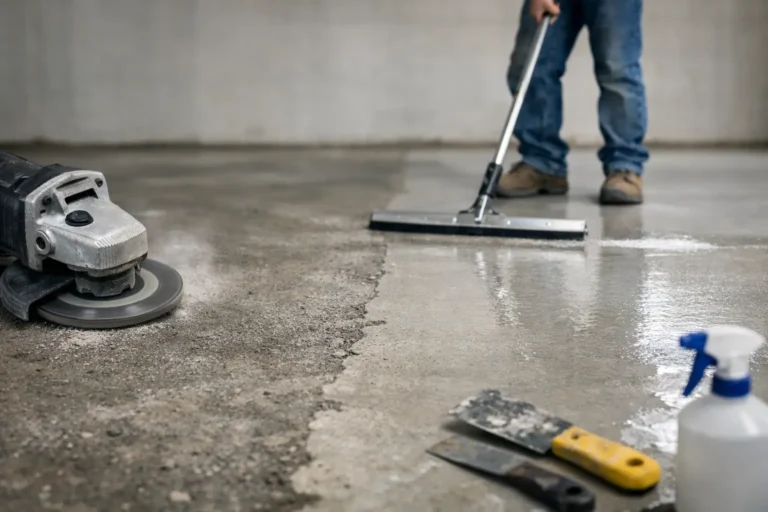
Professional prep typically starts with mechanical grinding using dust-controlled equipment. The goal is to remove weak surface paste, open the concrete pores, and create a profile that the epoxy can lock into. This is also where cracks, spalls, and joints are evaluated, because repairs need to be compatible with the coating system.
Moisture is another make-or-break factor. If a slab has moisture vapor coming up, certain coatings can blister or delaminate. A proper assessment may include moisture testing and, if needed, a moisture-mitigating primer designed for higher vapor transmission.
If you only remember one rule, make it this: most epoxy failures are prep failures. When quotes look too good to be true, the missing line item is often surface preparation.
Repairs and joints: getting realistic about movement
Warehouses often have saw-cut control joints and random cracking. Epoxy can bridge minor imperfections, but concrete movement does not stop just because you coated it.
Cracks can be chased, cleaned, and filled with repair materials before coating, which improves appearance and reduces the chance of the crack telegraphing quickly. Joints are more nuanced. Some joints are designed to move, and rigidly coating over them can lead to joint lines reflecting through or localized cracking.
A practical approach is to plan for where you can tolerate lines, and where you want the best cosmetic result. In high-visibility areas, you may choose more detailed joint treatment. In heavy-traffic lanes, you may prioritize durability and serviceability over a perfectly uniform look.
Chemical resistance, staining, and cleaning realities
Epoxy performs well against many warehouse contaminants, but “chemical resistant” is not unlimited. Battery acid exposure, harsh solvents, and certain degreasers may require a specific topcoat chemistry or additional protection.
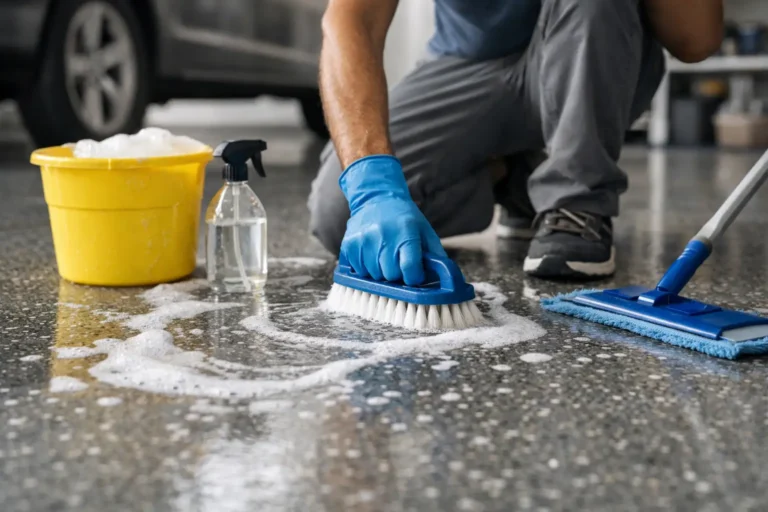
Cleaning also matters. A sealed epoxy floor is easier to scrub, but aggressive pads and harsh chemicals can dull a gloss finish over time. Many facilities do best with a consistent routine: daily dust control, periodic auto-scrubbing with a compatible detergent, and fast cleanup of spills.
If your team uses a specific chemical for sanitation or degreasing, bring that into the conversation early. Matching the system to your cleaning routine is part of building a floor that stays looking clean, not just a floor that looks good on day one.
What to expect during installation
Warehouse projects live and die by coordination. A coating crew needs access, controlled conditions, and enough time for each coat to cure. That means staging work by zones, planning around shipping schedules, and keeping other trades out of the active area.
Your contractor should explain cure times for foot traffic and equipment, and they should be clear about temperature and humidity limits. Epoxy is sensitive to conditions, and pushing a schedule too hard can create finish issues that are avoidable.
If downtime is your biggest concern, ask about phasing. Many warehouses can keep operating by coating sections in sequence, as long as traffic patterns are planned and safety barricades are enforced.
Signs you need more than “just epoxy”
Some slabs need additional steps to get a reliable outcome. If you see widespread delamination of old coatings, heavy oil saturation, or soft concrete at the surface, expect more aggressive prep and localized repair.
If moisture is present, a moisture-mitigation layer may be required before the main epoxy system. If impact and abrasion are extreme, a thicker build or a more industrial topcoat may be the better investment.
This is where straightforward, transparent pricing matters. A good quote does not just list “epoxy coating.” It spells out prep, repairs, number of coats, traction options, and what areas are included.
Choosing a contractor: what to listen for
The best indicator of a successful warehouse floor is not a fancy product name. It is whether the contractor leads with prep standards, testing, and a system matched to how you operate.
Listen for specifics: dust-controlled grinding, crack and spall repair methods, moisture assessment, and a clear plan for slip resistance. You also want a team that can work cleanly and safely in an active facility, because overspray, dust, and poor site control create problems fast.
If you operate in Sydney and across NSW and want an end-to-end team that handles concrete prep, repairs, and epoxy installation with a safety-first approach, Floor Masters can quote the job and lay out a system built for your traffic and timelines: https://Floormasters.com.au.
A warehouse floor does not need to be perfect to perform well, but it does need to be properly prepared and honestly specified. The smartest projects start by walking the slab, calling out the trouble zones, and choosing a system that makes those areas stronger than they were before – because that is what keeps forklifts moving and maintenance calls down.