Oil drips in the garage, pallet marks in a warehouse aisle, wet footprints near a shop entry – epoxy takes the hit so your concrete doesnt. But easy to clean doesnt mean maintenance-free. The way you clean an epoxy floor can either keep it looking sharp and slip-safe for years, or slowly dull it, scratch it, and wear down the topcoat.
This guide is the practical, real-world way to handle epoxy care: what to do daily, weekly, and seasonally – plus what to avoid if you want the coating to perform the way it was designed to.
How to clean and maintain epoxy floors without damaging them
Epoxy is tough, but its still a finished coating. Think of it like a high-performance surface: it resists stains and abrasion, yet it can be scratched by grit, dulled by harsh chemistry, or weakened by repeated soaking in the wrong cleaner.
Most epoxy floor problems we see arent epoxy failure. Theyre avoidable wear patterns: fine swirls from dirty mops, dull patches where degreaser was left too strong, or slippery residue from cleaners that werent rinsed.
The goal is simple: remove abrasive dirt early, lift oils before they attract more grime, and use a neutral cleaner that doesnt leave a film.
Know your epoxy system before you pick a cleaner
Not all epoxy floors behave the same. A high-gloss garage system will show fine scratches more easily than a satin industrial system. A non-slip broadcast surface (with grit) traps more dirt and needs a different approach than a smooth showroom finish.
If youre not sure what you have, treat it like this: start with the gentlest method (dust removal + pH-neutral wash) and only step up to targeted degreasing when you need it. If aggressive cleaning seems necessary every time, thats usually a sign the floor is being allowed to load up with oil and grit between cleans.
The daily and weekly routine that prevents 90% of wear
Abrasive grit is the quiet killer of epoxy. It acts like sandpaper under shoes, tires, and pallet jacks. The best cleaning is removing that grit before it gets ground into the surface.
For homes, that often means a quick sweep or dust mop in the garage and entry areas once or twice a week, more often if youre doing DIY projects or coming and going with wet tires.
For commercial sites, a microfiber dust mop daily in traffic lanes makes a bigger difference than an occasional deep scrub. If you have a ride-on scrubber, use soft pads and keep them clean. A dirty pad just redistributes grit.
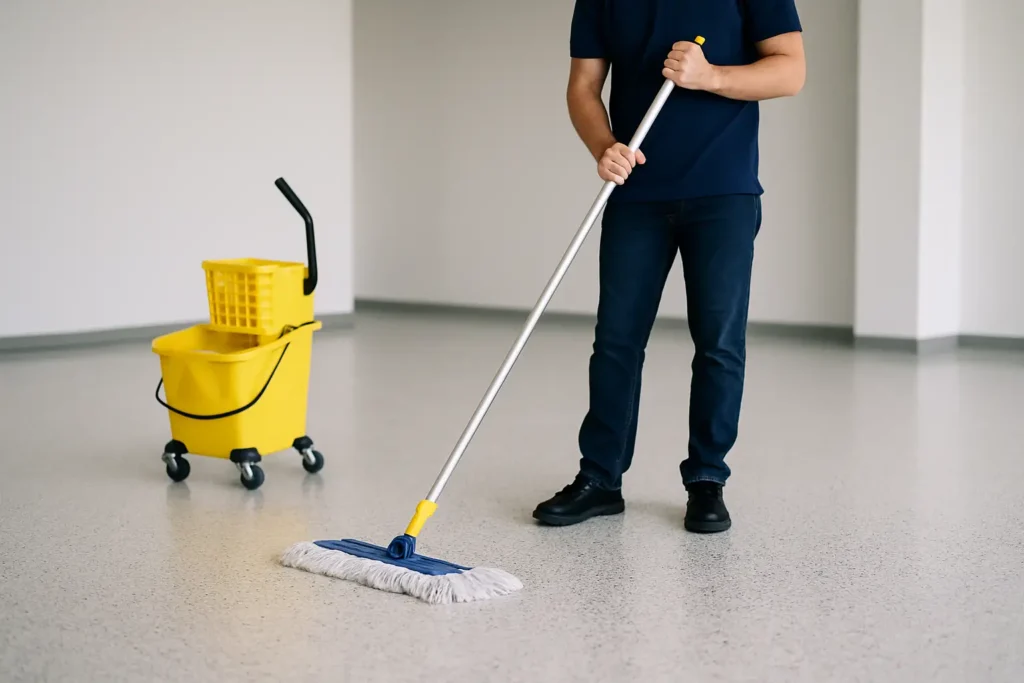
When its time to wet-clean, use warm water with a pH-neutral floor cleaner (or a small amount of mild dish detergent). Mop with a microfiber mop and change the water when it looks gray. If your mop bucket turns dark fast, youre not doing anything wrong – it just means the floor needs more frequent dust removal.
Do you need to rinse after mopping?
If you use a true pH-neutral cleaner at the right dilution, a rinse usually isnt necessary on smooth epoxy. But if the floor feels tacky, looks hazy, or seems to attract dirt quickly, youre dealing with residue. In that case, do one clean-water rinse pass and let it dry.
Spot cleaning spills (and why timing matters)
Epoxy resists staining, but some spills are still best handled quickly – especially oils, brake fluid, harsh chemicals, and anything with pigment.
Blot or wipe up the spill first. Dont start with a soaking wet mop that spreads it. Then wash the area with neutral cleaner and water.
For oil spots, sprinkle an absorbent (even cat litter works) to pull the bulk of the oil out, sweep it up, then wash. If you jump straight to degreaser, you can emulsify the oil and spread it wider than the original spot.
Degreasing without dulling your finish
Garages, workshops, and food-related spaces eventually need degreasing. The trick is using the right product at the right strength and not leaving it to dwell too long.
Use a cleaner labeled safe for epoxy floors, and follow dilution instructions. Strong alkaline degreasers can be fine when used correctly, but full-strength or repeated use can take the life out of a gloss topcoat over time.
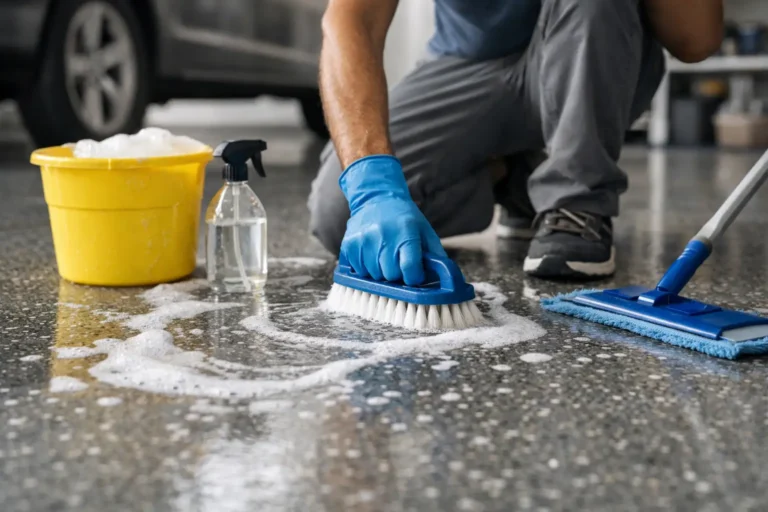
Apply degreaser to the affected area, agitate lightly with a soft bristle deck brush or microfiber pad, then rinse thoroughly. Rinsing is non-negotiable here. Leftover degreaser can leave a film, reduce slip resistance, and make the floor look patchy.
If youre cleaning a large commercial area, consider a scrubber with vacuum recovery so dirty water isnt left to dry on the surface.
What to avoid: common epoxy floor cleaning mistakes
Some cleaning habits cause more damage than the traffic itself.
Avoid citrus cleaners, vinegar, or other acidic solutions as a routine cleaner. Theyre often recommended for general household cleaning, but acids can dull certain coatings over time.
Avoid soap-heavy products that leave a shiny film. That film can become slick when wet and it holds onto dirt.
Avoid stiff wire brushes and aggressive scouring pads. If youre needing that level of abrasion, youre treating the symptom, not the cause.
Avoid pressure washing at close range on edges, joints, or any area with existing chips. Pressure can force water under a compromised section and make peeling worse.
Avoid steam cleaning unless you know your system is designed for it. Heat plus moisture can stress some coatings, particularly at edges and terminations.
Protecting the surface from scratches, hot tires, and impact
Cleaning keeps epoxy looking good, but a few protection habits make it last.
In garages, put a mat under motorcycle kickstands, jacks, and workbenches that get dragged around. Use soft wheels or casters where possible. If you regularly turn steering wheels while stationary (tight turns), expect more wear – thats true even for premium systems.
Hot tire pickup is much less common with modern professional epoxy systems, but it can still happen with lower-grade coatings or if the slab had contamination or moisture issues. If youre seeing black tire marks, they usually clean off with neutral cleaner and light agitation. If the coating is soft or lifting, thats not a cleaning problem – it needs inspection.
In warehouses and shops, keep grit out at the door with entry mats and sweep traffic lanes. If you move pallets, check that debris isnt stuck in wheels. One small stone can carve a surprising scratch line.
Handling scuffs, tire marks, and stubborn staining
Most scuffs are transfer marks sitting on top of the coating, not damage through it.
Start with neutral cleaner and a microfiber pad. If that doesnt work, step up to a dedicated epoxy-safe cleaner or a small amount of isopropyl alcohol on a cloth for the mark only, then rinse. Test in an inconspicuous spot first. Some coatings can haze if solvents are overused.
For rust staining from metal furniture or tools, remove the source and use a rust remover that states its safe for coated floors. Rinse well. If rust has penetrated a chip down to concrete, cleaning wont fully remove it – thats a repair situation.
Seasonal checks: the maintenance most people skip
Epoxy floors usually fail at the edges first: garage door thresholds, control joints, drain penetrations, and any area that gets repeated moisture.
A few times a year, walk the floor and look for small chips, peeling at joints, or hairline cracks that are catching dirt. Fixing a small issue early is fast and affordable. Leaving it lets water and grime work under the coating, and the damaged area grows.
If your floor includes a non-slip texture, pay attention to areas that look polished down. That can mean the topcoat is wearing and the texture is becoming less effective – a safety concern in wet zones.
When a simple recoat is smarter than endless scrubbing
If the floor is structurally fine but looks tired – dull traffic lanes, micro-scratching, or patchy sheen – you may be at the point where cleaning alone wont bring back the finish.
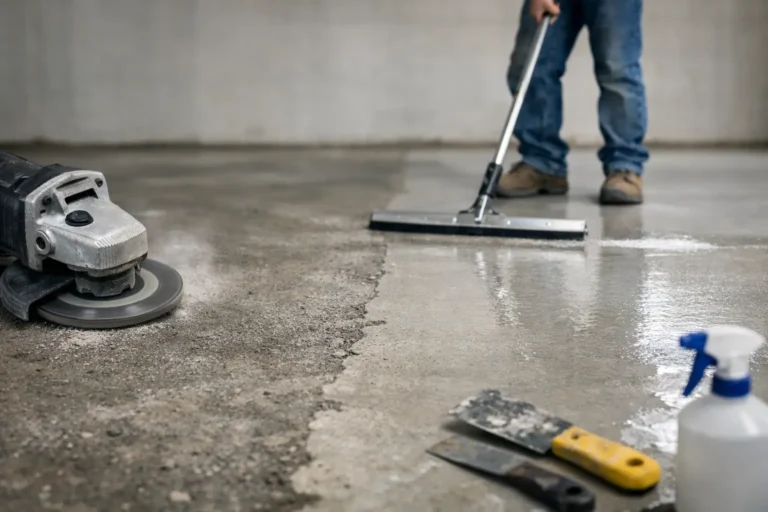
A professional clean and recoat can restore gloss (or convert to a satin), improve chemical resistance, and refresh non-slip performance without removing the whole system. It depends on adhesion, thickness remaining, and whether contamination has penetrated. A contractor should test and prep properly – coating over a dirty or glossy surface without mechanical prep is how recoats fail.
If youre in Sydney or across NSW and want a straight answer on whether your floor needs a deep clean, a recoat, or a localized repair, Floor Masters can assess the surface and quote the right fix based on condition and traffic – not guesswork. (https://Floormasters.com.au)
The simplest rule that keeps epoxy looking new
Clean epoxy like you want it to stay a coating, not become a sacrificial layer. Get grit off early, wash with neutral cleaner, degrease only when you need it, and dont ignore small chips at the edges. A little consistency beats aggressive one big clean every time, and it keeps your floor looking professional the way a performance surface should.