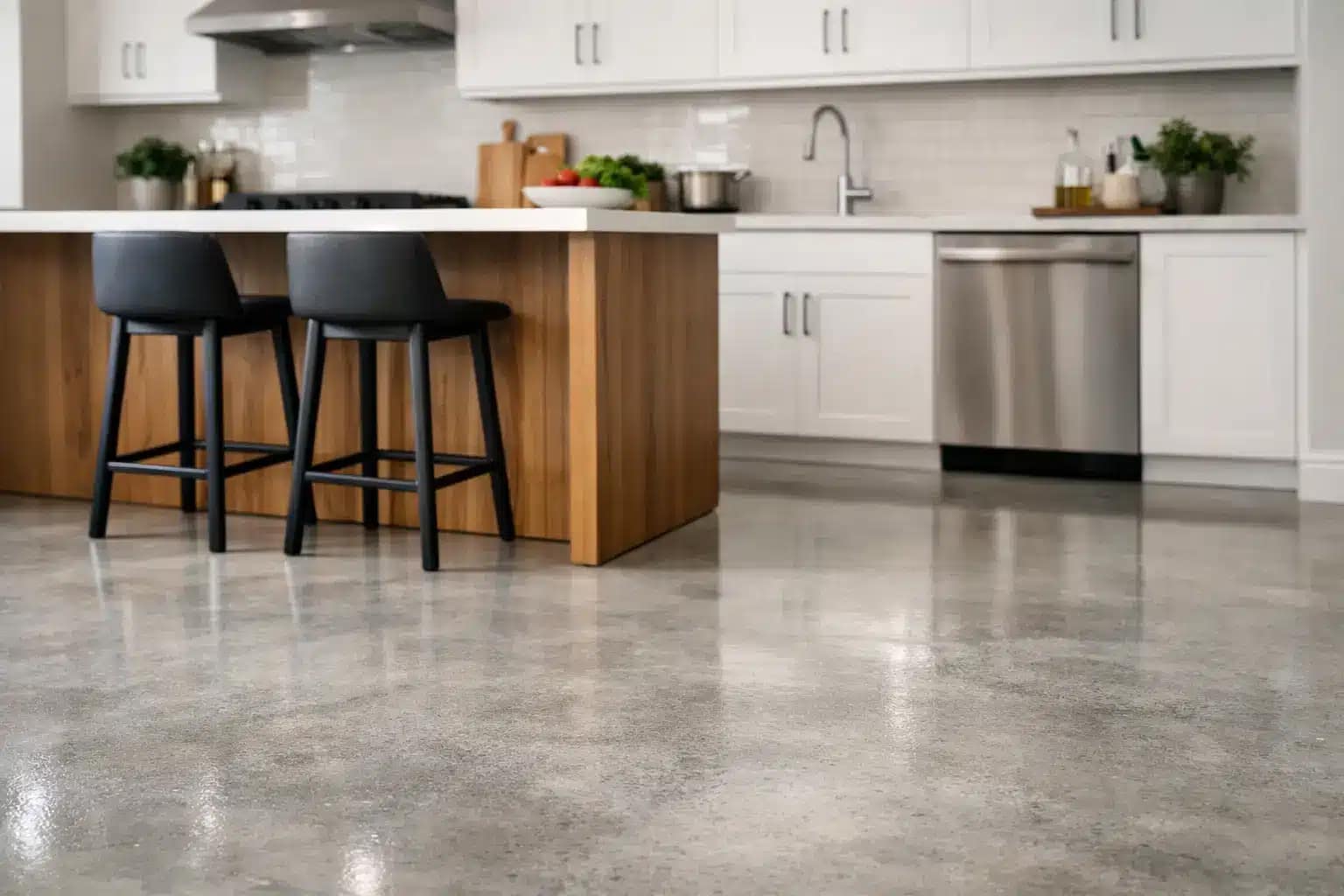
A kitchen floor cops more than most surfaces in the house. It deals with dropped utensils, food spills, chair movement, foot traffic, moisture and regular cleaning. If the slab underneath is exposed, dusty, stained or hard to keep looking presentable, a kitchen concrete floor coating can turn it into a surface that works harder and looks cleaner every day.
For many homeowners, the appeal is simple. They want a kitchen floor that is easy to clean, resists staining, handles wear and suits a modern home without the grout lines and maintenance that come with some other finishes. For property managers and investors, the goal is usually longer-term value – fewer surface issues, a more durable finish and a floor that presents well between tenants or during a sale campaign.
Why kitchen concrete floor coating makes sense
Concrete is already a strong base, but bare concrete is porous. In a kitchen, that creates problems quickly. Oil, water, food spills and general dirt can soak in and leave marks that are difficult to remove. Over time, the floor can start to look tired even if the slab itself is still structurally sound.
A properly installed coating changes how the surface performs. Instead of absorbing spills and holding dust, the floor becomes sealed, smoother and much easier to maintain. That matters in kitchens where hygiene, appearance and practical cleaning all need to line up.
The other reason this option appeals to Sydney homeowners is design flexibility. A coated concrete kitchen floor can suit a minimalist renovation, a busy family home or an investment property that needs a neat, hard-wearing finish. It gives a cleaner visual line than many segmented flooring products, which is one reason more people are considering it in open-plan living areas.
What a coated concrete kitchen floor needs to handle
A kitchen is not the same as a garage or warehouse, even if some of the same coating systems are used in principle. The finish needs to stand up to daily household use, but it also needs to feel right underfoot and look appropriate in a living space.
That means the coating system has to balance durability with appearance. High stain resistance is important, but so is slip resistance. A glossy finish might look sharp, but if the kitchen is used heavily and spills are common, a non-slip texture may be the better choice. Like most flooring decisions, the right result depends on how the space is used.
Surface preparation is also a major factor. A coating is only as good as the concrete underneath it. If the slab has old sealers, contamination, hairline cracking or uneven patches, these issues need to be addressed before any coating goes down. Proper grinding and repair work make the difference between a floor that performs well and one that starts showing problems too early.
Kitchen concrete floor coating options
Not every kitchen calls for exactly the same finish. Some homeowners want a sleek modern look with a smooth low-maintenance surface. Others are more concerned with traction, especially in homes with kids, older residents or frequent cooking activity.
Epoxy coating systems are a common choice because they provide a dense, durable and easy-clean finish. When installed correctly over a well-prepared slab, epoxy can hold up well against regular wear, food spills and cleaning products used in residential kitchens. It also gives a refined finished look that suits contemporary interiors.
In some cases, a different system or topcoat may be more suitable depending on the expected traffic, the condition of the slab and the preferred finish level. This is why a site inspection matters. A kitchen in a newer home with a sound slab is a different job from an older property with surface damage, moisture concerns or existing coatings that need to be removed.
The finish matters as much as the coating
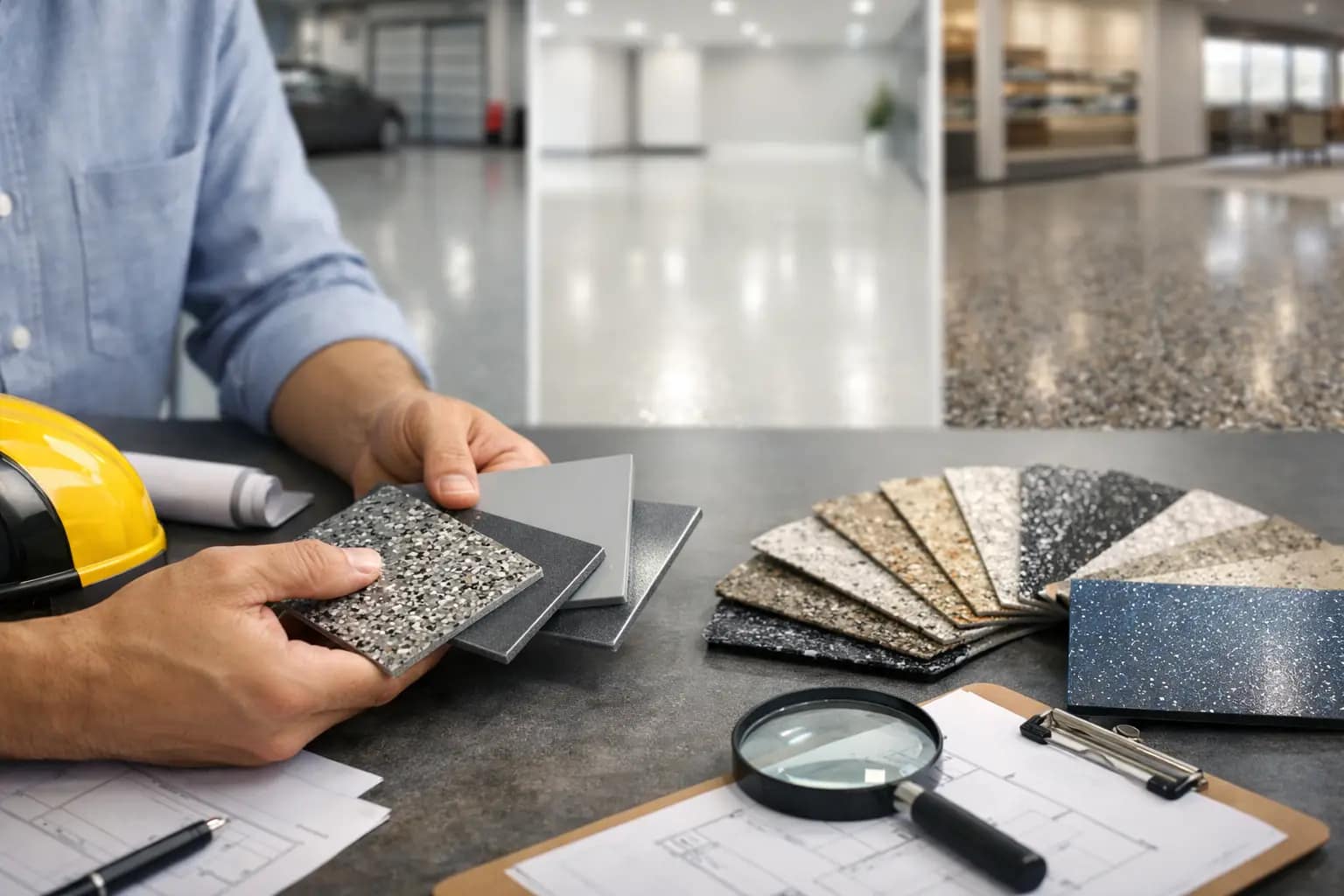
When people think about floor coatings, they often focus on strength first. In kitchens, appearance and usability carry equal weight. The colour, sheen level and texture all affect how the floor feels as part of the room.
A lighter finish can help a kitchen feel more open and make dust or crumbs easier to spot during cleaning. A darker tone may hide some day-to-day marks better, but it can also show residue differently depending on the lighting. Matte or satin finishes tend to be practical for kitchens because they offer a cleaner visual result without the higher reflectivity of a full gloss floor.
Texture needs a measured approach. Too smooth, and the surface may be slippery when wet. Too aggressive, and it can become harder to mop or less comfortable in a residential setting. A good contractor will talk through these trade-offs rather than push a one-size-fits-all finish.
What to expect from the installation process
A professional kitchen floor coating job starts well before the coating itself is applied. The concrete needs to be assessed for cracks, contamination, moisture issues and any previous sealers or coverings. If the slab is not prepared properly, even premium materials will struggle to bond as intended.
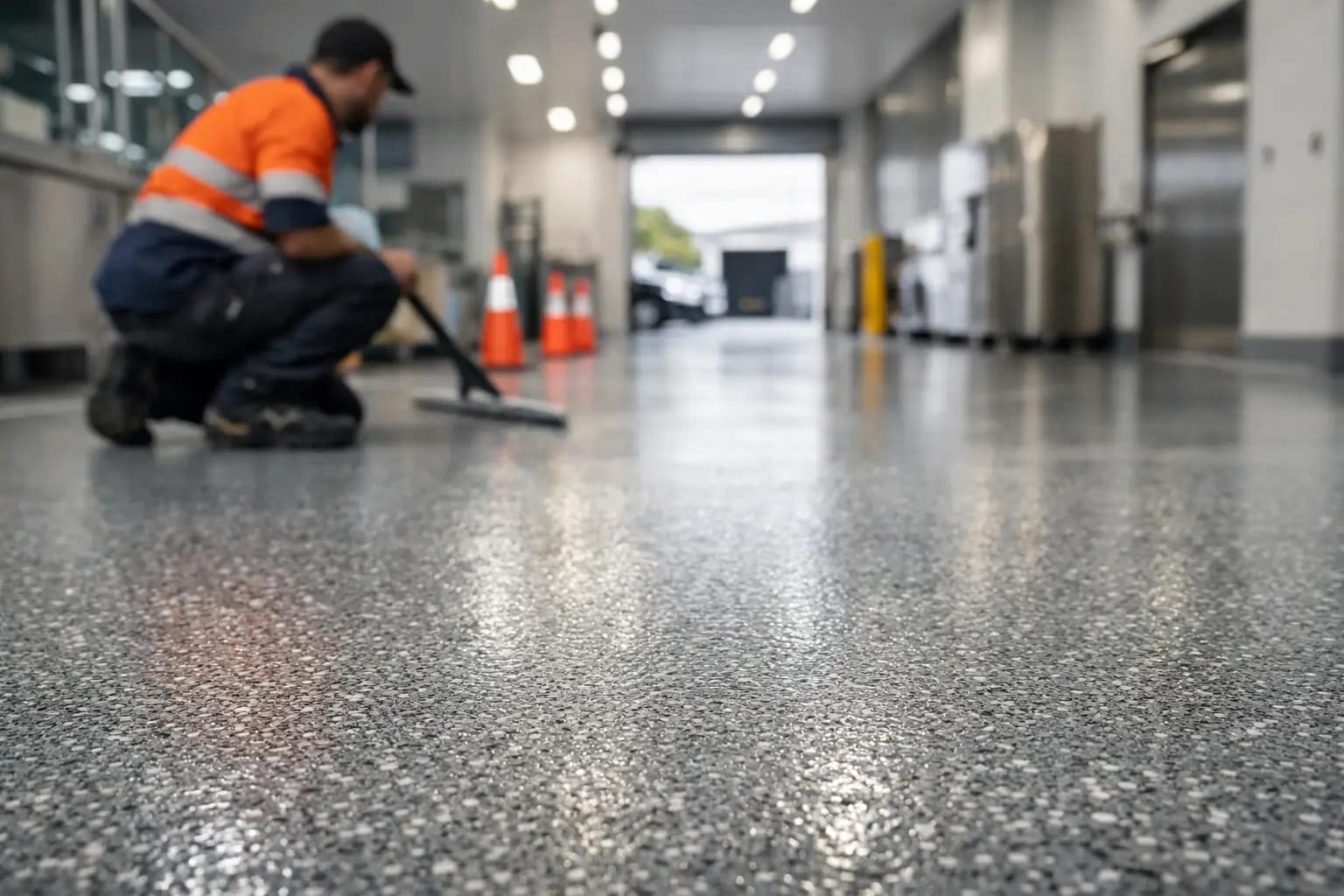
Grinding is typically used to open the surface and create the right profile for adhesion. Dust control during this stage matters, especially inside occupied homes. Clean workmanship is not just a nice extra – it is part of doing internal flooring work properly.
Once repairs and preparation are complete, the coating system is installed in stages. The exact method depends on the product being used and the condition of the concrete, but the focus should always be on consistent coverage, proper curing and a finish that suits the room. Fast turnaround is important, particularly in homes where the kitchen is central to daily life, but rushing the process can compromise the result.
Long-term value in a high-use area
Kitchen floors wear out visually long before people are ready to renovate the whole room. That is one reason coated concrete is attractive. It improves the surface you already have, rather than adding another material layer that may come with its own maintenance issues.
A quality kitchen concrete floor coating can reduce cleaning effort, improve stain resistance and help the space keep a neater appearance over time. For homeowners, that means less frustration with marks and surface wear. For investors, it can mean fewer presentation issues during inspections and less frequent need for cosmetic touch-ups.
There is also value in having a floor that supports the rest of the home. In open-plan layouts, kitchen flooring often flows into dining and living areas, so the finish needs to look deliberate. Coated concrete can create that continuous look while still delivering the practical performance needed in a working kitchen.
When this option is a good fit – and when it depends
Kitchen coatings are a strong option for homes that already have a suitable concrete base and want a clean, durable finish without high ongoing maintenance. They are also a practical choice where stain resistance and ease of cleaning are priorities.
That said, the existing slab condition matters. If there are significant structural cracks, moisture movement or multiple old surface layers, the scope of work may be broader than expected. None of that rules the job out, but it does affect the preparation required and the coating system that will perform best.
Usage also matters. A lightly used kitchen in an investment property may suit a different finish from a family kitchen that sees constant cooking, kids, pets and heavy traffic. The best outcome usually comes from matching the system to the real use of the space rather than choosing on appearance alone.
Choosing the right contractor for a kitchen floor coating
Internal concrete coating work needs more than product knowledge. It requires careful preparation, clean application methods and a clear understanding of how the finished floor will be used day to day. Kitchens are visible spaces, so workmanship standards matter just as much as technical performance.
Look for a contractor who explains the preparation process clearly, talks honestly about surface condition and discusses finish options in practical terms. Non-slip needs, cleaning expectations, curing time and visual outcome should all be part of the conversation. If those details are skipped, the result may not suit the space as well as it should.
For Sydney property owners, local experience also helps. Conditions vary from newer suburban builds to older homes with more surface variation in the slab. A contractor who regularly handles concrete preparation and coatings across different property types is better placed to recommend a system that will hold up in real use.
At Floor Masters, that practical approach is central to the job – assess the slab properly, prepare it thoroughly, use quality materials and deliver a finish that is built for the way the kitchen actually functions.
A kitchen floor should not be the surface you keep apologising for. If the concrete underneath has good potential, the right coating can turn it into a cleaner, tougher and better-looking part of the home for years to come.