You can usually tell within the first month whether an epoxy flake floor coating was done properly. A good system stays tight to the concrete, cleans up easily, and doesn’t get that dusty, chalky look in traffic lanes. A rushed or under-prepped job starts showing wear fast – hot-tire pickup in the garage, peeling at joints, or that annoying “grit” feeling underfoot where the topcoat has thinned.
This review epoxy flake floor coating is written for property owners and operators who want a floor that looks clean, stays safer underfoot, and holds up to real use – not just a nice finish on day one.
Review epoxy flake floor coating: what you’re actually buying
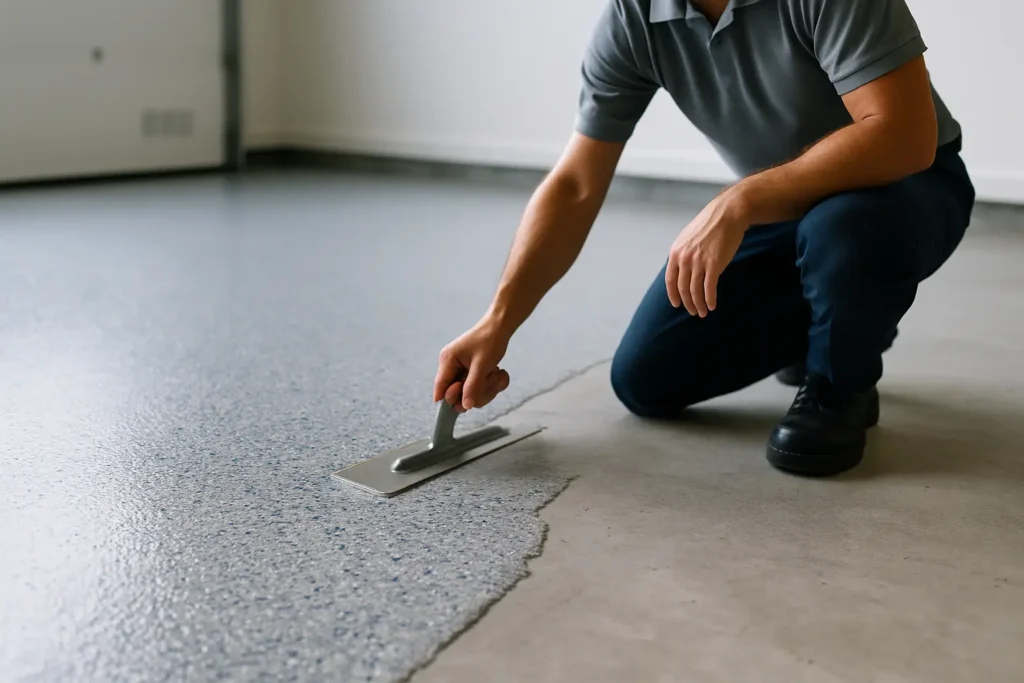
An epoxy flake floor isn’t just “paint with chips.” It’s a system. Typically you’re looking at a prepared concrete base, a pigmented epoxy layer, decorative vinyl flakes broadcast into that wet epoxy, then a clear protective topcoat.
The flakes do more than change the look. They help hide minor surface imperfections and make scuffs and dust less obvious between cleans. They can also influence slip resistance depending on the broadcast rate and the topcoat selected.
The part most people don’t see is what makes or breaks the outcome – the concrete prep, moisture management, and the right clear coat for the environment.
Where epoxy flake floors perform best (and where they don’t)
Epoxy flake coatings earn their reputation in places that need a hard-wearing, good-looking floor with straightforward maintenance. Garages are the classic example, especially where you want to stop concrete dust, make oil drips easier to wipe, and brighten the space.
They also suit commercial settings like back-of-house areas, workshops, light-industrial rooms, showrooms, and retail storage where foot traffic and trolley traffic are constant and the floor needs to look presentable without daily detailing.
Where it depends is heat, UV, and chemical exposure. Epoxy can amber in direct sunlight and can suffer in areas that bake all day. In those cases, the topcoat selection matters a lot, and sometimes a different resin system is the smarter call. If you’re running aggressive chemicals, forklift traffic with hard wheels, or very hot wash-down cycles, you want a coating system specified for those conditions – not a standard garage package.
The big decision: full flake vs partial flake
When people say “flake floor,” they can mean anything from a light sprinkle to a full broadcast where you can’t see the base color at all.
A partial broadcast can look clean and modern, and it can be a practical option if you want some visual texture without building too much thickness. Full broadcast systems generally do a better job of disguising day-to-day marks and give a more consistent appearance across large areas.
The trade-off is that full broadcast systems typically require more labor to scrape and back-roll, then a carefully applied topcoat to lock everything down. If you want that showroom look and long-term wear, full broadcast is usually where the value is.
Durability: what holds up, what fails
A properly installed epoxy flake system is tough. It resists abrasion far better than bare concrete, it keeps dust down, and it gives you a surface you can actually maintain.
Most failures we see in the industry aren’t because “epoxy doesn’t work.” They’re because of one of three issues: inadequate grinding, coating over contaminated concrete (oil, curing compounds, old sealers), or moisture vapor pressure that wasn’t addressed.
Hot-tire pickup is another common complaint in garages. It’s often a sign of the wrong product choice for the conditions, insufficient cure time before parking, or a topcoat that wasn’t suited to heat and plasticizers from tires. A well-specified system with correct cure windows dramatically reduces this risk.
If you’re comparing quotes, ask what the contractor is doing for surface preparation and what topcoat is being used. That’s where the durability lives.
Slip resistance: safer floors without turning it into sandpaper
A flake floor can be safer than a smooth epoxy because the texture breaks up the surface and can provide better traction, especially when the right clear coat is used.
That said, slip resistance is a design choice, not an automatic feature. Too smooth and it can get slick when wet. Too aggressive and it becomes hard to mop and uncomfortable underfoot.
The best outcomes usually come from specifying the right level of non-slip additive in the clear coat for the environment. A residential garage may need a different finish than a commercial workspace where water, oils, or cleaning chemicals show up regularly.
Maintenance: why owners like flake systems
For busy households and commercial operators, maintenance is where epoxy flake floors win.
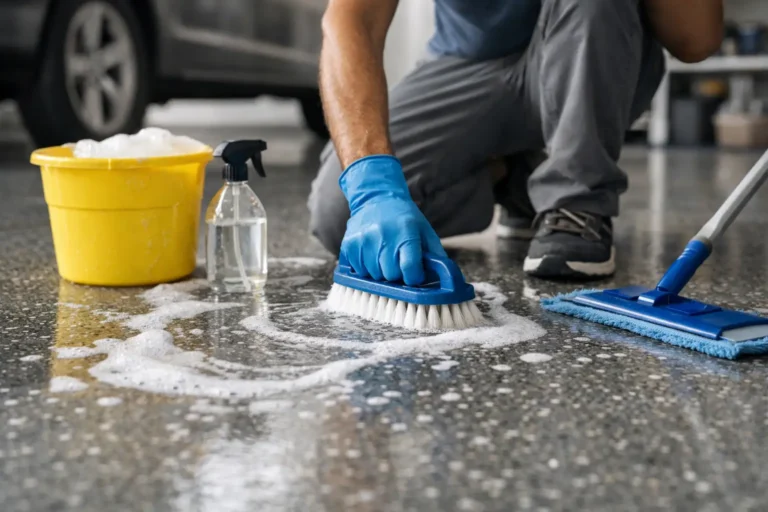
You’re not dealing with porous concrete that holds stains and sheds dust. Most dirt stays on the surface. Regular sweeping and an occasional mop with a cleaner that won’t leave residue is typically enough to keep it looking sharp.
Two realistic expectations help here. First, lighter flake blends hide dust well but can show dark scuffs in high-traffic turns. Second, very dark blends can look dramatic but show fine dust more quickly in bright light. If you want the “always clean” look, picking a mid-tone blend is often the most forgiving.
The prep question: grinding, repairs, and why shortcuts show up fast
Concrete surface preparation is not the glamorous part of a flake floor, but it’s the part you’re paying for whether you realize it or not.
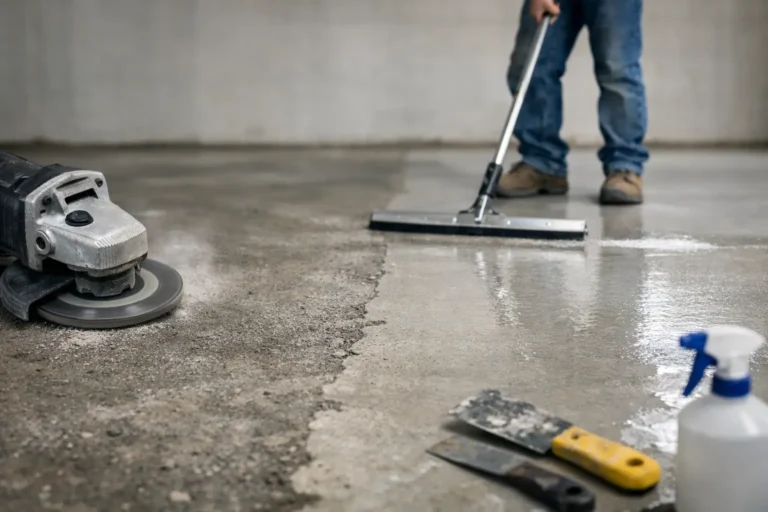
Mechanical grinding opens the concrete and creates a profile the coating can bite into. It also exposes weak or contaminated layers that need to be removed. In real garages and warehouses, you’re often dealing with oil drips, old sealers, paint overspray, or patched areas that don’t bond well unless they’re treated correctly.
Repairs matter, too. Cracks, spalls, and pitted zones should be fixed with compatible materials and allowed to cure properly before coating. If they’re rushed, they can telegraph through the finish or create weak points that chip.
Dust control is another sign of a professional operation. Proper extraction keeps the site cleaner and improves the quality of the bond by preventing fine dust from settling back into the surface right before coating.
Moisture and concrete condition: the hidden variable
If your slab has moisture coming up through it, coatings can blister or delaminate no matter how good the product is. This is especially relevant for older slabs, coastal areas, and spaces that were previously unsealed.
A reputable contractor will look for signs of moisture issues and may recommend testing. If moisture is present, the system may need a moisture-mitigating primer or a different approach.
This is also where pricing can vary for good reason. Two garages can be the same size and have completely different prep requirements depending on slab condition.
Appearance: what you can control (and what you can’t)
Epoxy flake floors look clean, modern, and intentionally finished. They brighten garages and workshops, and they can make a retail or warehouse space feel more professional.
Still, there are limits. If the slab is heavily patched or uneven, coatings don’t magically flatten it. They follow the surface profile. Grinding can improve flatness and remove high spots, and skim-coat repairs can help, but those are separate scope items. If you want a truly uniform surface, talk about leveling and repair options before anyone starts mixing product.
Also, color consistency depends on proper mixing, correct application rates, and controlled cure conditions. Temperature and humidity affect working time and finish quality. The best installers plan around the weather and the site conditions, not against them.
Cost and value: how to compare quotes fairly
Epoxy flake pricing only makes sense when you know what’s included. A cheaper quote can look attractive until you realize it’s a single coat over minimal prep with a basic sealer on top.
You’re better off comparing three things: the prep method (and whether repairs are included), the system build (base coat, flake broadcast rate, topcoat type), and the cure time before traffic.
If you need the space back fast, that’s possible, but it should be engineered into the plan. Rushing cure times is one of the quickest ways to damage a new floor.
What we’d look for before approving an epoxy flake job
If you’re about to move forward, the best protection is asking the right questions upfront. Who is doing the grinding, what equipment and dust control are being used, how cracks and spalls will be repaired, what topcoat is specified for your use case, and what the realistic return-to-service timeline is.
If you’re in Sydney or across NSW and you want a coating specified around your actual traffic, moisture risk, and safety needs, Floor Masters can quote the full scope – from dust-controlled grinding and repairs through to a non-slip flake system and clear topcoat. You can start at https://Floormasters.com.au.
A flake floor is one of those upgrades that keeps paying you back when it’s done right: fewer cleaning headaches, better day-to-day grip, and a surface that still looks professional after the novelty wears off. The smartest next step is simple – match the system to the space, and don’t let anyone treat preparation like an optional extra.