A garage floor that still looks clean after a week of parking, oil drips, and kids’ bikes is not an accident. Neither is a warehouse aisle that stays grippy when it’s wet, or a shop floor that doesn’t start peeling at the edges six months after install. The difference usually comes down to two things: the surface preparation and the right epoxy system for how the space is actually used.
If you’re searching for the best epoxy flooring services in Sydney – garage & commercial solutions, it helps to know what “best” looks like in real-world outcomes: strong adhesion, consistent finish, safe traction, and a contractor who controls dust, manages downtime, and doesn’t cut corners on prep.
What “best” means for epoxy flooring in Sydney
Epoxy is a performance finish. When it’s specified and installed correctly, it gives you a hard-wearing, easy-to-maintain surface that handles daily traffic and looks sharp doing it. When it’s rushed, laid over weak concrete, or installed without proper grinding and repairs, it can bubble, lift, or wear through in high-use zones.
Sydney conditions add their own pressure points. Garages see temperature swings and moisture vapor moving up through slabs. Commercial sites see constant abrasion, pallet jacks, point loads, and cleaning chemicals. The best service isn’t the one with the cheapest square-meter rate. It’s the one that treats epoxy like a system: concrete preparation, repair, primer, build coats, topcoat, and traction as needed.
Garage epoxy: built for vehicles, spills, and hot tires
Garage floors fail in predictable ways. Tires heat up on the road, then park on the coating. Oil and brake fluid find their way into pores and cracks. Water comes off cars and sits along the edges. If the concrete wasn’t properly prepped, those stresses show up as peeling at the hot-tire pickup zones, flaking near the roller door, or glossy spots turning dull where you walk most.
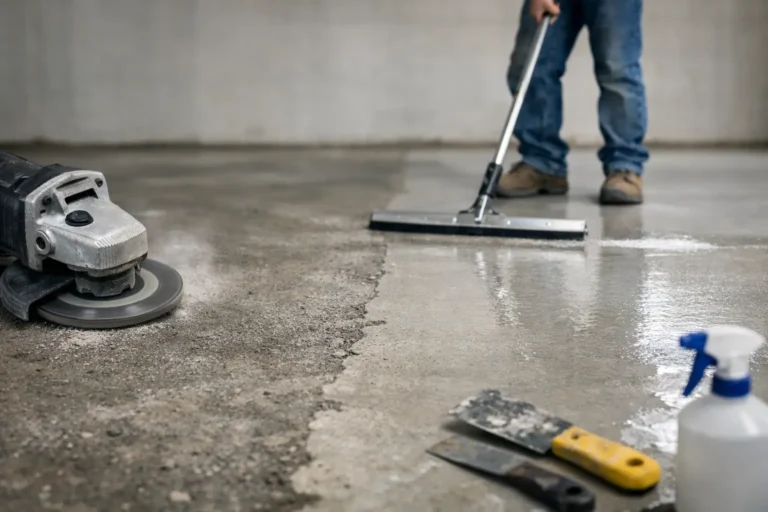
A quality garage epoxy service starts with mechanical preparation, not acid washing. Grinding opens the concrete properly so the coating can bond, and it levels out minor highs and contamination. If the slab has cracks, pitting, or old coatings, repairs and skim-coat work matter as much as the epoxy itself. Without that, you’re basically decorating problems and hoping they behave.
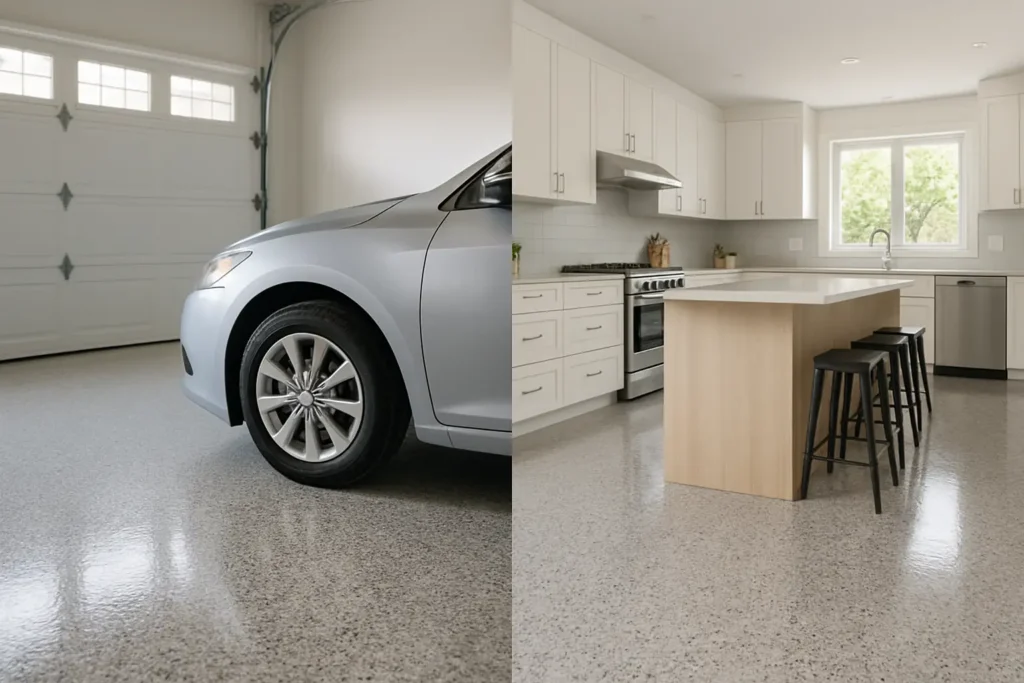
The “best” garage outcome is typically a system that balances durability and cleanability. Many homeowners want a decorative flake finish because it hides dust and minor marks better than a flat solid color. If the garage doubles as a gym or workshop, traction and chemical resistance become more important than pure gloss.
Commercial epoxy: performance first, looks second (but still clean)
Commercial and industrial sites don’t get to baby the floor. You need a finish that supports operations, reduces slip risk, and holds up under cleaning routines. The best epoxy flooring services for commercial spaces start with the practical questions a site supervisor will care about.
What’s moving across the floor – foot traffic, trolleys, forklifts, pallet jacks? Is there food prep, oils, or harsh chemicals? Is the slab on grade with moisture risk? Do you need a fast return to service, or can the area be staged?
Those answers dictate the system. A back-of-house kitchen area may need higher slip resistance and easier sanitation. A warehouse may need a thicker build for abrasion and point loads. A retail shop may prioritize a bright, clean look with predictable downtime.
In every case, the best commercial result comes from getting the substrate right and selecting a coating schedule that matches the job, not whatever product is left on the truck.
The hidden make-or-break: concrete surface preparation
If you only remember one thing, make it this: epoxy is only as reliable as the concrete it’s bonded to.
Mechanical grinding is the standard for a reason. It removes surface laitance, opens pores for adhesion, and exposes sound concrete. For older slabs, it also takes off contaminants that you can’t see but that will absolutely interfere with bonding.
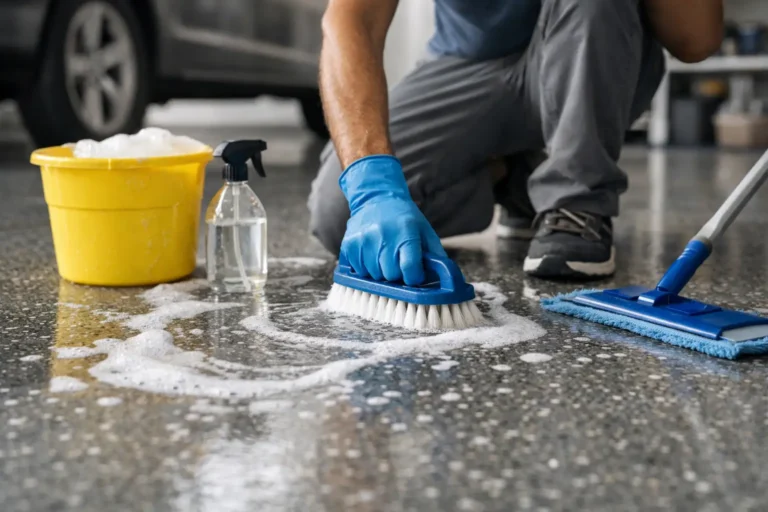
Dust control is not a “nice extra.” In an active home or operating business, uncontrolled dust gets everywhere and becomes a safety and cleanup issue. A professional team uses dust-controlled grinding equipment and work practices that keep the site clean and predictable.
Repairs matter too. Cracks, spalls, and divots can telegraph through coatings or create weak spots that wear faster. A skim coat or targeted patching is often what separates a floor that looks good on day one from one that still looks good after heavy use.
Choosing the right system: it depends on the space
Epoxy gets used as a catch-all term, but the best contractors talk about systems and performance requirements.
A garage in a dry, well-ventilated home may do great with a standard multi-coat epoxy with a durable topcoat. A ground-level commercial slab with moisture concerns may require a moisture-tolerant primer and a system designed to reduce the risk of blistering.
Non-slip is another “it depends” area. More grip improves safety, especially where water is present, but higher traction can be slightly harder to mop perfectly clean. The goal is the right balance for the space: safe underfoot without turning routine cleaning into a chore.
Gloss level also matters more than most people expect. High gloss looks sharp and bright, but it can show scuffs and dust in some environments. Satin finishes can be more forgiving while still looking professional.
What to look for when comparing epoxy flooring services
Marketing photos can be misleading. Any floor can look great right after installation. The more useful comparison is how the company approaches process, prep, and risk.
Here are the signals that usually indicate you’re dealing with a serious operator:
- They start by inspecting the slab, asking about use, and flagging issues like moisture, contaminants, or previous coatings.
- They specify preparation clearly, including grinding and repairs, not vague language like “clean and coat.”
- They offer non-slip options and explain where traction matters most (entries, wet zones, ramps, loading areas).
- They’re transparent about cure time and staging, so you can plan access and downtime instead of guessing.
- They quote with scope clarity, so you know what’s included: prep, crack repairs, number of coats, and topcoat type.
If a quote is dramatically cheaper, ask what was removed from the scope. Most of the time it’s prep, coat thickness, or topcoat quality – the exact items that determine lifespan.
Timeline and disruption: plan it like a small project
Homeowners usually want to know when they can park again. Business owners want to know when they can reopen the area safely.
A professional epoxy job is scheduled around preparation, coating windows, and curing. Some systems allow faster turnaround than others, but speed always has a trade-off if it compromises adhesion or final hardness. The best approach is a clear plan: when grinding happens, when coats go down, when foot traffic is allowed, and when vehicles or heavy equipment can return.
For commercial spaces, staging is often the difference between “we can’t shut down” and “we can do this.” A contractor with real commercial experience can sequence work so you maintain access routes and minimize operational impact.
Cost: what you’re actually paying for
Epoxy flooring is not just paint in a bucket. You’re paying for preparation equipment, dust control, skilled installation, premium materials, and a system that’s designed to last.
Two floors can look identical in photos but perform very differently. A thinner build with minimal prep may look fine until hot tires lift it, a forklift turns hard and scuffs through, or moisture pushes it off the slab.
When pricing is transparent, you can see the value: the grinding standard, the repair scope, the number of coats, and the final finish (including non-slip). That clarity protects you. It also makes it easier to compare proposals fairly.
A local note for Sydney and NSW properties
Across Greater Sydney and many NSW sites, slabs can vary wildly in age, porosity, and past treatment. Some garages have old sealers or curing compounds that need proper removal. Some commercial floors have contamination from oils or cleaning chemicals that must be ground out, not just washed.
That’s why site-specific prep is so important. The best epoxy flooring service isn’t a one-size package. It’s the team that adapts the process to the concrete you actually have.
Getting to a confident “yes” before you book
If you want a floor that stays easy to clean and safe underfoot, ask the contractor to walk you through their preparation method, repair approach, and coating schedule. Have them explain where the floor is most likely to fail if corners are cut. A good installer won’t dodge that question – they’ll use it to show you how they reduce risk.
If you’re looking for a single team to handle surface prep, repairs, and epoxy installation with dust-controlled grinding and non-slip options, Floor Masters delivers complete garage and commercial epoxy flooring across Sydney and NSW. You can request a fast, transparent quote at https://Floormasters.com.au.
A well-installed epoxy floor is one of those upgrades you stop thinking about – because it just works, day after day, without turning routine life or business into a cleanup battle.