Old concrete usually tells on itself fast. It starts with patchy colour, light cracking, stains that never quite come out, or a surface that feels tired even after a proper clean. In many cases, spray on concrete resurfacing is the practical middle ground between living with an ugly slab and ripping the whole thing out.
For homeowners, property managers and business operators, that matters because replacement is disruptive, expensive and often unnecessary when the base concrete is still structurally sound. A professionally resurfaced concrete area can improve appearance, lift safety underfoot and make day-to-day maintenance far easier, especially in spaces that cop traffic, weather and spills.
What spray on concrete resurfacing actually is
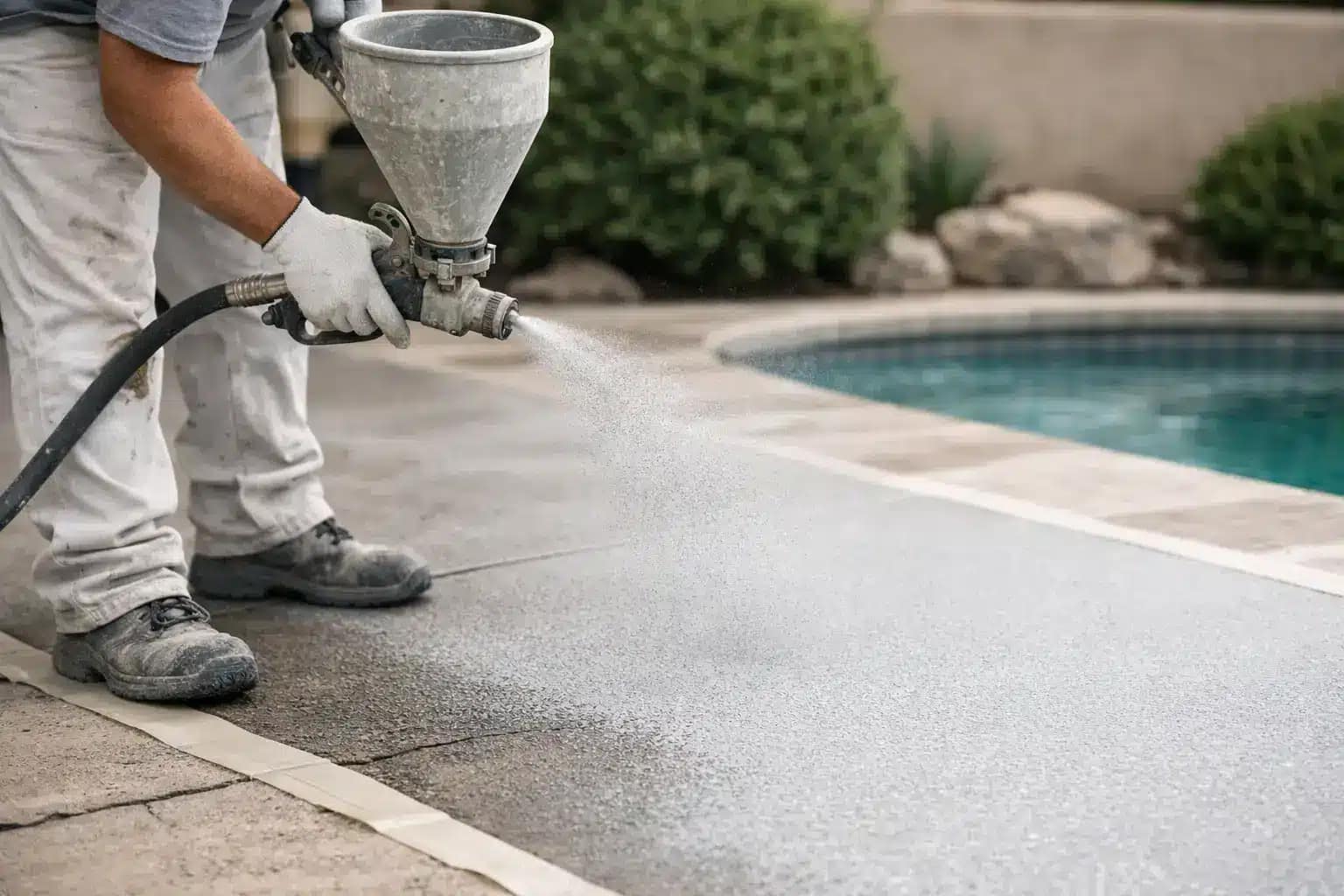
Spray on concrete resurfacing is a cement-based coating system applied over existing concrete to refresh the surface and create a new textured finish. It is commonly used on driveways, paths, pool surrounds, alfresco areas, garages and some commercial outdoor spaces where appearance and slip resistance both matter.
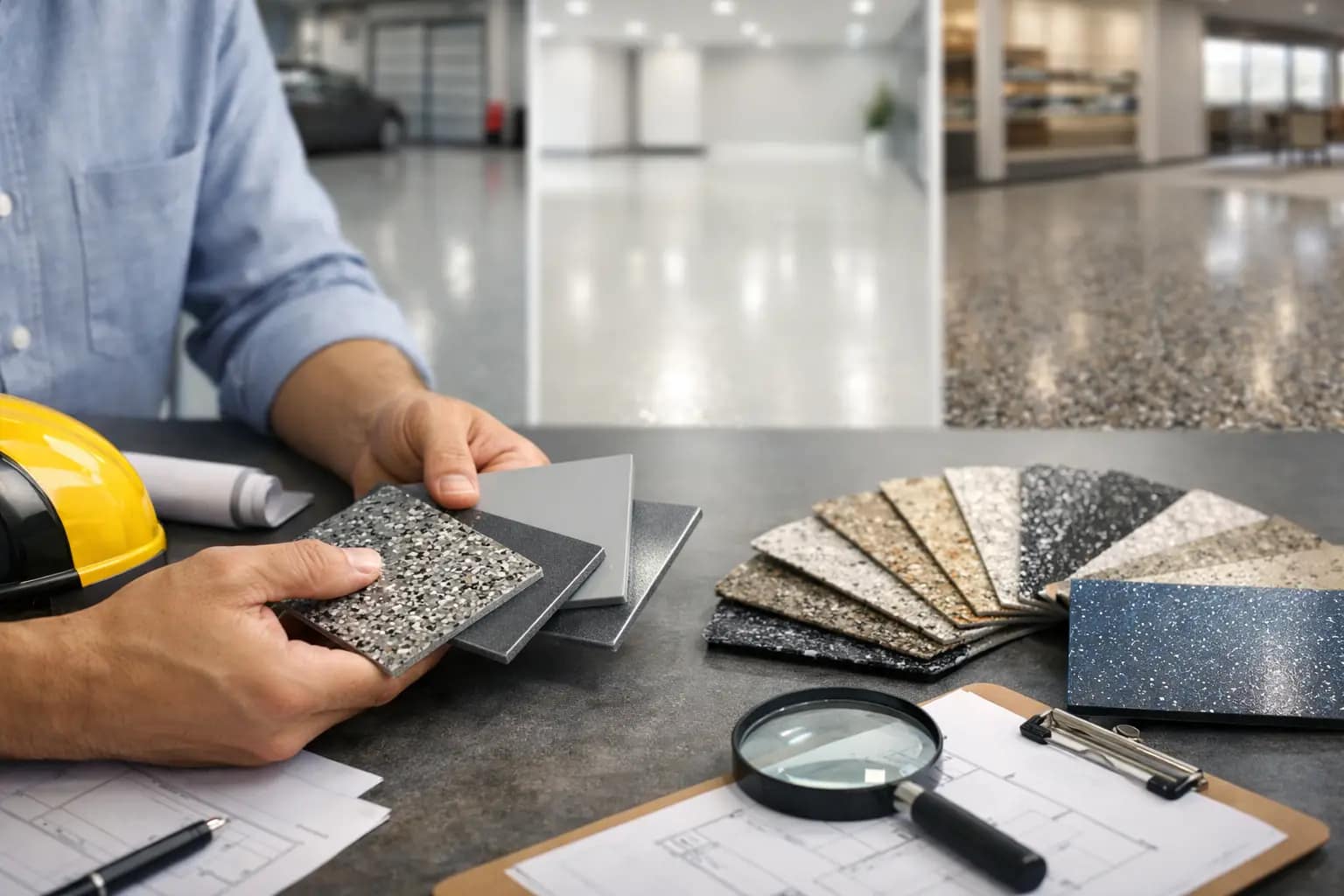
The coating is not simply paint. It is designed to bond to prepared concrete and form a hard-wearing decorative layer over the top. Depending on the system and intended use, the finish can be subtle and clean or more textured for extra grip. Colours, patterns and sealing options can also be tailored to suit the property and the level of traffic the surface needs to handle.
That said, it is not the right answer for every slab. If the concrete underneath is badly failing, moving or heaving, resurfacing will not fix the underlying structural problem. Good results depend heavily on proper preparation and on whether the existing slab is suitable in the first place.
Where spray on concrete resurfacing works best
This type of finish is popular because it suits a wide range of areas without needing a full rebuild. On residential properties, it is often used to improve driveways, front entries, side paths and outdoor entertaining areas. It gives older concrete a more modern and uniform look while adding texture that can make the surface safer in wet conditions.
For commercial and multi-property settings, it can also be a smart option in pedestrian zones, access paths, common areas and external hardstand spaces where presentation matters. Property managers often look for a finish that is easier to maintain and better looking than plain aged concrete, without the downtime and cost of complete replacement.
The best applications are surfaces that are worn on top but still basically sound underneath. If the slab has minor surface imperfections, weathering or staining, resurfacing can often deliver a significant visual and functional improvement.
Why preparation matters more than the coating itself
The biggest difference between a resurfacing job that lasts and one that starts failing early usually comes down to preparation. Concrete surfaces collect contaminants over time – dirt, grease, old sealers, tyre marks, moisture-related residue and weak surface material. If that layer is not properly removed, the new coating is only bonding to a problem.
This is why professional surface prep matters. Mechanical grinding, crack and patch repairs where needed, and careful cleaning all help create a sound base for the resurfacing system. In some cases, areas of damage need to be repaired or skim coated before the spray finish can be applied evenly.
It is also where experience counts. A contractor needs to identify whether the slab is suitable, whether moisture may be an issue, and whether movement or existing damage could affect the result. A neat finish on top means very little if the substrate underneath has been ignored.
The benefits people usually care about most
For most customers, the appeal of spray on concrete resurfacing is straightforward. It improves the look of tired concrete, adds texture, and extends the useful life of an existing surface without the cost and mess of starting over.
There is also a practical maintenance benefit. A properly sealed resurfaced area is generally easier to keep clean than rough, porous, ageing concrete. That can make a difference on driveways exposed to weather, garages dealing with dust and marks, or outdoor areas where people want a cleaner and more finished appearance.
Safety is another key reason people choose it. In the right setting, a textured resurfaced finish can provide better slip resistance than plain smooth concrete, especially around entries, outdoor entertaining spaces and other areas exposed to rain. As with any flooring solution, though, the right texture depends on how the space is used. Too smooth can be a risk when wet, while too aggressive may not suit every residential setting.
What to expect from the process
A professional resurfacing project usually starts with an inspection of the existing concrete. That step helps determine whether the slab is suitable for coating and whether repairs are needed before resurfacing begins. This is also when the intended use of the area should be discussed, because a driveway, pool surround and warehouse entry all place different demands on the finish.
Once the slab is assessed, the concrete is prepared using the appropriate mechanical method. Any cracks, surface defects or weak spots are addressed, then the resurfacing material is applied and built up to achieve the required texture and coverage. After that, the surface is sealed to help protect the finish and support easier cleaning.
Drying and return-to-service times depend on the product system, weather conditions and site conditions. That is one reason fixed online promises rarely tell the full story. A shaded outdoor area in winter behaves differently from an exposed driveway in summer, and a good contractor will be upfront about that.
Spray on concrete resurfacing for homes
At home, the biggest wins are usually visual and practical. A worn driveway can pull down the look of the whole frontage, while an old alfresco slab can make an otherwise tidy backyard feel unfinished. Resurfacing gives those areas a cleaner, more intentional finish without needing to demolish sound concrete.
Garages can also benefit, although the right system depends on how the space is used. If the main goal is to improve a plain concrete floor in a light-use setting, resurfacing may be suitable. If the area needs stronger chemical resistance or a more specialised coating performance, another concrete coating system may be a better fit. That is why the intended use matters more than choosing a product by name alone.
For Sydney homes, weather exposure also comes into play. Outdoor concrete has to deal with heat, rain and daily wear, so it makes sense to choose a finish based on traction, durability and ease of maintenance rather than colour alone.
When commercial sites should consider it
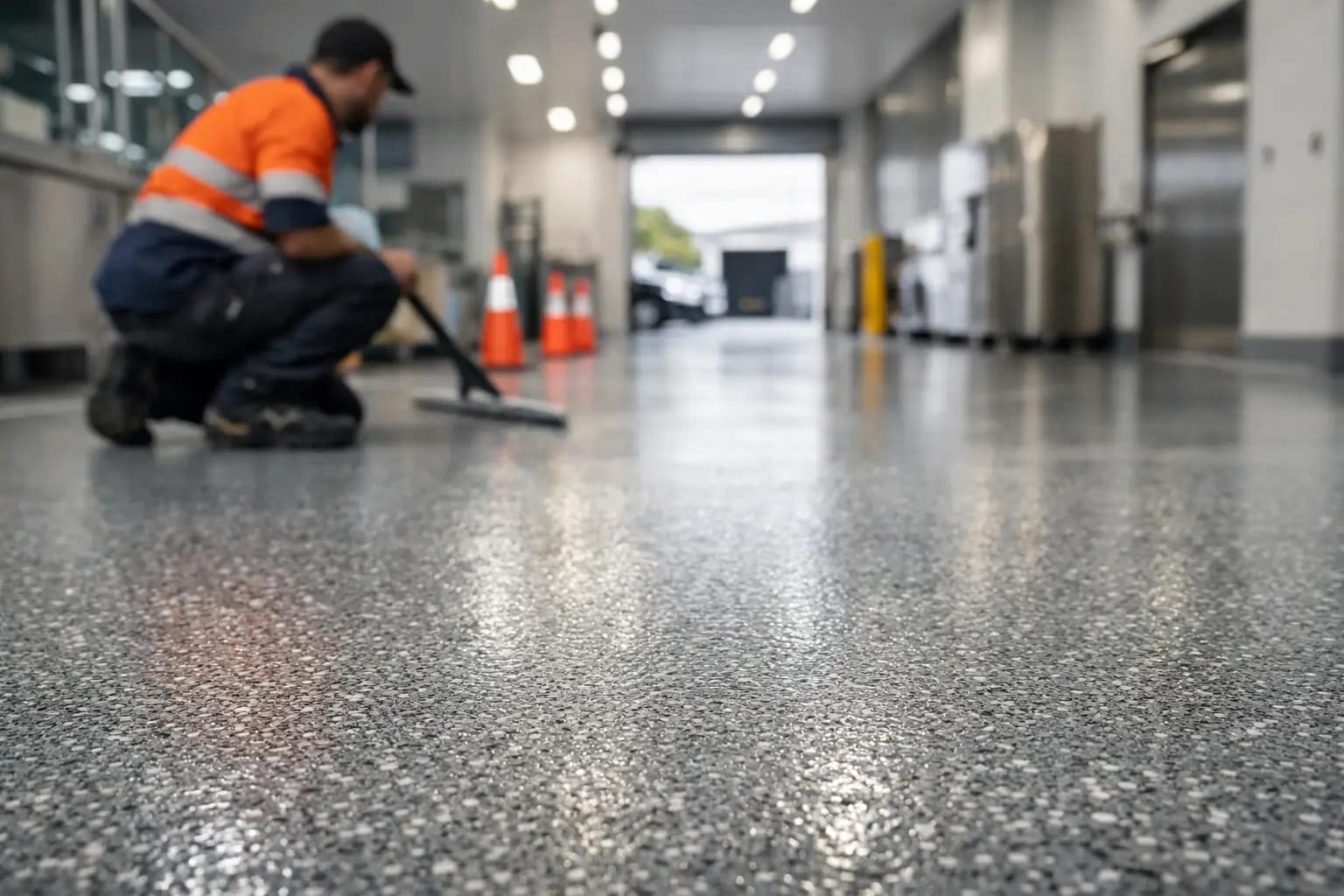
For commercial properties, resurfacing is often about presentation, safety and asset life. A tired external concrete area can make a site look poorly maintained, even if the business inside is well run. Fresh resurfacing can sharpen that first impression while also making the area easier to manage.
It can be particularly useful in retail frontages, common areas and external pedestrian access zones where a cleaner finish and better slip resistance are priorities. For heavier-duty industrial spaces, suitability depends on traffic loads, exposure and operational demands. Some areas will benefit from resurfacing, while others may need a more specialised flooring solution designed for forklifts, chemicals or constant heavy wear.
That is the trade-off to be honest about. Resurfacing is versatile, but it is not a one-size-fits-all answer for every commercial floor.
Choosing the right contractor
The product matters, but workmanship matters more. A contractor should be able to explain what condition the slab is in, what preparation it needs, what finish suits the area and what realistic performance you can expect over time.
It is also worth looking for a team that handles the full process rather than only the topcoat. Surface preparation, repairs, application quality and clean finishing all affect the outcome. Dust-controlled grinding, reliable materials and clear communication are practical signs that the contractor takes the work seriously.
For clients across Sydney and wider NSW, Floor Masters approaches resurfacing the same way it approaches any concrete coating job – by focusing on preparation first, the right system for the site, and a finish that performs well in real use, not just on day one.
Spray on concrete resurfacing is at its best when it solves a real problem. If your concrete is worn, dated or slippery but still fundamentally sound, the right resurfacing system can give it a cleaner look, better grip and more useful life without the cost of replacement. The smart next step is not guessing from photos online – it is having the surface inspected properly so the solution matches the slab.