A garage floor usually tells the truth faster than the rest of the property. Tyre marks, oil drips, chipped concrete and dust build-up all show up quickly when the space gets real use. If you are weighing up the best flooring for busy garages, the right answer is not just about appearance. It comes down to traffic, spills, cleaning, safety and how well the floor holds up over time.
For most busy garages, the strongest option is a professionally prepared and coated concrete floor, especially an epoxy system designed for vehicle traffic and daily wear. But that does not mean every garage needs the exact same finish. A family garage in suburban Sydney has different demands from a workshop, storage-heavy space or multi-use garage that doubles as a home gym.
What makes garage flooring suitable for heavy use
A busy garage puts flooring under pressure in a few different ways at once. Cars bring in grit and moisture. Tools get dropped. Petrol, oil and cleaning products can stain or soften lower-grade finishes. On top of that, plain concrete creates dust as it wears, which spreads through the garage and often into the house.
That is why the best flooring is not simply the hardest product on paper. It needs to resist abrasion, handle chemical exposure, stay easier to clean and provide grip underfoot. Surface preparation matters just as much as the coating itself. If the concrete underneath is weak, cracked, damp or poorly prepared, even a premium finish can fail earlier than it should.
Best flooring for busy garages: why epoxy leads the field
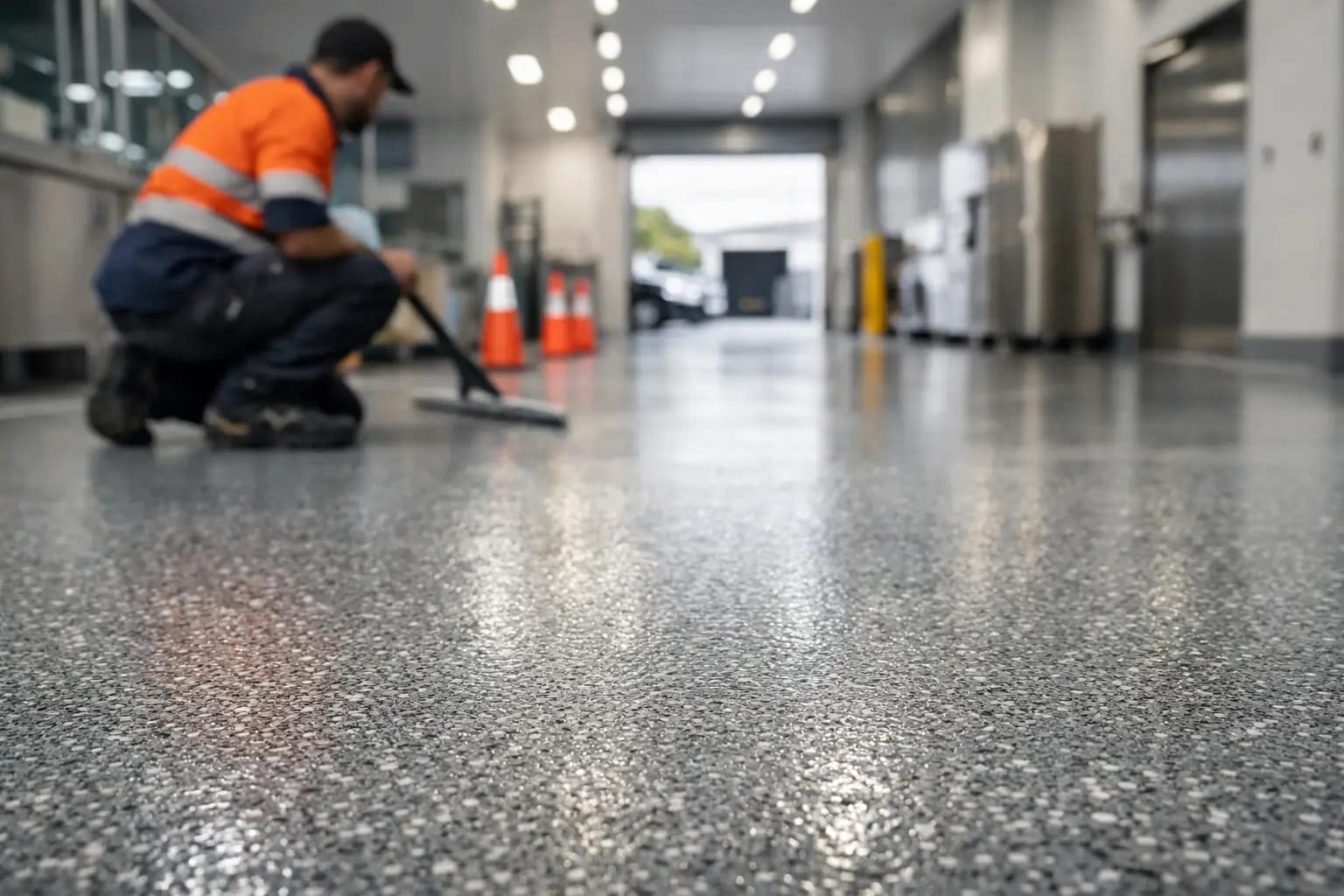
For high-traffic residential and commercial garages, epoxy flooring is usually the most practical long-term solution. It bonds to prepared concrete to create a dense, protective surface that is far more durable than bare slab alone. It also gives the space a cleaner, more finished look, which matters whether the garage is part of a home, a strata property or a working site.
A quality epoxy floor handles day-to-day traffic well. It resists tyre wear better than many basic sealers, stands up to oil and chemical spills more effectively than uncoated concrete, and makes regular cleaning much easier. Instead of dust and stains soaking into the slab, most mess stays on the surface where it can be cleaned off.
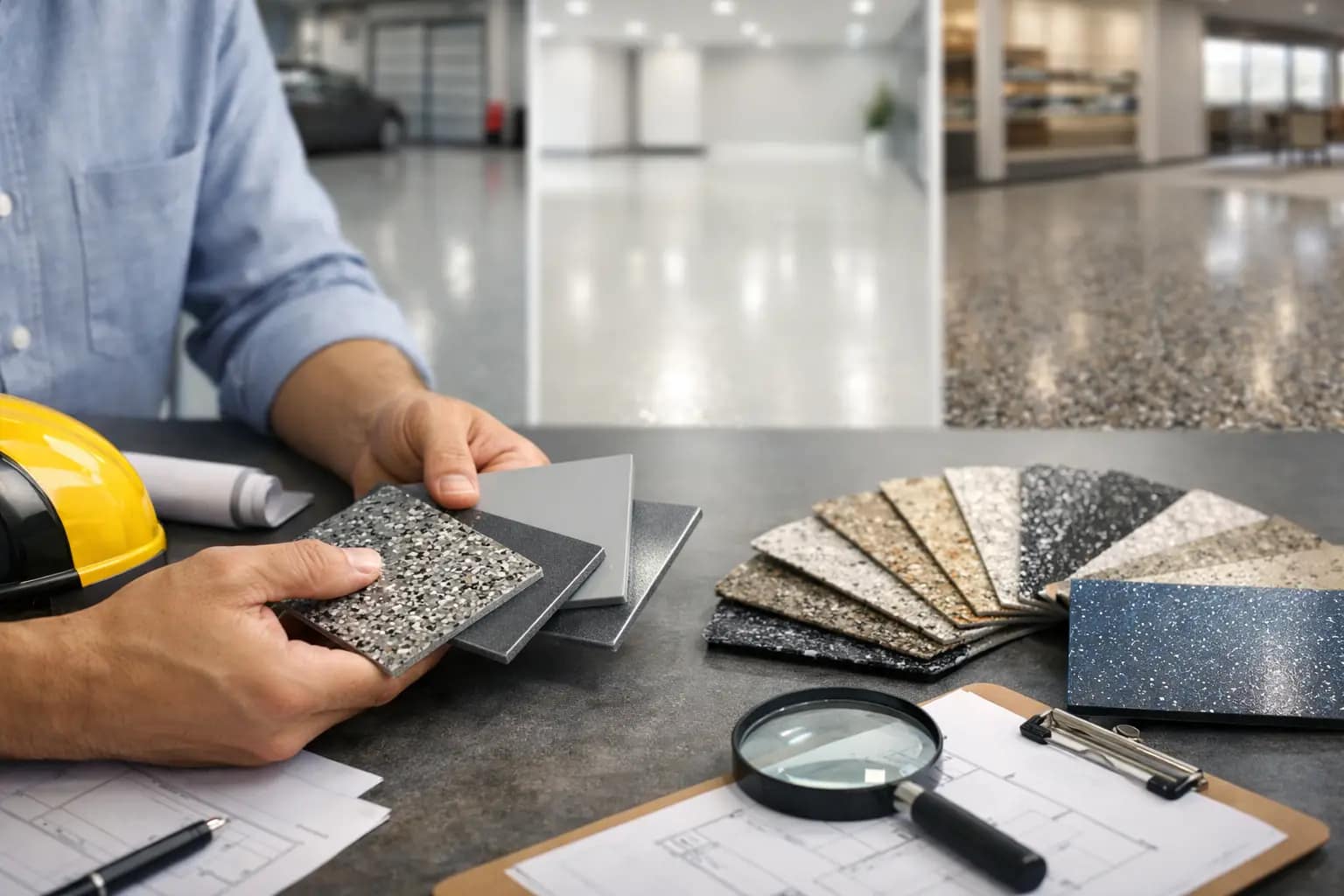
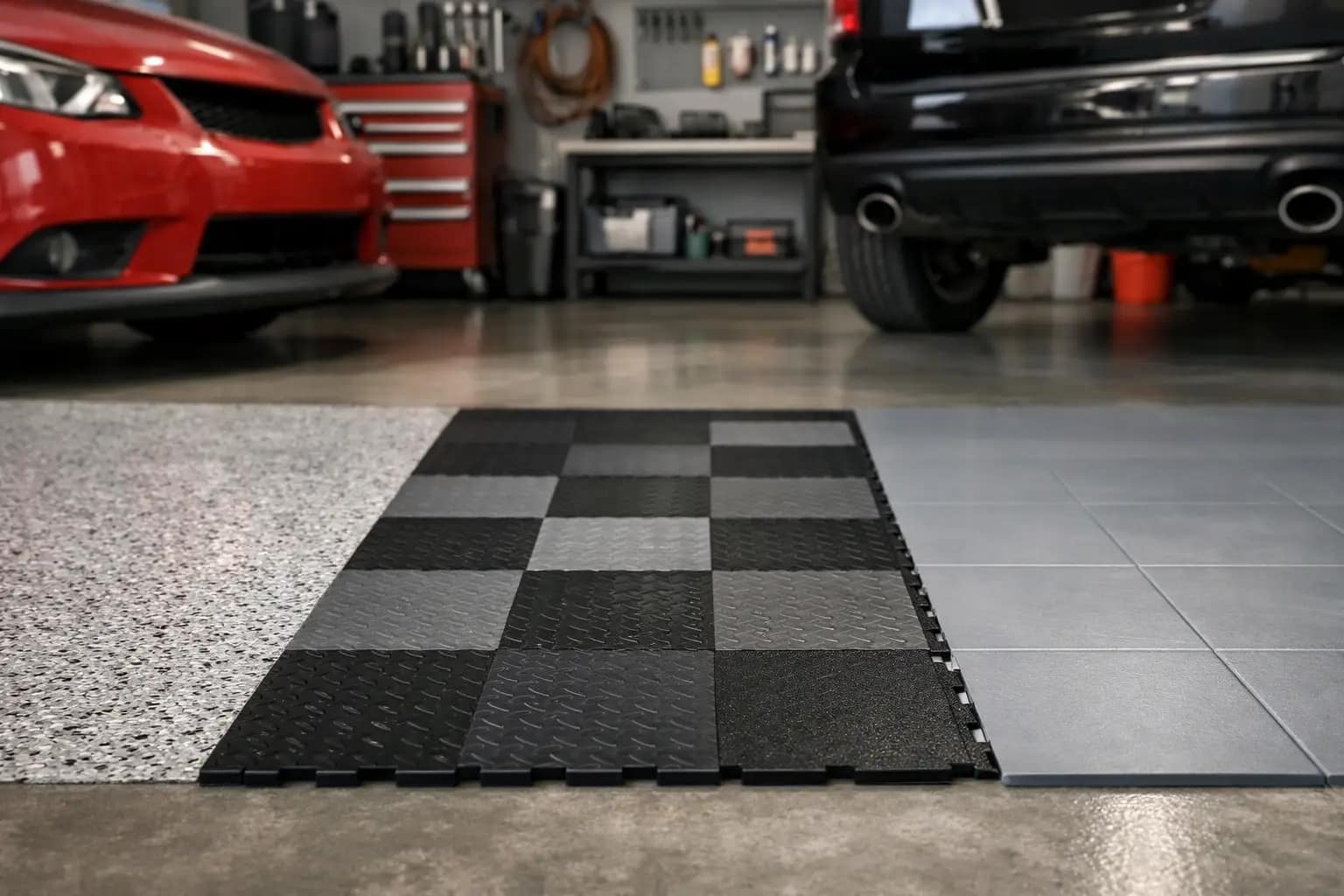
There is also flexibility in the finish. Some garages need a smooth, easy-clean surface. Others are better suited to a non-slip system, especially where water, wash-downs or foot traffic are common. Flake finishes are popular because they help disguise light dirt and add texture without making the floor look industrial.
When epoxy is the right fit
Epoxy works particularly well in garages used for more than parking. If the space sees frequent movement, storage shelving, tool benches, bikes, trailers or weekend mechanical work, the floor needs to do more than look tidy. It has to protect the slab and reduce ongoing maintenance.
For homeowners, epoxy is often the best balance of performance and appearance. For commercial operators, it offers a durable surface that supports a cleaner, safer working environment. In both cases, the result depends heavily on the condition of the concrete and the quality of the preparation.
Bare concrete is cheap upfront, but costly over time
Many garages are left as bare concrete simply because it is already there. The issue is that untreated concrete is porous, dusty and prone to staining. Under regular traffic, the surface gradually wears down and creates fine concrete dust. That dust settles on stored items, sticks to tyres and gets tracked indoors.
Bare concrete also absorbs oil and other fluids quickly. Once stains soak in, they are difficult to remove fully. Cracks and surface wear tend to become more visible over time, especially in garages with regular vehicle movement or temperature changes.
For low-use garages, plain concrete may seem acceptable for a while. For genuinely busy spaces, it rarely remains practical. What starts as a low-cost choice often turns into a floor that looks tired, is harder to maintain and offers no real protection to the slab.
Painted floors usually fall short
Standard garage floor paint is often chosen because it appears to offer a quick cosmetic fix. The problem is performance. In a busy garage, most basic paints do not hold up well against hot tyres, abrasion and chemical spills. Peeling, lifting and patchy wear are common, particularly where surface preparation was limited.
That does not mean every painted floor fails immediately, but it does mean it is not usually the best flooring for busy garages. If the goal is a longer-lasting surface with proper durability, a professional coating system is a different category altogether.
The real difference is in the preparation
A garage floor coating is only as good as the slab underneath it. This is where many flooring decisions go wrong. People compare products but overlook the importance of grinding, repairs and moisture checks.
Professional preparation usually involves concrete grinding to open the surface and remove contaminants, weak material and previous coatings. Cracks or damaged areas should be repaired before the new system goes down. If moisture issues are present, they need to be identified early because trapped moisture can affect adhesion and finish quality.
For busy garages, this step is not optional. Good preparation helps the coating bond properly, wear evenly and deliver the kind of long-term result people expect when investing in a floor upgrade.
Choosing the right finish for how the garage is used
Not every busy garage needs the same level of slip resistance, texture or finish style. A household garage used for parking two vehicles and storing sports gear may benefit from a decorative epoxy flake system with a moderate non-slip texture. It looks clean, hides everyday dust reasonably well and remains easy to maintain.
A workshop or commercial garage may need a more heavy-duty system with higher chemical resistance and stronger slip performance. If foot traffic and vehicle traffic happen in the same space, the floor has to support both safely.
This is where an on-site assessment matters. The best result comes from matching the coating system to the actual use of the area, not applying a one-size-fits-all product.
Safety matters more than people think
Garage floors are not only about durability. Safety is a real factor, especially where water, detergents, oils or regular movement create slip risks. A floor that looks sleek but becomes slippery when wet can create problems in both homes and commercial settings.
That is why non-slip options are worth considering from the start. The right level of texture depends on how the space is used. Too little grip may be unsafe. Too much texture can make cleaning harder. A well-planned coating system balances both.
For businesses and property managers, safety is often a practical and compliance issue. For homeowners, it is about reducing risk in a space that often gets used more heavily than expected.
Appearance still counts in a working garage
A garage is a functional area, but presentation still matters. In homes, it can improve the overall feel of the property and make the space more usable. In commercial settings, a clean, well-finished floor gives a better impression to staff, customers and tenants.
More importantly, a finished floor tends to stay looking better because it is easier to clean and maintain. Dust control, stain resistance and a uniform surface all contribute to that. The benefit is practical first, visual second, but the visual improvement is still significant.
Best flooring for busy garages in Sydney conditions
In Sydney and across wider NSW, garages often deal with a mix of heat, humidity, wet weather and tracked-in debris. That makes moisture resistance, surface adhesion and slip performance especially relevant. Garages near the coast, in high-traffic suburban homes or attached to commercial premises can all place different demands on the floor.
A system that performs well in these conditions needs proper assessment, solid preparation and materials suited to the environment. That is one reason many property owners choose specialist contractors rather than treating garage flooring as a cosmetic add-on.
At Floor Masters, the focus is on prepared concrete surfaces that are built for real use – not just a better look on day one. For busy garages, that practical approach matters.
What to ask before choosing a garage floor system
Before committing to any flooring option, it helps to ask a few straightforward questions. How much vehicle traffic does the garage actually get? Is the space exposed to oil, water or chemicals? Does it need non-slip performance? Are there cracks, moisture issues or surface damage already present?
Those answers usually point clearly towards the right system. In many cases, epoxy comes out ahead because it addresses the full problem, not just one part of it. It protects the concrete, improves cleaning, lifts appearance and gives the garage a tougher working surface.
The best garage floor is the one that still performs after the novelty wears off. If your garage gets daily use, carries real load and needs to stay safer and easier to maintain, it is worth choosing a floor built for that reality rather than the cheapest short-term fix.