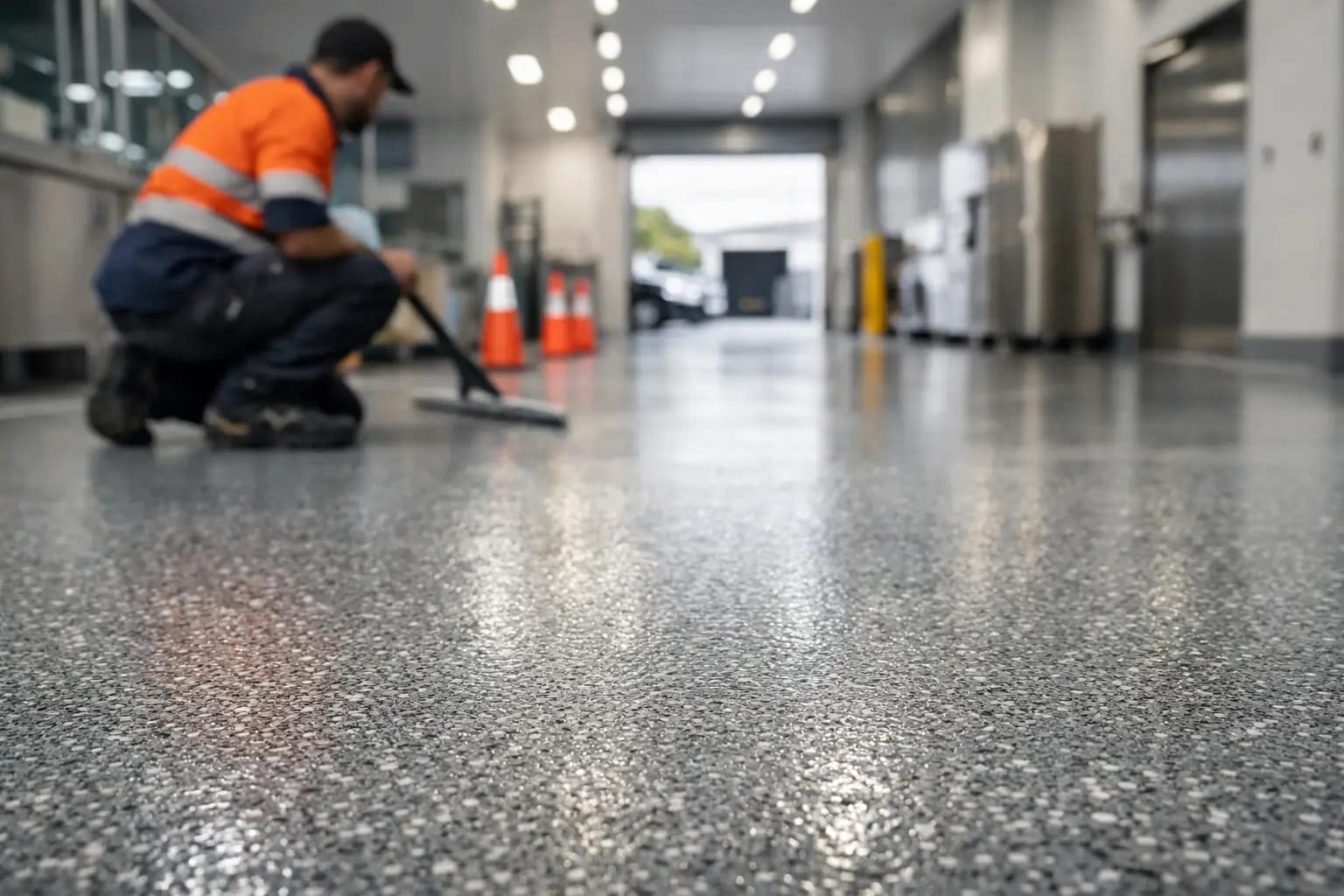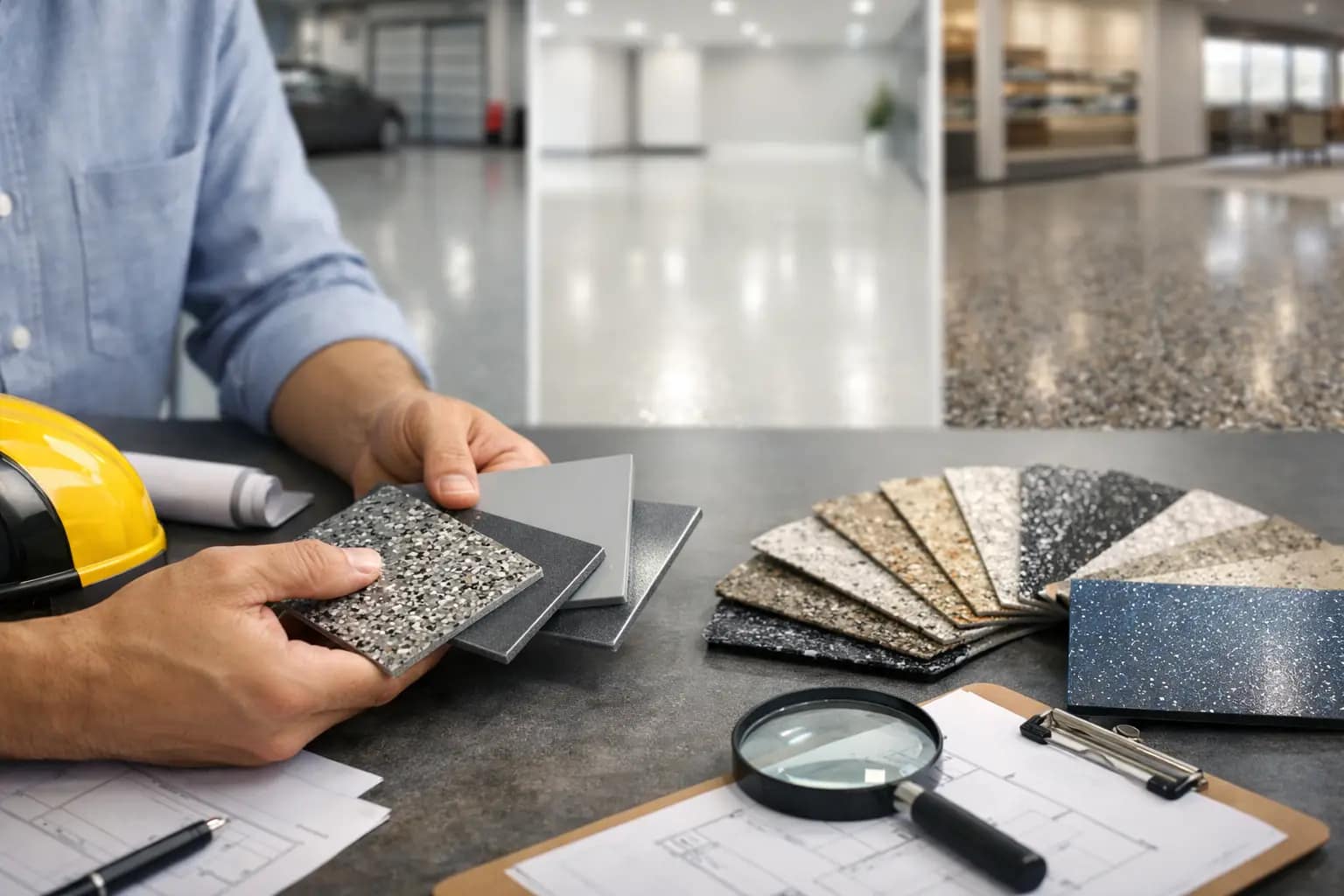
A good epoxy floor starts well before the coating goes down. If you are looking up how to prepare concrete for epoxy, the key point is simple: surface preparation decides whether the floor lasts or fails. Peeling, bubbling and patchy adhesion usually come back to the slab underneath, not the topcoat.
At Floor Masters, preparation is treated as the job, not an extra. For garages, warehouses, workshops, retail spaces and residential concrete areas, the goal is the same – create a clean, sound, properly profiled surface that allows the epoxy system to bond for the long term.
How to prepare concrete for epoxy the right way
Proper preparation is not just a quick acid wash or a basic clean-up. Concrete needs to be assessed, repaired, ground and tested before any primer or coating is applied. That process changes slightly depending on the condition of the slab, the age of the concrete and how the area is used.
A garage floor with tyre marks, oil contamination and hairline cracking needs a different prep approach from a commercial kitchen or warehouse floor carrying regular traffic. The right method depends on what the concrete has been exposed to and what the finished system needs to handle.
What we check before any epoxy work starts
Before coating begins, the slab needs to be inspected properly. That means looking at surface strength, contamination, existing coatings, cracks, moisture and previous repairs. A floor can look fine at a glance and still be unsuitable for epoxy without further preparation.
If there is oil soaked into the slab, laitance on the surface, weak concrete or old sealer still present, epoxy will not bond as it should. In those cases, coating over the top only hides the problem for a short time. Correcting it first is what protects the finish and the investment.
Concrete grinding creates the bond epoxy needs
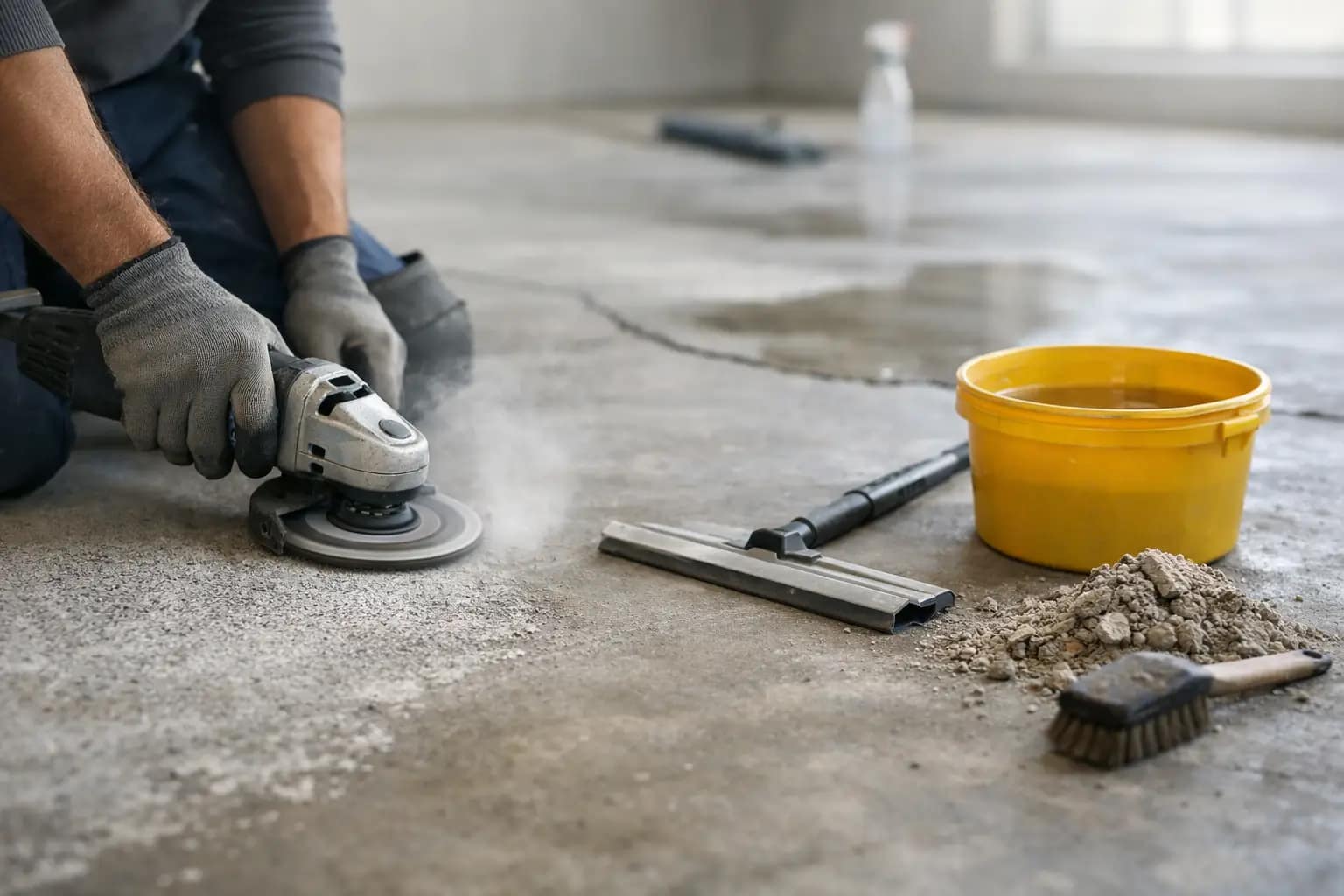
Mechanical grinding is one of the most important steps in epoxy preparation. It removes weak surface material, opens the concrete and creates the profile needed for proper adhesion. This is what gives the coating a stable base rather than sitting on top of dust, residue or smooth concrete.
For most epoxy flooring jobs, dust-controlled grinding is the preferred approach because it is cleaner, more consistent and far more reliable than shortcut prep methods. It also helps expose surface issues that need repair before coating starts. That matters in both residential garages and busy commercial spaces where performance is non-negotiable.
Repairs matter just as much as grinding
Grinding alone will not fix damaged concrete. If the slab has cracks, chips, pitting or low areas, those need to be repaired before the epoxy system is installed. Otherwise, the finished floor may look uneven, wear inconsistently or fail around weak points.
This is where skim coating and concrete repairs can make a major difference. A repaired and levelled surface gives the coating a better foundation and a cleaner final result. For customers upgrading older garage slabs or hard-used commercial floors, this step often separates an average finish from a professional one.
Moisture testing cannot be skipped
One of the biggest reasons epoxy floors fail is moisture coming up through the concrete. If the slab has excessive moisture vapour, the coating can blister, peel or lose bond over time. This problem is common in some ground-level slabs and older buildings, especially where moisture barriers are missing or compromised.
That is why moisture needs to be checked before installation. Not every slab has the same risk, and not every site needs the same system. In some cases, a moisture-tolerant primer or a different coating build may be required. A professional assessment helps avoid applying the wrong product to the wrong floor.
Old paint, sealers and failed coatings must be removed
Epoxy should bond to properly prepared concrete, not to loose paint or failing coatings. If the floor has been painted before, sealed, tiled over or patched with unsuitable materials, those layers need to be removed or treated correctly.
Trying to coat over an unstable surface saves time only on day one. After that, it usually creates callbacks, lifting edges and premature wear. For homeowners and business operators, it is a poor trade-off. Proper removal and preparation cost less than redoing the whole floor later.
Preparation for garage, residential and commercial epoxy floors
Different spaces call for different prep standards. In garage epoxy flooring, contamination from tyres, oil, brake fluid and general wear is common. The slab often needs thorough grinding, crack repair and local patching before the decorative and protective layers are applied.
For residential epoxy in laundries, outdoor covered areas or other concrete surfaces, preparation still needs to be exact, even if traffic is lighter. The floor should be stable, dry and properly profiled so the finish stays easy to clean and resistant to staining.
Commercial epoxy flooring usually involves a higher-performance requirement. Warehouses, workshops, retail floors and industrial spaces often need heavier grinding, more detailed repairs and coating systems built around traffic, safety and chemical exposure. In these environments, preparation is directly tied to lifespan and maintenance costs.
Why professional preparation delivers better results
There is no shortage of quick-fix advice online, but epoxy is not forgiving when prep is poor. Basic cleaning, etching or patchy sanding may look adequate before coating, but those methods often fall short in real conditions. Hot tyres, pallet traffic, spills and repeated cleaning quickly expose weak preparation.
Professional prep uses the right grinding equipment, dust control and repair methods for the slab condition. It also gives a clearer picture of what the floor needs before product is applied. That leads to better adhesion, a more even finish and fewer surprises once the floor is in service.
What customers want from epoxy preparation
Most customers are not chasing preparation for its own sake. They want a floor that lasts, looks sharp and does not become a maintenance problem. Good preparation supports all of that. It helps epoxy resist peeling, improves overall appearance and gives the finished surface the durability people expect.
It also supports safer outcomes where non-slip performance is needed. In workshops, commercial kitchens, garages and other practical spaces, the floor needs to do more than look clean. It needs to handle real use without becoming difficult to maintain.
Why choose Floor Masters
We focus on the part many contractors rush – the slab itself. That means proper assessment, dust-controlled concrete grinding, repairs where needed and a system matched to the site conditions. We do not treat epoxy as a cosmetic layer. We treat it as a protective flooring system that only performs when the base is right.
Customers choose us because the process is clear, the pricing is transparent and the workmanship is built around long-term results. We are licensed and insured, we use premium materials, and our epoxy flooring installations are backed by a 5-Year No-Peel Guarantee. That applies whether you need a garage floor upgrade, a residential concrete coating or a commercial flooring solution.
Get your concrete prepared properly from the start
If you need to know how to prepare concrete for epoxy, the short answer is this: inspect it properly, grind it correctly, repair what is weak and never guess on moisture or adhesion. That is the difference between a floor that looks good for a few months and one that keeps performing.
If your garage, home or commercial site needs epoxy flooring in Sydney or across surrounding NSW service areas, we can assess the slab and recommend the right preparation before any coating starts. A proper floor finish begins with proper groundwork, and that is where lasting results are made.