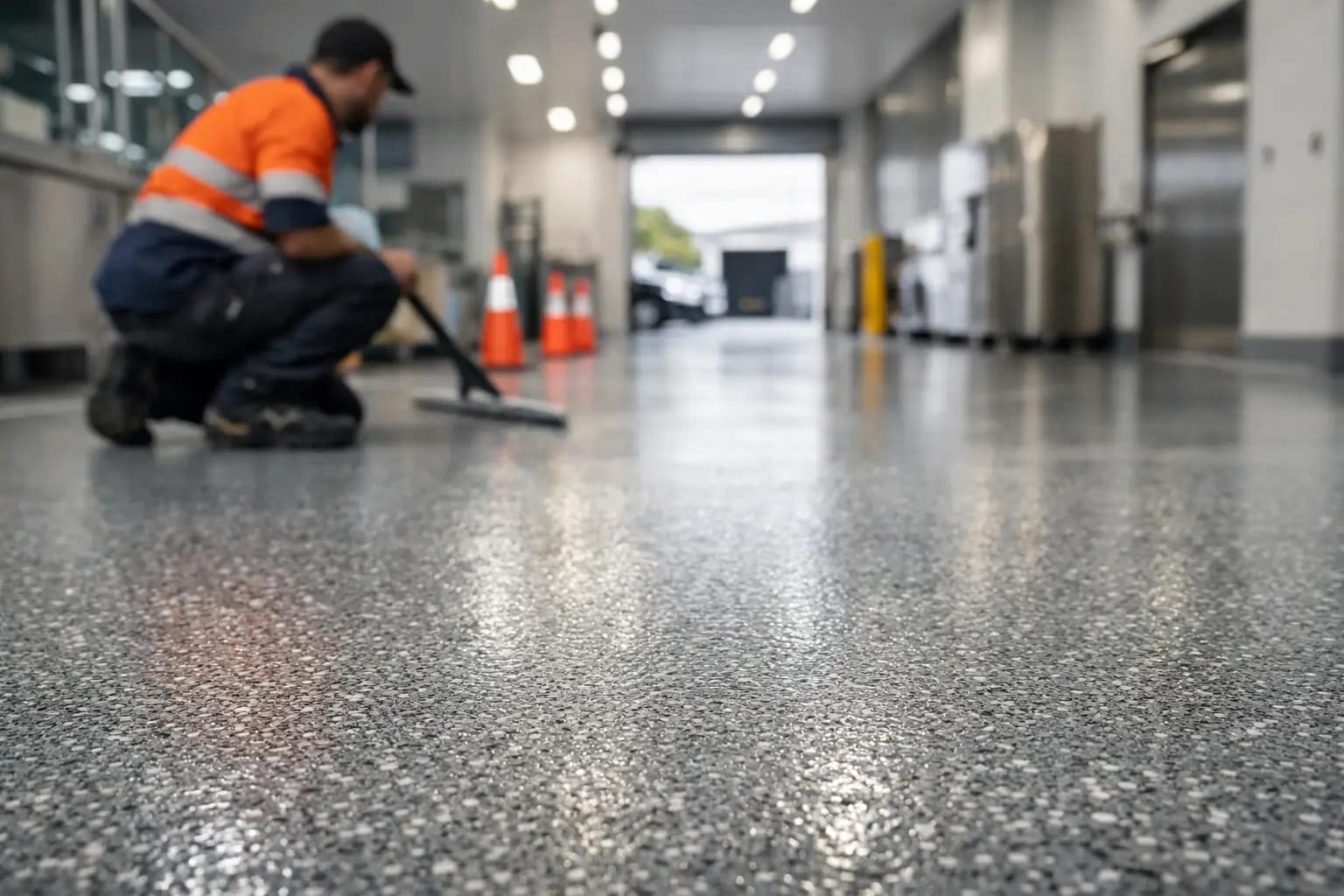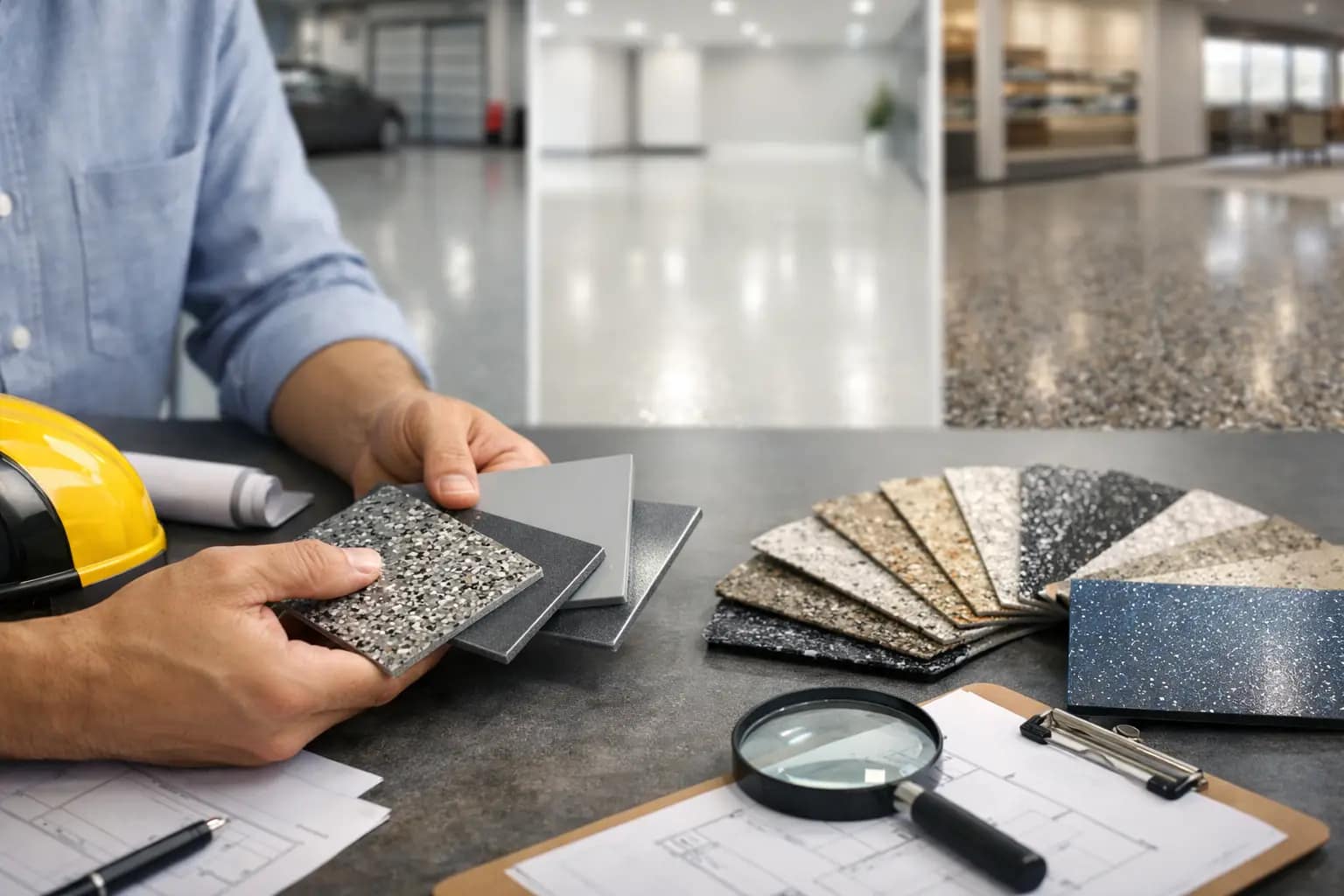

When customers ask about polyaspartic vs epoxy flooring, they usually want a simple answer – which one will last, look clean, and hold up under real use. The right choice depends on how the floor is used, the condition of the concrete, the level of traffic, and how quickly the area needs to be back in service.
At Floor Masters, we install practical coating systems for garages, homes, warehouses, workshops, retail spaces and other commercial sites across Sydney and NSW. We do not recommend one product for every floor. We recommend the system that suits the job, backed by correct preparation, quality materials and a 5-Year No-Peel Guarantee.
Polyaspartic vs epoxy flooring for real-world use
Both epoxy and polyaspartic coatings are designed to protect concrete, improve presentation and reduce maintenance. Both can deliver a sealed, durable surface when installed properly. The difference is in how they perform under different site conditions.
Epoxy is a proven option for many residential and commercial floors. It builds a strong protective layer, gives a clean finished look and suits a wide range of spaces, especially garages, workshops and internal commercial areas.
Polyaspartic is often chosen where faster return to service matters, or where higher UV stability is important. It can be a strong option for exposed areas or jobs that need quicker turnaround. That said, faster curing does not automatically mean a better result. A good floor still comes back to preparation, moisture assessment, concrete condition and application quality.
Where epoxy flooring is often the better fit
For many garages and indoor work areas, epoxy remains the most practical choice. It provides excellent adhesion when the slab is prepared correctly, handles day-to-day vehicle traffic well and gives property owners a hard-wearing finish that is easy to clean.
Epoxy is also a strong option where the concrete needs repair work before coating. If the slab has surface wear, light damage or uneven areas, proper grinding and skim coating can make a major difference to the final result. In those cases, the coating system is only as good as the surface underneath it.
For homeowners, epoxy is popular because it lifts the look of a garage without turning it into a high-maintenance surface. For business owners, it offers a practical balance of durability, presentation and value.
Garage epoxy flooring
Garage floors take more punishment than most people expect. Hot tyres, oil drips, tool drops, moisture and regular traffic all wear bare concrete down over time. A professionally installed epoxy system helps protect the slab, keeps dust under control and makes the space easier to maintain.
If you want a garage floor that looks cleaner, resists stains and stands up to regular use, epoxy is often the right place to start. We can also include non-slip finishes where extra grip is needed.
Commercial and industrial epoxy flooring
Commercial sites need flooring that works as hard as the business does. In warehouses, workshops, kitchens and service areas, the priority is usually durability, safety and easy cleaning rather than appearance alone.
Epoxy is well suited to many of these spaces because it creates a sealed surface that is easier to maintain than raw concrete. It also supports a more professional finish for areas where customers, staff or deliveries move through every day. Where safety matters, non-slip options can be built into the system.
When polyaspartic flooring makes sense
Polyaspartic coatings are often selected for projects where speed is a major factor. If a commercial site cannot stay offline for long, or a homeowner wants the space back in use sooner, the faster cure time can be a real advantage.
It is also commonly considered for areas with more exposure to sunlight, as polyaspartic generally offers better UV resistance than standard epoxy. That can help maintain colour stability in certain settings.
Still, polyaspartic is not a shortcut around proper preparation. Concrete must still be mechanically ground, repaired where required and coated under the right conditions. On some jobs, the speed of cure leaves less room for poor application, which makes installer experience even more important.
The part most people overlook – surface preparation
If you are comparing coating products without looking at surface preparation, you are missing the biggest factor in long-term performance. Peeling, bubbling and early coating failure usually start below the surface.
That is why we focus heavily on concrete grinding, dust-controlled preparation and slab assessment before any coating goes down. If the concrete has weak surface laitance, contamination, moisture issues or previous coating failure, it needs to be addressed properly first.
A better product cannot fix poor preparation. The floor has to be mechanically prepared to create the right profile and remove anything that can compromise adhesion. This is one of the main reasons professionally installed systems outperform quick DIY or low-cost coating jobs.
Choosing the right system for your property
The best coating is the one that suits your site, not the one with the most marketing behind it. A residential garage in Parramatta has different demands to a warehouse in Blacktown or a workshop in Penrith. Exposure, traffic, turnaround time and budget all affect the right recommendation.
If the goal is a durable, clean-looking garage floor with strong day-to-day performance, epoxy is often the sensible choice. If reduced downtime is critical, or the area has conditions that favour a faster-curing topcoat, polyaspartic may be worth considering.
In some cases, the best result comes from a system that uses more than one coating layer type rather than treating it as a simple one-or-the-other decision. What matters is getting a coating system matched to the slab and the way the area is actually used.
Residential, garage and commercial flooring services
We provide coating solutions for homeowners, commercial operators and industrial clients who want practical floor protection, not a cosmetic patch-up. Our work includes garage flooring, residential epoxy flooring, warehouse and workshop floors, retail spaces, commercial kitchens, driveways and other concrete surfaces that need a harder-wearing finish.
For residential customers, the focus is usually on a cleaner look, easier maintenance and better protection against stains, moisture and wear. For commercial clients, the focus often shifts to durability, safety, presentation and keeping the floor serviceable under daily traffic.
Whatever the setting, the job starts with the slab. We assess the concrete, carry out grinding and repairs where needed, and install a coating system suited to the use of the space.
Why customers choose us
Customers come to us because they want the job done properly the first time. That means licensed and insured service, transparent pricing, premium materials and workmanship that is built around long-term performance.
We also understand that a floor has to do more than look good on day one. It needs to resist wear, stay easy to clean and hold up in real conditions. That is why we put so much emphasis on preparation, equipment quality and practical recommendations instead of pushing a one-size-fits-all product.
Our 5-Year No-Peel Guarantee gives customers added confidence that the system has been installed with care and backed properly.
Get the right advice before you coat your floor
If you are weighing up polyaspartic vs epoxy flooring, the smartest next step is to get your concrete assessed by a contractor who installs both with the job in mind. The right answer depends on your slab, your use case and the finish you expect over time.
Whether you need a garage floor upgrade, a commercial epoxy floor, or a full residential concrete coating system, we can recommend a practical option based on performance, safety and value. If you want a floor that works hard, stays cleaner and is built to last, start with a proper on-site quote and clear advice.