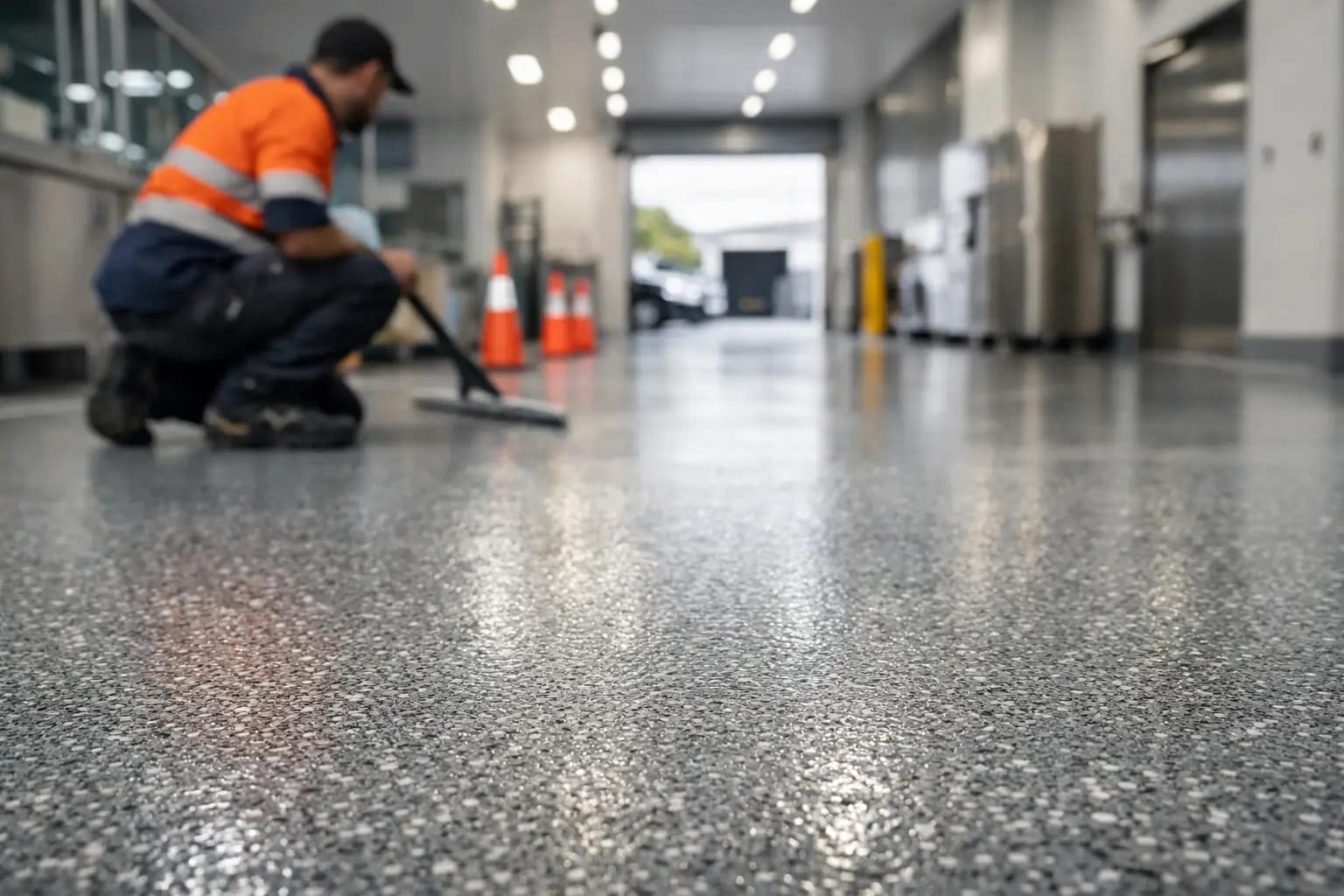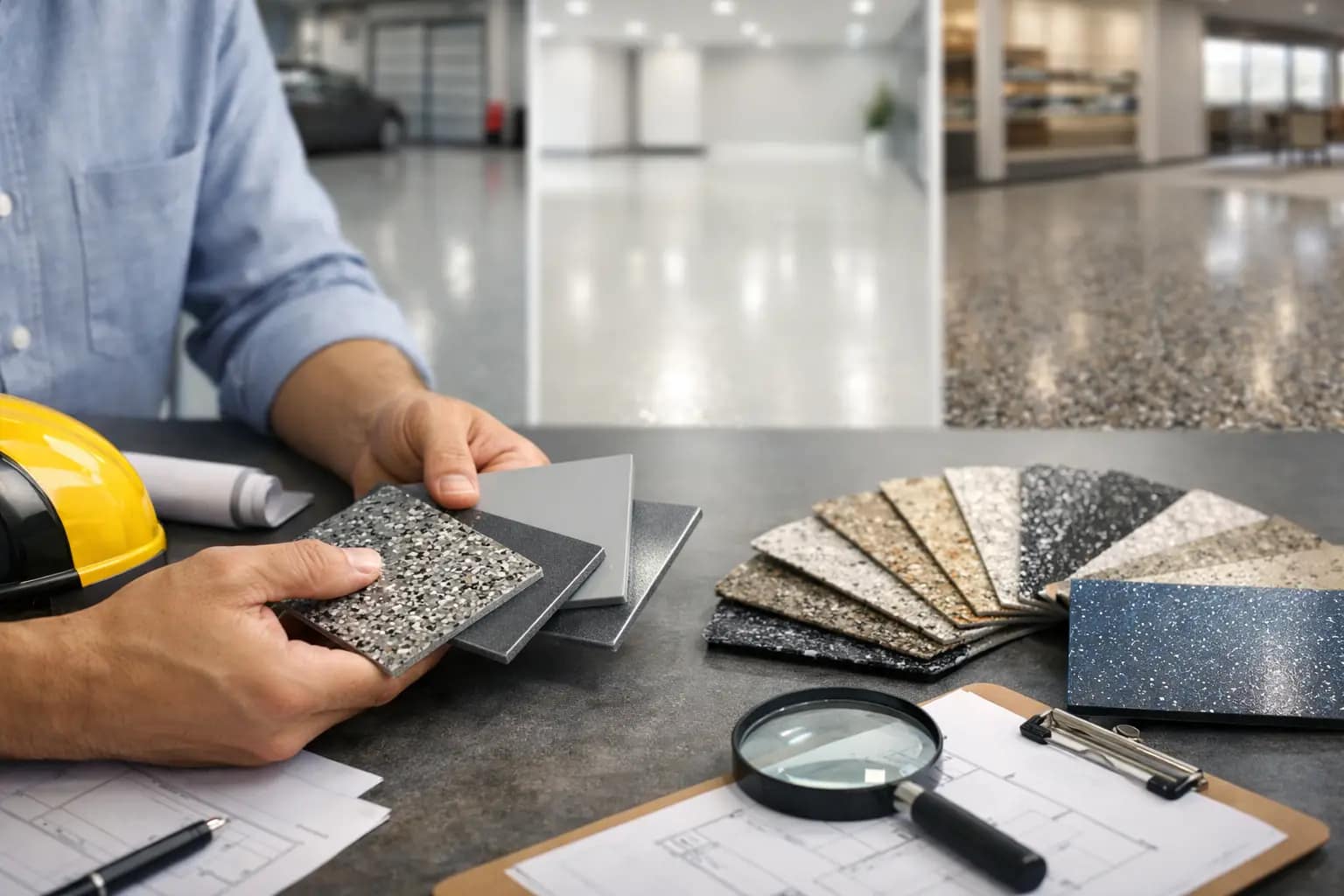

When a commercial floor starts dusting, staining or breaking down under traffic, it quickly turns into a maintenance problem, a safety risk and a poor look for the whole site. Commercial Epoxy Flooring is a practical fix because it gives concrete a hard-wearing, easy-clean surface that stands up to forklifts, foot traffic, spills and daily wear.
For business owners and property managers, the value is not just appearance. A properly installed epoxy floor can reduce dust, improve slip resistance, protect the slab underneath and make day-to-day cleaning far easier. In warehouses, workshops, retail spaces and food prep areas, that matters more than most people realise.
Why commercial epoxy flooring works
Concrete on its own is strong, but it is also porous and vulnerable. It absorbs oil, moisture and chemicals, and over time it can crack, wear unevenly and create surface dust. Epoxy changes that by forming a protective coating over the slab.
The result is a surface designed for function first. It resists abrasion better than bare concrete, holds up well in high-traffic areas and creates a cleaner working environment. For businesses that need floors to perform without constant upkeep, that is a major advantage.
There is also a presentation benefit. A clean, uniform floor helps a warehouse feel more organised, makes a retail space look more professional and gives customers and staff more confidence in the site overall. In many commercial settings, flooring is part of how the business is judged.
Where commercial epoxy flooring is most useful
Commercial epoxy is not limited to one type of site. It suits warehouses, factories, workshops, showrooms, retail stores, storerooms and medical or food-related spaces. The right system depends on the environment, the amount of traffic and what the floor is exposed to each day.
In a warehouse, durability and dust control are usually the main priorities. In a retail space, appearance and easy cleaning often matter just as much as wear resistance. In kitchens or food service areas, slip resistance becomes critical, which is why many businesses also look at solutions like Non Slip Commercial Kitchen Flooring.
That is why a one-size-fits-all approach rarely works. The coating system, surface texture and preparation method should match the actual use of the space.
The part most people overlook – surface preparation
A good epoxy finish starts well before the coating goes down. Surface preparation is what determines whether the floor bonds properly and lasts. If the concrete is contaminated, weak, damp or uneven, simply coating over it will not solve the problem.
Professional preparation usually involves concrete grinding, repair of cracks or damaged sections and removal of old coatings or surface contaminants. Dust-controlled grinding is especially important in active commercial settings because it keeps the job cleaner and helps create the right profile for strong adhesion.
This is also where honest advice matters. Some slabs are in good condition and ready for coating after preparation. Others need repair work first. Skipping that step might save time upfront, but it often leads to peeling, bubbling or premature wear later.
What to expect from the finish
A well-installed epoxy floor should feel solid, smooth and built for work. Depending on the site, the finish can be high gloss, satin or textured for extra grip. Non-slip additives are often worth considering in wet areas, loading zones and places where staff move quickly.
Colour also plays a practical role. Lighter shades can brighten a workspace and improve visibility. Marked zones, walkways and safety lines can help with workflow and compliance. For many businesses, epoxy is not just a coating – it is part of making the space safer and easier to manage.
Maintenance is straightforward. Regular sweeping and occasional washing usually keep the floor in good condition. Compared with untreated concrete, it is much easier to keep clean and far less likely to hold dust, grime and spills.
Is commercial epoxy flooring worth it?
In most high-use environments, yes – provided the installation is done properly. The main trade-off is that epoxy is not a paint-and-go job. Good results depend on preparation, product quality and the condition of the existing slab. If any of those are handled poorly, the floor will show it.
But when the system is matched to the site and installed by an experienced contractor, the long-term value is strong. You get a more durable floor, lower maintenance demands, better presentation and a safer surface for staff and customers.
For businesses in Sydney and across NSW, that makes epoxy a practical investment rather than a cosmetic extra. If you are comparing options for a site upgrade, it also helps to look at broader local factors in Epoxy Flooring Sydney for Homes and Business.
Flooring problems usually get worse, not better, once traffic and wear set in. If your concrete is becoming harder to clean, showing signs of damage or dragging down the look of the space, the right epoxy system can give it a tougher, cleaner and more professional finish that holds up where it counts.