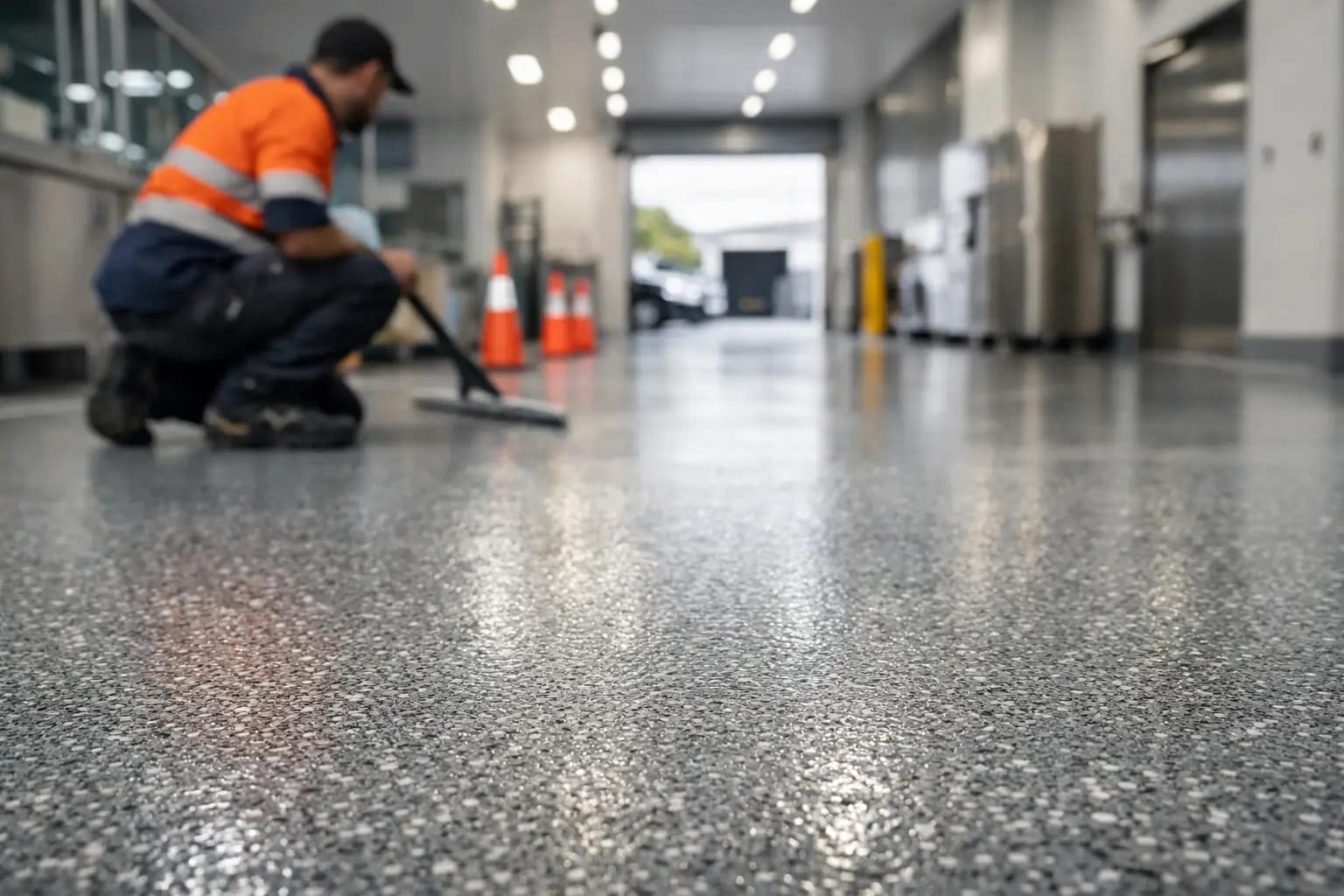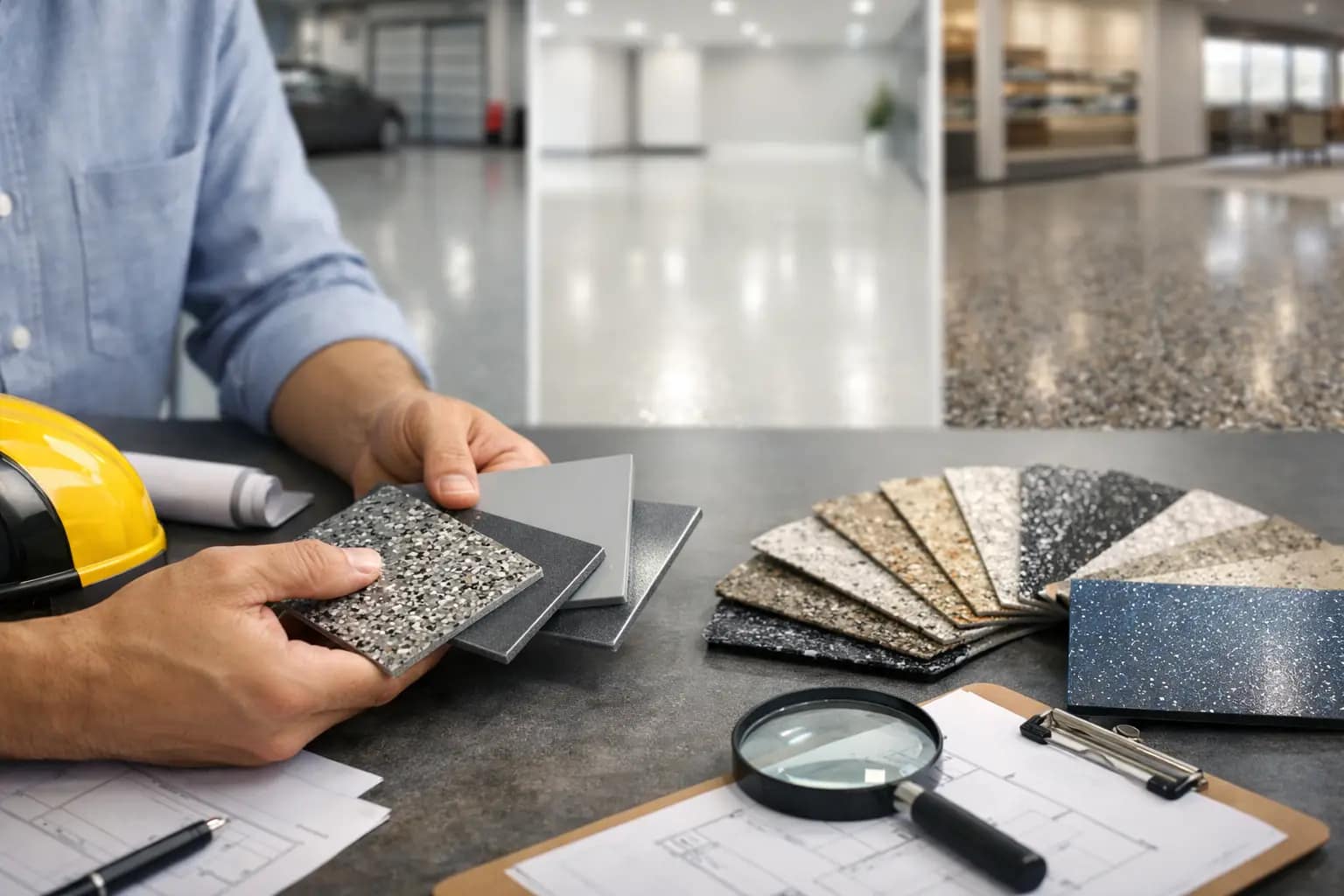
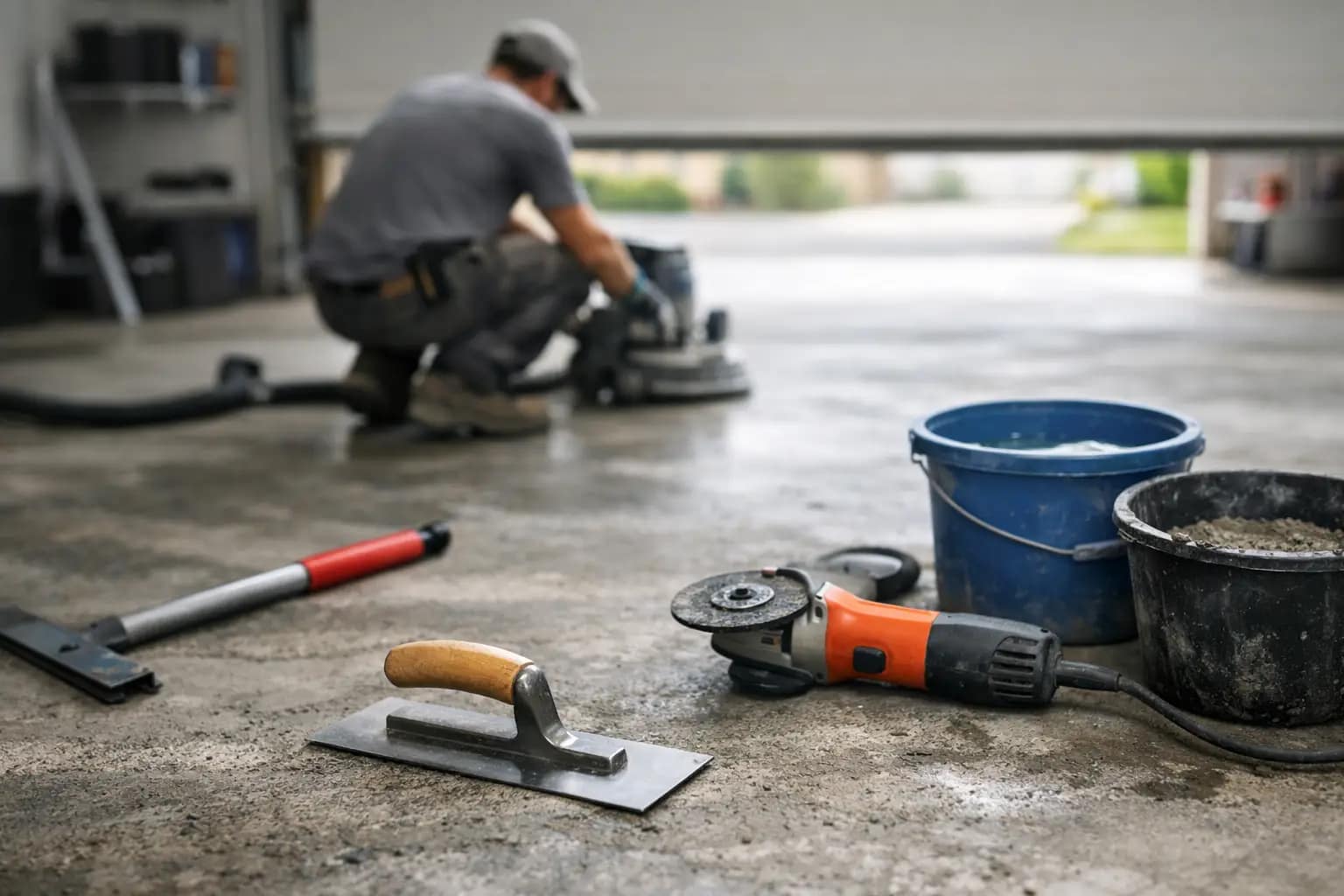
If you want a garage floor coating to last, surface preparation is where the job is won or lost. Knowing how to prepare garage concrete properly matters because epoxy and other coatings only perform as well as the slab underneath them. If the concrete is dusty, weak, cracked, contaminated or holding moisture, the coating can fail early – peel, bubble, wear unevenly or lose its finish.
That is why we treat preparation as the most important part of the job, not a quick step before coating. A good-looking floor is easy to promise. A floor that stays bonded under daily traffic, hot tyres, tool drops and oil exposure takes proper assessment, grinding and repair from the start.
How to prepare garage concrete for a coating that lasts
Every garage slab is different. Some are new but still too smooth for coating adhesion. Others are older and have oil staining, tyre marks, surface dusting, patchy repairs or hairline cracking. In working garages and home workshops, it is common to find contamination that has soaked into the concrete over time.
The right process depends on the condition of the slab, but the principle stays the same. The concrete has to be clean, sound, open and dry enough for the coating system being applied. Anything less is a compromise, and compromises usually show up later as delamination or premature wear.
At Floor Masters, we prepare garage concrete with the end result in mind – long-term adhesion, a cleaner finish and reduced maintenance. That means using professional grinding equipment, controlling dust, repairing defects properly and checking the slab before any coating is applied.
What proper garage concrete preparation includes
The first step is inspection. Before any grinder is switched on, the slab needs to be assessed for existing sealers, paint, curing compounds, laitance, moisture issues, cracks, spalling and weak surface areas. A garage floor that looks acceptable at a glance can still have hidden issues that interfere with coating performance.
If there are oil or grease contaminants, they need to be addressed properly. Coatings do not hide contamination. In fact, contamination often prevents adhesion altogether. The same applies to flaky old paint or failed previous coatings. These need to be removed back to a sound surface before a new system can go down.
Mechanical grinding is then used to open the surface and create the correct profile for bonding. This is a far more reliable method than acid etching or basic cleaning alone. Grinding removes weak surface material, levels minor inconsistencies and gives the coating the best chance of achieving a strong bond with the slab.
Repairs come next where needed. Cracks, pits, small holes and localised damage should be filled and stabilised before coating. If this step is skipped or rushed, the defects often print through the finished floor or continue to move and break down underneath it. In garages that see regular vehicle traffic, that can shorten the life of the whole system.
Finally, the slab must be clean and suitable for coating application. Dust, loose debris and residue all interfere with adhesion. So does moisture. If a slab has moisture vapour issues, the coating system may need to be adjusted to suit the conditions rather than forcing a standard product onto a problem surface.
Why grinding matters more than most people realise
When clients ask how to prepare garage concrete, the biggest point is usually this one – proper preparation is not just about washing the floor. Concrete grinding is what creates a mechanical key for the coating to bond to. Without that profile, even premium epoxy can struggle to hold long term.
Grinding also reveals the true condition of the slab. Once the surface is opened up, hidden cracks, weak patches and old repairs become visible. That gives us the chance to fix the floor properly before the final coating is installed.
For Sydney garages, grinding has another practical advantage. With the right equipment and dust control, the process is cleaner and more controlled than many people expect. It helps minimise airborne dust through the home or worksite and leads to a more consistent finish across the slab.
Not every garage slab needs the same prep
This is where experience matters. A newer garage slab may only need grinding, minor repairs and a suitable primer before the topcoat system is applied. An older slab that has seen years of oil leaks, tyre traffic and moisture exposure may need more extensive preparation, including deeper cleaning, patching or skim coating to restore surface integrity.
There is also a difference between residential and commercial garage spaces. A standard home garage has one set of demands. A workshop, warehouse loading area or service bay has another. Heavier traffic, more aggressive chemicals and stricter slip-resistance needs can all influence the preparation method and coating build.
That is why we do not treat garage floor preparation as a one-size-fits-all process. The slab condition, use of the space and selected coating system all need to line up if you want a durable result.
What can go wrong when prep is rushed
Poor preparation is usually the reason coatings fail, not the coating material itself. If the concrete is not properly opened and cleaned, the product may only bond to dust, surface laitance or contamination rather than solid concrete. That weak bond might hold for a short time, but it rarely lasts under real use.
Common signs of poor prep include peeling near the tyres, bubbling, patchy gloss, visible repair lines, flaking around cracks and wear in high-traffic zones sooner than expected. These issues are frustrating because they are often preventable. The floor may need to be stripped and redone, which costs more than doing the preparation correctly the first time.
For property owners and business operators, the real cost is downtime and disruption. A failed floor means another round of work, another interruption to the garage or workspace and another decision about who to trust with the job.
Garage, residential and commercial epoxy preparation services
We prepare concrete floors for garage coatings, residential epoxy installations and heavier-duty commercial flooring systems. That includes home garages that need a cleaner, more durable finish, as well as commercial spaces that need hard-wearing, low-maintenance performance.
In residential settings, the goal is usually a floor that looks sharper, cleans easily and stands up to daily use. In commercial and industrial settings, preparation also supports safety, reliability and ongoing operational use. Non-slip options, repair work and the right coating system all start with getting the concrete ready the right way.
Where a slab is too rough, uneven or damaged for direct coating, skim coating and floor repairs may be the better path before the final finish is applied. That extra step can make a major difference to both appearance and long-term wear.
Why clients choose us for garage concrete preparation
We focus on workmanship first. That means proper concrete grinding, careful assessment, honest advice and preparation matched to the actual slab – not a rushed quote based on assumptions. If a floor needs more prep, we explain why. If a simpler system is suitable, we say that too.
Our work is built around practical results: stronger adhesion, cleaner finishes, low-maintenance surfaces and reliable performance under traffic. We use professional equipment, keep dust controlled as much as possible and apply coating systems suited to the space, whether it is a garage, workshop, warehouse or residential floor.
Clients also want certainty. That is why quality materials, transparent pricing and dependable installation matter. Our 5-Year No-Peel Guarantee reflects the fact that long-term performance starts with correct preparation, not shortcuts.
Get your garage floor prepared properly
If your garage floor is stained, dusty, cracked or simply not ready for coating, the best next step is a professional assessment. We will check the slab condition, explain what preparation is required and recommend a flooring system that suits how the space is actually used.
Whether you are upgrading a home garage or preparing a commercial floor for a tougher coating system, the preparation stage is what protects the finish, the budget and the lifespan of the floor. If you want the job done properly from the ground up, we can help.
A well-prepared concrete floor does not just look better on day one. It gives the coating every chance to perform the way it should for years to come.